 Treeing Walker
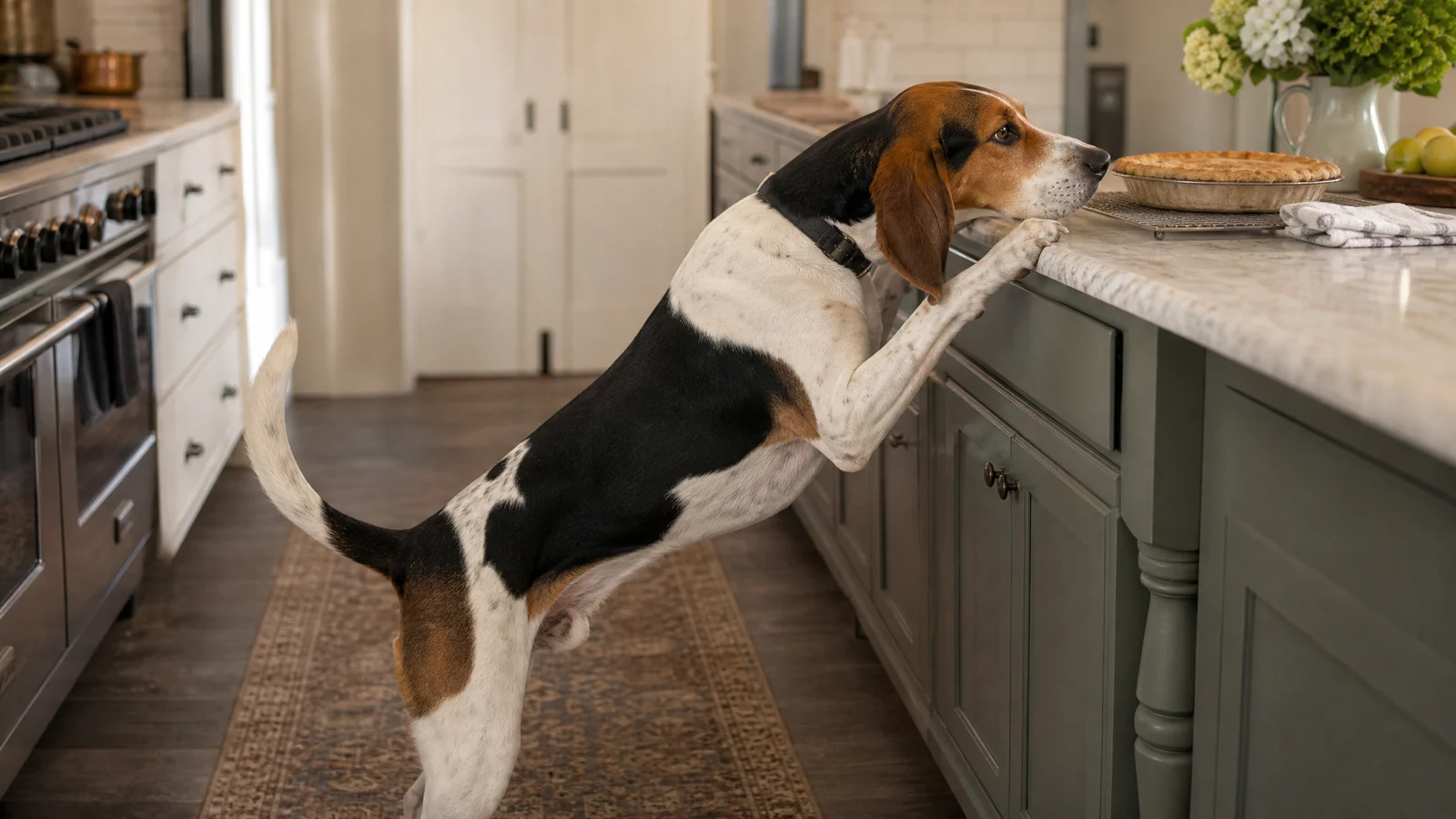
How do you stop a Treeing Walker Coonhound from counter surfing? First make every counter search come up empty, then teach a floor-level job that pays during real kitchen traffic. Telling the dog to get down after they find food leaves the most important reward in place.
We treat the kitchen as a loss-control problem because a tall, scent-driven dog can check a surface in a moment and remember the result for much longer. This guide closes food routes, maps permission zones, builds a mat station, rehearses cooking movement, investigates relapses, and separates ordinary scavenging from behavior that needs professional help. Management begins today, while training builds the replacement habit.
Stop Treeing Walker Coonhound Counter Surfing Payouts
A single sandwich can pay for many future searches. The dog does not need to find food often. An occasional discovery keeps the counter worth checking, especially for a tall hound who can reach the work surface without much effort.
Clear food, dirty dishes, wrappers, cutting boards, and cooling pans before the dog enters. Push items back only when the entire surface is truly unreachable. A closed door or secure gate is more dependable than hoping a tempting item sits far enough from the edge.
Manage nonfood rewards too. A window over the counter, a sink full of interesting smells, or a person who speaks and reaches toward the dog can all pay front-paw contact. Close the view, rinse the sink, and make human attention available on the floor.
The UKC breed standard describes a hound developed to move across varied terrain. Kitchen height is not much of a physical barrier for that athlete. We change access rather than expecting the counter itself to discourage investigation.
Everyone in the home needs the same clearing rule. An occasional unattended breakfast can maintain the search even when formal lessons look excellent. Prevention is the condition that lets new behavior become more profitable.
- Assign protected landing places for groceries, cooling food, and dirty dishes.
- Audit after an ordinary meal for crumbs, grease, wrappers, and food scent.
- Close the kitchen before a phone call, delivery, or other divided-attention moment.
Map Counter Surfing Zones in the Kitchen
Divide the room by permission rather than by furniture. The food-preparation area includes the sink, cooking surfaces, counters, and moving people. The waiting area contains the dog's mat or another defined station. The exit route leads to a gate, quiet room, or activity outside the kitchen.
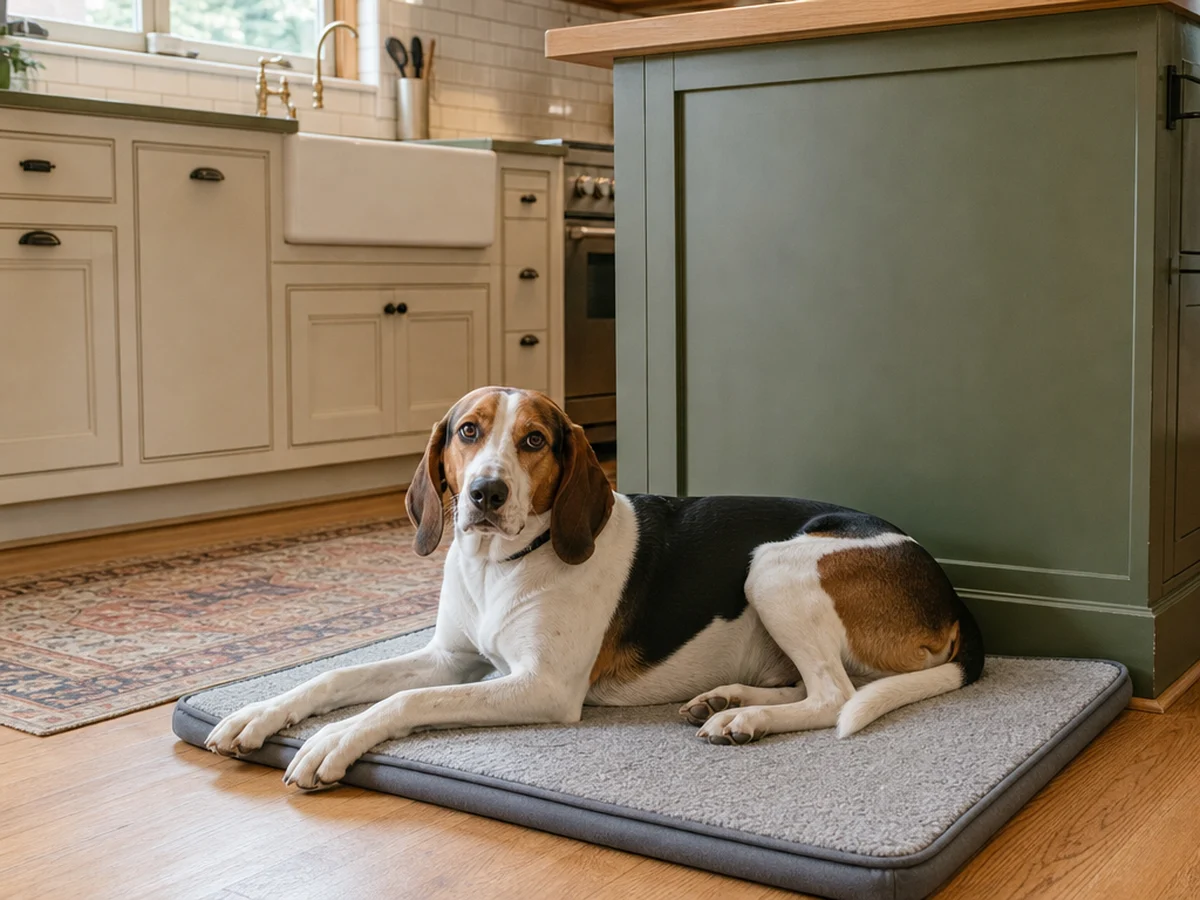
Walk the route while the dog is elsewhere. Note narrow turns, spill points, and appliances that block the path. Place the waiting zone beyond moving feet but close enough for prompt rewards.
Use a washable mat with good traction and a clear border. A vague request to stay “over there” is hard to reproduce. Four paws on a visible surface give the person a behavior to mark and the dog a location that can earn access to kitchen life.
Keep the exit route usable during cooking. If the dog becomes restless or cannot remain on the mat, moving behind a gate should be an ordinary reset, not a social penalty. A food puzzle or prepared chew can make that quieter zone useful.
- Mark the waiting area and travel lane on the household floor plan.
- Tell guests that the mat is a working station, not a place to call the dog away from.
- Keep the exit route clear when appliances or cabinet doors are open.
The site's Treeing Walker leash training guide also changes one boundary condition at a time. Apply that discipline to the kitchen map. Teach the waiting zone before adding dropped utensils, open refrigerators, visitors, and meal smells.
Test whether the dog can enter and leave each zone without food being prepared. Walk to the waiting area, pay there, release through the exit route, and reset outside the room. Clear traffic between zones prevents the mat from becoming a dead end that the dog avoids.
Keep that traffic test brief and finish while every route remains easy to use. The goal is a clean map, not endurance on the station.
A Treeing Walker Coonhound Floor Job
Begin outside meal preparation. Toss a treat onto the mat, allow the dog to step on, and mark when all paws arrive. Deliver several rewards low on the mat, then use a release word and invite the dog off. The release prevents the station from becoming an indefinite guess.
Next, wait for the dog to choose the mat after entering the room. Mark that choice and pay there. Voluntary returns matter because a kitchen job must survive moments when the handler's hands are busy and no cue arrives immediately.
Add duration in small pieces. One reward follows arrival, another follows a brief settled moment, and release comes before the dog gets up. If the dog leaves early, shorten the next repetition rather than repeating the mat cue across the room.
Vary the handler's position before adding food. Take a step toward the counter, turn away, open an empty drawer, or lift a clean bowl. Return to the dog to pay. Movement becomes part of the station picture without placing temptation overhead.
Reward placement stays on the floor or mat. Food delivered near the counter edge pulls the nose upward and blurs the job. The dog should learn that the profitable search area is below human knee level.
- Practice a neutral exit cue when nothing is cooking and reward behind the barrier.
- Use brief station repetitions during easy tasks, not only the strongest meal smells.
- Release in another room before the mat job becomes too difficult.
Practice Counter Surfing Prevention During Cooking
Cooking introduces several difficulty layers at once. Start with a cold kitchen and one prepared item, then add sounds, smells, and longer movement separately. Use the exit zone before a session becomes a contest.
| Kitchen event | Dog's current job | Handler decision |
|---|---|---|
| Person enters with groceries | Wait behind the gate | Put food away before opening access |
| Empty counter rehearsal | Choose the mat | Pay short calm intervals |
| Simple cold-food prep | Remain in waiting zone | Release before attention fades |
| Hot pan or crowded meal | Use the exit zone | Prioritize safety over station practice |
Prepare the dog's rewards before handling human food. Reaching into the meal to improvise payment risks dropping something unsafe or teaching the dog that crowding produces samples. Use separate, suitable rewards stored near the waiting zone.
Build floor searches away from the work surface when the kitchen is inactive. A few pieces placed on a snuffle mat can make nose-down behavior useful, but do not scatter food under moving feet or near hot equipment. The search is a planned activity, not cleanup duty.
If food falls during cooking, block access and pick it up. Do not race the hound or reach into their mouth. The setup should give the person time because a barrier or trained station has already separated the dog from the spill.
The dog's communication matters during practice. The PDSA communication guide notes early discomfort signs such as yawning and looking away. If the dog appears tense, stops eating, or repeatedly leaves, simplify the job or use the exit zone.
Link cooking sessions to appropriate activity earlier in the day. The site's Treeing Walker behavior problems guide also shows how a prepared station and human roles protect a busy household moment. Enrichment and routine do not replace a cleared counter, but they reduce improvisation when attention is divided.
Investigate Treeing Walker Coonhound Counter Surfing Relapses
A relapse is evidence of a payment route, not proof the dog forgot everything. Reconstruct the first contact with the counter while the details remain fresh. Look for access, scent, human attention, station difficulty, and what the dog obtained.
- Which surface held the first useful smell or item?
- Was the kitchen barrier open before the dog had a job?
- Did a person talk, touch, or offer food after paws rose?
- Was the mat farther away, slippery, occupied, or unrewarded?
- What smaller cooking event had succeeded previously?
Repair the first weak link. Clear the surface, restore the gate, move the mat, or return to a simpler kitchen event. Running the same failed setup again usually produces another rehearsal of the search.
Do not make the mat a place where the dog watches food fall without any payment. The station should earn regular reinforcement while cooking is difficult. Over time, vary the schedule thoughtfully, but keep the floor job worth choosing.
Counter work may spread to tables, grills, or outdoor serving areas. Transfer the permission-zone map rather than assuming the kitchen lesson generalized. Each surface needs prevention while the dog learns where waiting pays.
Review video only if it can be recorded without leaving the dog unmanaged. A fixed camera may reveal that the first paw rises when a person turns toward the refrigerator, not when food appears. That detail points to an earlier moment for reinforcement.
Separate access failures from skill failures. An open gate and unattended roast require a management repair. A dog who leaves the mat during an empty-counter rehearsal needs an easier duration. The same word, relapse, should not hide two different jobs.
Counter Surfing Progress and Professional Help
Progress appears as fewer approaches, quicker voluntary mat choices, easier recovery after a dropped item, and the ability to leave the kitchen when asked. It is not permission to begin leaving food out as a test. A cleared surface keeps the successful history intact.
Bring in a humane trainer if the dog cannot remain safe around ordinary food preparation, guards found items, becomes frantic near barriers, or the household cannot arrange workable zones. Best Friends offers trainer selection questions, including observing methods and leaving if anything feels uncomfortable. The DACVB directory explains the difference between veterinary behavior specialists and other behavior professionals.
Sudden hunger, scavenging, agitation, or a major behavior change belongs in regular veterinary care. Training cannot explain a new physical need. Bring the relapse record so the veterinary team can see timing, appetite, and context.
Tonight, clear the counters before the dog enters, place the mat in its mapped zone, and reward several floor-level choices while the kitchen is quiet. Treeing Walker Coonhound counter surfing loses strength when the work surface stops paying and the household reliably funds a better job below it.
 BehaviorWelcoming Guests With a Treeing Walker Coonhound Who Keeps Paws Down
 Puppy trainingTrade Games and Chews for a Mouthy Treeing Walker Coonhound Pup
 Puppy trainingBaby Treeing Walker Coonhound Teen Training: Stubborn Months