 Treeing Walker
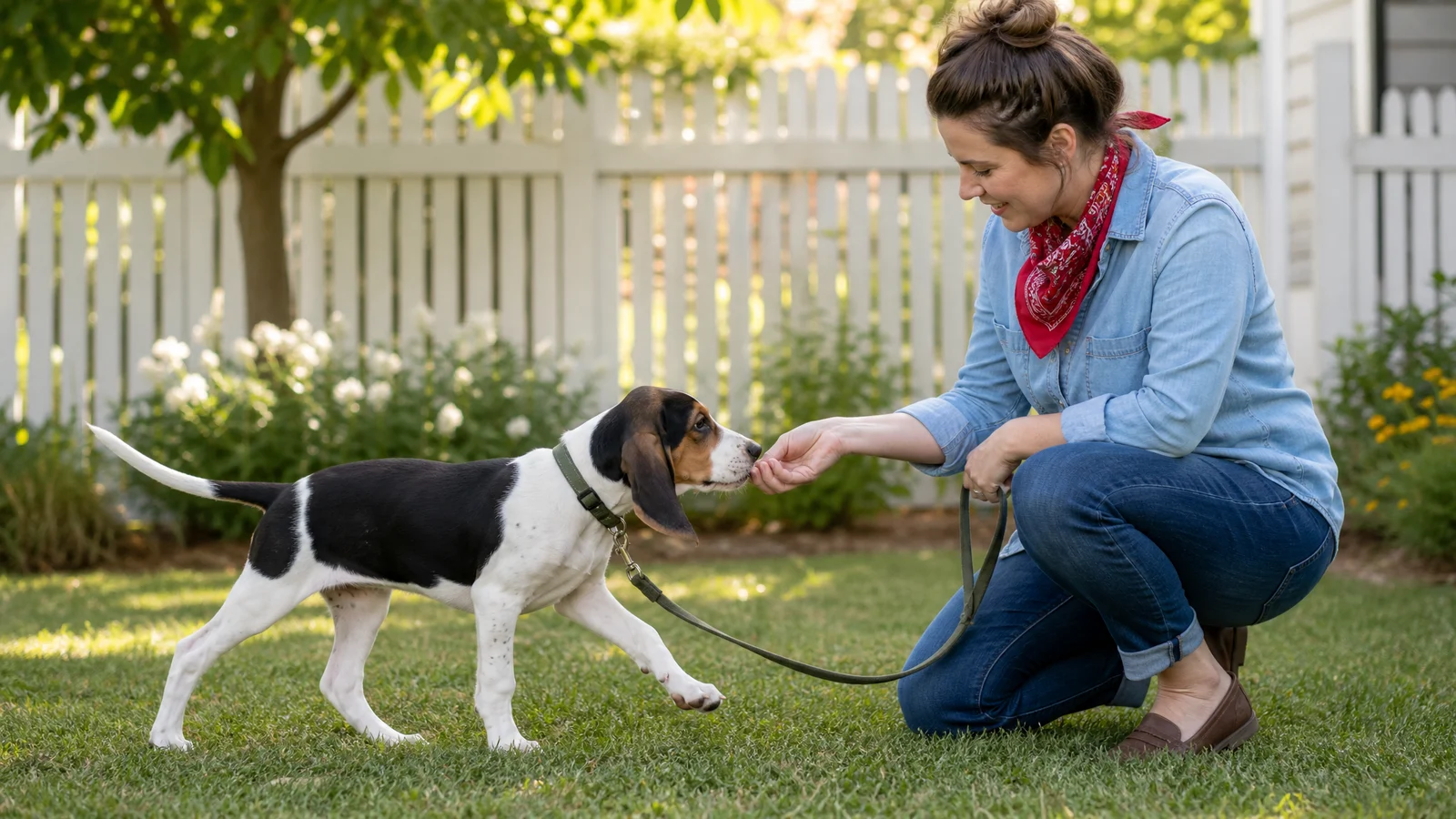
A Treeing Walker Coonhound puppy can start learning as soon as they come home. Somewhere near five to six months they begin tuning you out, and cooperation returns gradually through the first year as they mature. Owners mainly want to know when the stubborn phase starts and when it ends, and the pattern is more predictable than it feels from the middle of it.
We specialize in the behavior and training of this breed, and what we see is a clever, food-loving hound whose nose gets louder as they grow. Handled badly, that phase teaches a puppy that ignoring you pays. Handled well, it leaves you with the alert, intelligent partner described in the breed standard.
This article looks at puppy training stage by stage, so you can plan short, rewarding sessions, protect your recall before the nose takes over, and stay calm when a once-biddable puppy starts hearing selectively.
Puppy Training Starts the Day Your Puppy Comes Home
Food is the lever that works best in the first weeks. Many owners find their hound is extremely food driven and learns a cue quickly because a reward reliably follows it. That means the payoff has to be planned before the lesson, not improvised after, so keep treats in a pouch or pocket wherever you tend to train.
Settle the house rules on day one too: where the puppy sleeps, which rooms are open, and what is allowed in their mouth. A scent-driven puppy tests any rule that bends, so everyone in the household should apply each rule the same way. Consistency now is what keeps the later months from feeling like starting over.
Name Response and a Marker Word
Begin with the name, because most other cues are built on it. Speak it once in a cheerful tone, and the moment the puppy's head turns, mark the turn with a crisp word such as good and hand over a treat. A marker is a sound that pinpoints the exact instant the puppy earned the reward, which is more precise than praise arriving a second late.
Resist repeating the name over and over. A name used that way fades into the background noise a busy hound already tunes out.
Crate and Handling Basics
Make the crate the place where good things turn up. Scatter treats inside, serve a meal or a chew there, and leave the door open at first so the puppy walks in by choice.
Handling gets the same treatment: run a fingertip down each leg, lift an ear flap, touch the lips, and follow every touch with food so being examined predicts something pleasant. Regular veterinary visits start early in a puppy's life, and a puppy who has practiced this at home finds the exam table much easier.
This is general information, not veterinary advice. Check with your veterinarian before any medicine or diet change.
Treeing Walker Coonhound Puppy Training While Still Biddable
Start recall and leash work early, and use the time fully. A young puppy is usually food focused and eager to stay close, so recall (coming when called) and leash manners form quickly. The reason to begin now is that scent interest tends to grow as the puppy matures. Habits laid down while the nose is still quiet are the ones you will lean on when it turns loud.
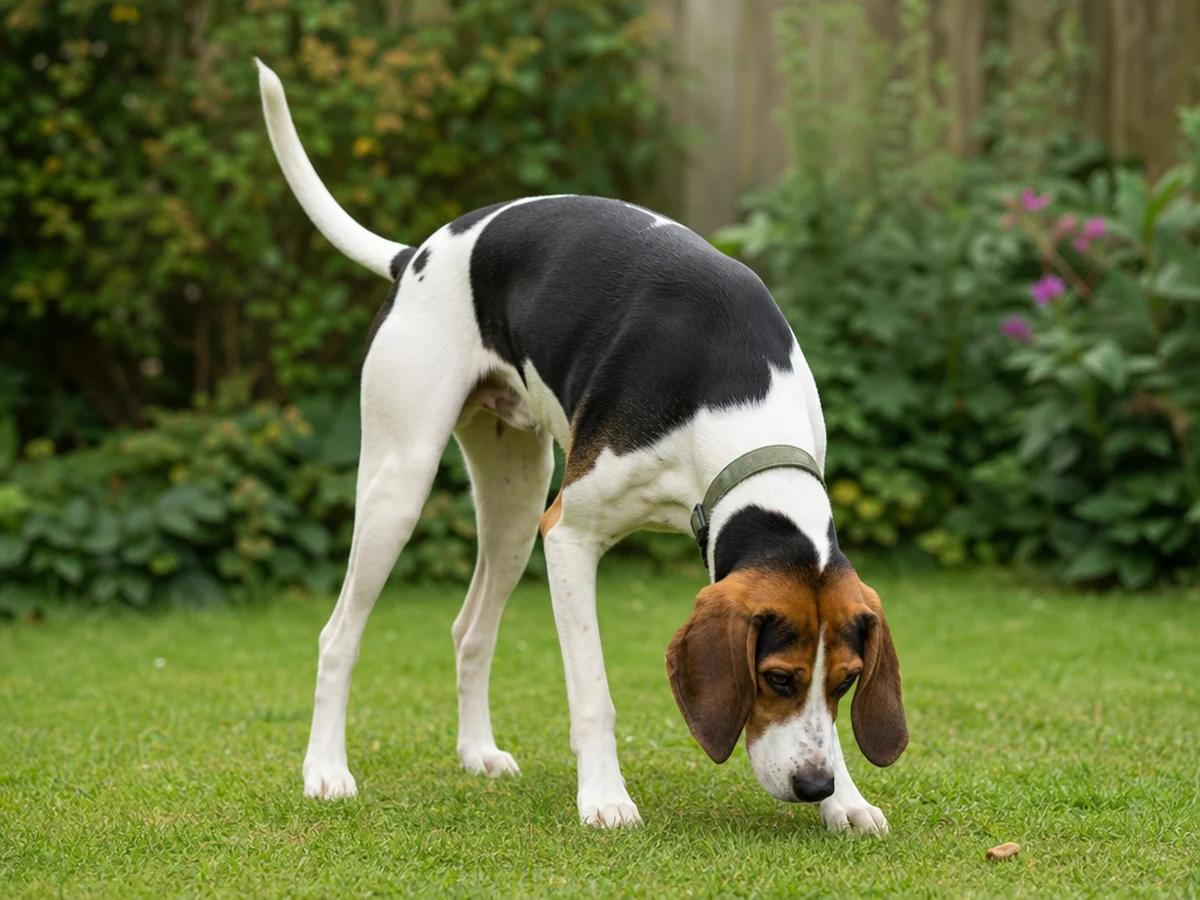
Begin recall indoors and in a secure yard. Use a cheerful voice and reward with a small handful of treats each time the puppy arrives, so that coming to you becomes the best event of their day. Do not use the recall to end something enjoyable only to hand over something unpleasant, like a nail trim. Walk over and collect the puppy for those, because a recall that sometimes ends badly loses value fast.
Loose-Leash Walking Basics
On the leash, reward the puppy for staying beside you with a slack line, which is the heart of the humane, reward-based training that veterinary behavior experts recommend. If the leash goes tight because the nose has found something, stand still until it slackens, then walk on. Moving forward is what the puppy wants, so it becomes the payment for a loose line.
Food games suit this age. Scatter treats in the grass for a sniffing hunt, hide a morsel under one of several upturned cups, or toss pieces of kibble down a hallway to chase. Each turns the nose into a training partner instead of a rival. Because the breed has a very high prey drive and covers ground quickly, plan on a leash or secure fencing outdoors for a long time. Off-leash reliability should never be assumed.
Puppy Training at Five Months, When the Nose Takes Over
Around five to six months, many owners notice the puppy looking past them. The cause is rarely defiance. A scent hound's nose is their main way of reading the world, and as the puppy matures, a trail can outbid anything in your pocket.
Owners of young hounds report that once a scent is caught, recall can fail completely. Some puppies tow their person along nose-down with nothing slowing them, and calling louder does not compete with a smell. No one can say exactly when this arrives, since dogs vary, so assume that recall can fail whenever a young hound locks onto a scent. What stays constant is the lesson: plan around the nose rather than arguing with it. These adjustments help most:
- Use a long, lightweight line in open areas so the puppy can sniff widely but cannot leave, and keep the yard securely fenced.
- Practice recall where scent is light, such as a quiet corner of the yard, before asking for it where scent is heavy.
- Reward every recall with your best treats, then let the puppy go back to sniffing. That way, coming to you never signals that the fun has ended.
- Treat a sniff break as a reward, because a hound who is allowed to investigate on cue is more willing to leave a trail.
- Shorten sessions and end them while the puppy still wants more.
This is also the stage when squirrels and trees in the yard begin to hold the puppy's attention. Expect it and manage it early rather than hoping it fades by itself.
Teenage Treeing Walker Coonhounds Hear Selectively
Adolescence, the stretch between puppyhood and adulthood, is when the independent streak shows. The AKC describes the breed as very intelligent, eager to learn and keen to please, yet stubborn and independent in a way that can seem difficult to a trainer who does not understand the coonhound brain. Both halves are true at once. The teenager knows the cue and weighs it against everything else in the air.
In practice, the puppy negotiates. A cue that once earned a treat now competes with smells, sounds and the chance to wander, and the winner is whichever reward looks biggest at that moment. The table below sums up the timeline and what to adjust at each stage.
| Stage | What you will likely see | What to do |
|---|---|---|
| First days home | Curious, easily rewarded, learns fast | Name response, crate, handling |
| Early puppyhood | Biddable and food focused | Early recall, leash basics, food games |
| Five to six months | Nose-down, slower response | Long line, light-scent practice, shorter sessions |
| Around seven months | Recall can fail when scent is strong | Keep management tight and rewards high |
| After the first birthday | Reliability slowly builds | Steady, varied, brief practice |
Skip Eye Contact as the First Engagement Game
Rewarding eye contact is common advice, but it can backfire with a very food-driven hound. Many owners find the puppy fixes on the treat instead of their face, then drifts into their own world once no treat is in sight. Easier engagement behaviors make a sturdier base: touching your hand with their nose, turning at their name, and simple nose games.
Fade Treats Slowly and Vary the Payoff
Attention in this breed often depends on food being visible or expected, so removing treats suddenly can make a puppy seem to forget everything. Fade them gradually instead. Blend praise, play, or a sniff break in as payment, and sometimes pull the treat from a pocket after the behavior rather than showing it first. The puppy then keeps working even when nothing is in your hand.
Why Does Puppy Training Seem to Fall Apart?
Progress appears to reverse for several reasons at once, and no one can say how much each contributes in a given dog. The nose is stronger, the puppy is more confident, and the treats that once felt thrilling may have gone stale. Owners also tend to repeat the cue louder and more often, which teaches the puppy that the first request is optional. The skill has not vanished. Its payoff has simply been outbid.
Riding it out works better than nagging, and a reset follows a simple order:
- Say the cue once, then wait a few seconds without repeating it.
- If nothing happens, make the task easier by moving closer or reducing the distraction.
- Mark and reward the first small success with something the puppy truly loves.
- End the session there, while the puppy is still keen, and try again later.
If a puppy keeps ignoring cues, a calm pause and a fresh start a minute later is a fair, mild consequence, and it costs nothing in trust. If a change in behavior is sudden, seems tied to fear, or arrives with other odd signs, ask your veterinarian first. They can refer you to a board-certified veterinary behaviorist if needed.
Treeing Walker Coonhound Training After the First Birthday
As dogs mature, responses often get faster and sessions tend to hold up longer, though dogs vary. The change is gradual rather than a switch, and the nose does not retire. A high prey drive and a love of covering ground stay with the breed for life, so leashes and secure fencing remain part of the plan even for a well-trained adult.
Steady training at this age looks undramatic. Keep sessions brief, vary the rewards, and raise difficulty one dial at a time: a longer wait, a farther recall, or a stronger distraction, but never all three at once. Changing a single thing lets the dog succeed, and success is what keeps a food-motivated hound willing.
This is a high-energy, mentally demanding breed, so most dogs appreciate long daily walks at a minimum, and many make excellent running or hiking companions on a leash. Real mental work, like nose games, keeps them from inventing their own jobs. The breed is also vocal, so reward quiet moments early. Socially, they are described as openhearted with children and other pets, so the main work now is polite greetings.
Stubborn Months End Sooner With Short Puppy Training Sessions
The stubborn months are a phase to outlast, not a verdict on your puppy. Brief, upbeat sessions with strong rewards keep a food-loving hound interested while the nose runs hot, and the habits built in them pay off once the adolescent slump passes. Keep lessons fun, reward generously, and trust that a breed this eager to please will come back to you.
Owners usually ask a few things next:
- What to do about a puppy who locks onto squirrels and trees, which our guide to redirecting squirrel and tree fixation covers in detail.
- How much daily exercise a young hound needs beyond walks, because boredom sends a hound looking for their own fun.
- When recall will hold in open spaces, and which places should stay leashed for good.
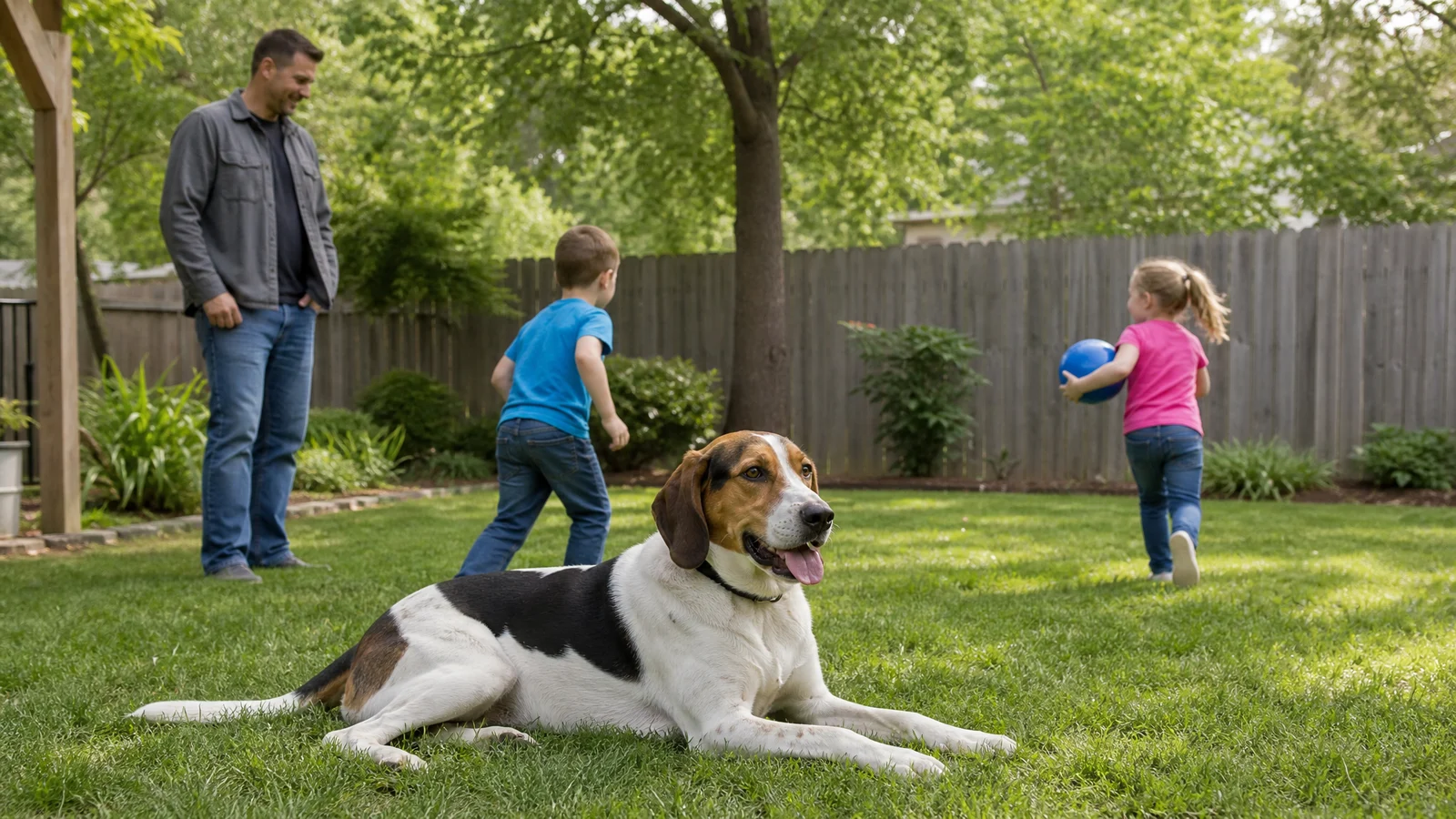 BehaviorTeaching a Treeing Walker Coonhound Calm Manners Around Kids and Dogs
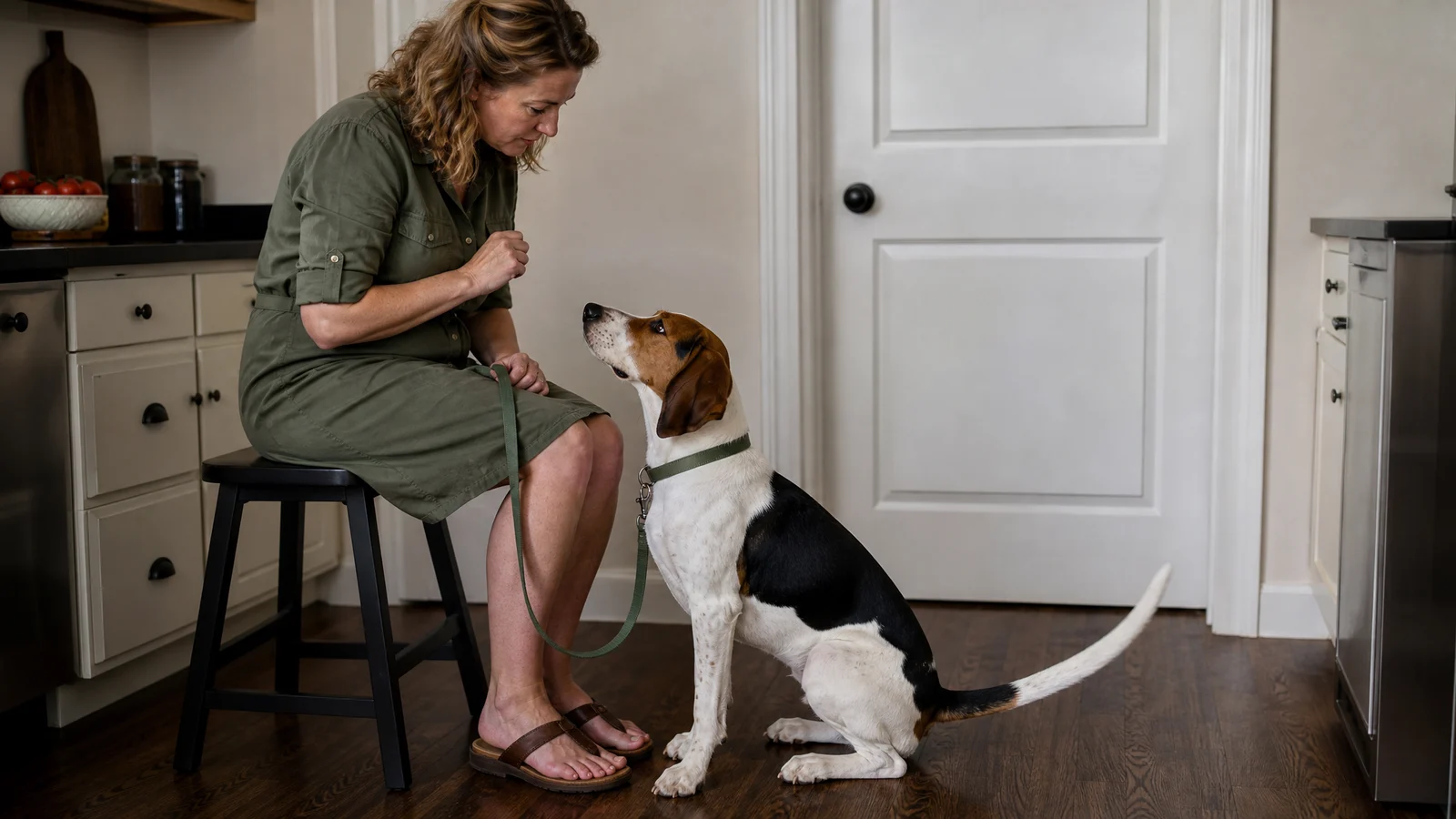 Training basicsHow to Keep a Treeing Walker Coonhound Focused
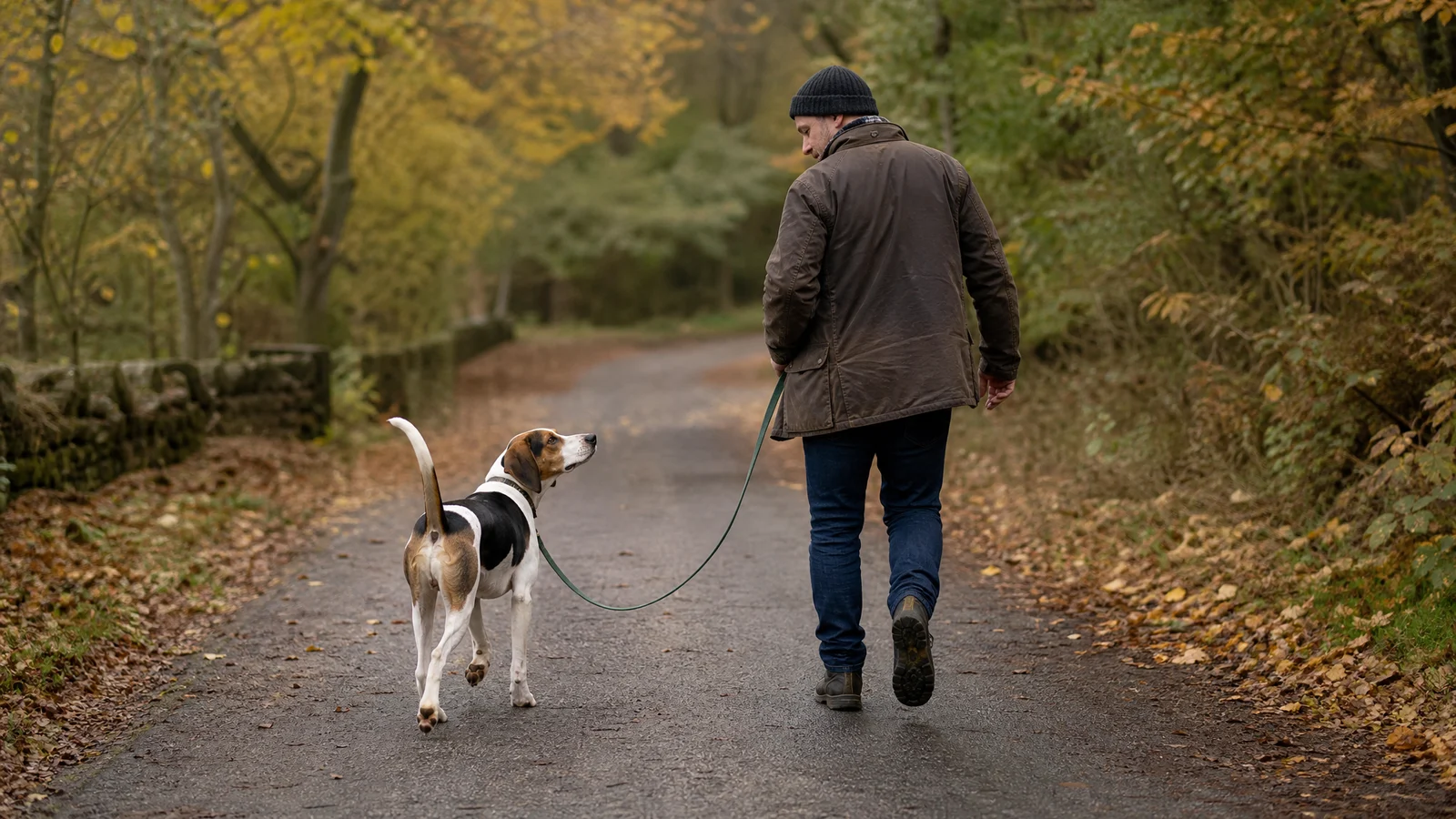 Training basicsLoose-Leash Walking for a Treeing Walker Coonhound