 Treeing Walker
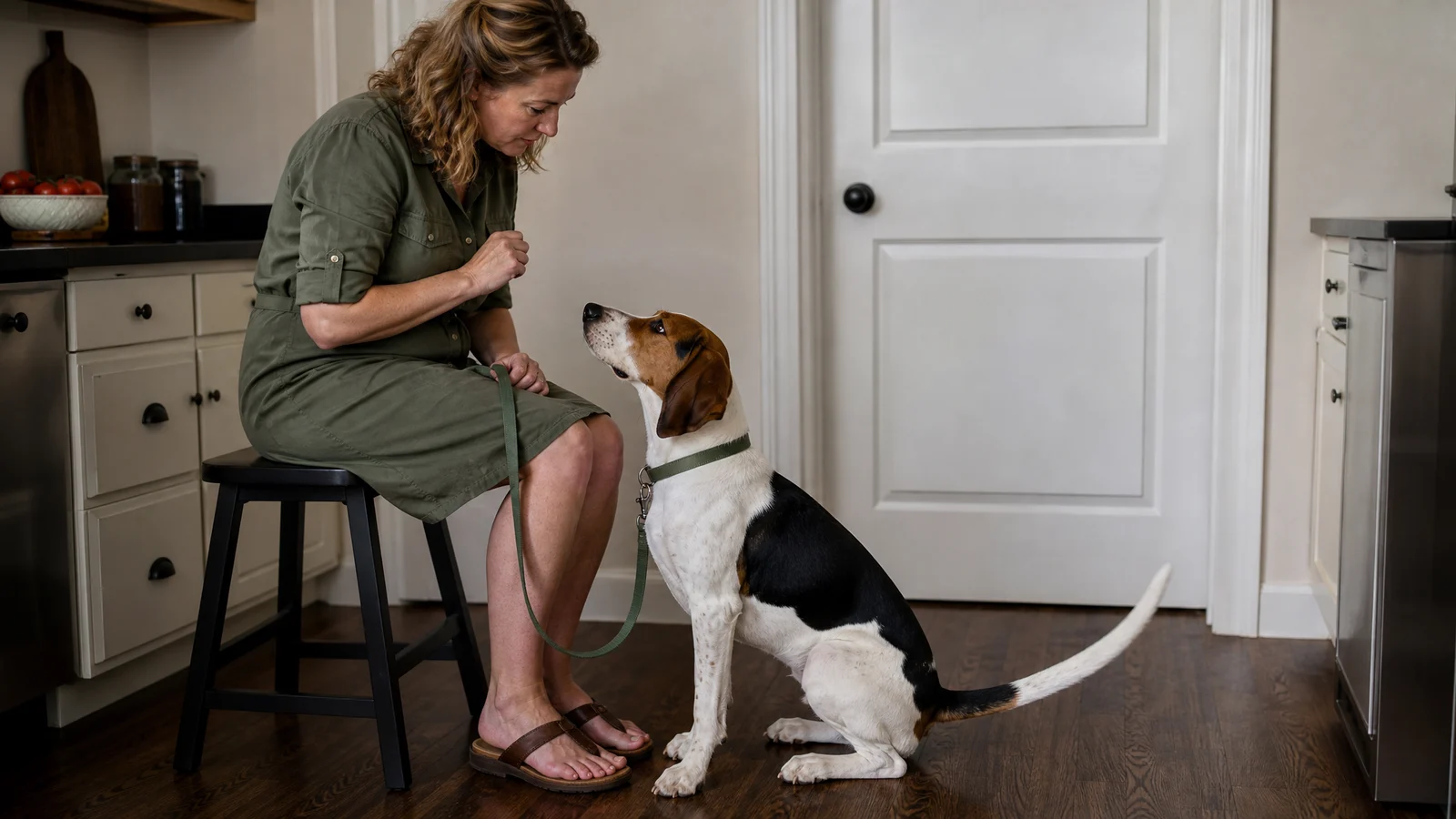
A lesson can look excellent until a delivery truck stops outside or a breeze carries a new smell past the door. Calling that change stubbornness hides the useful question. Which condition changed, and how much did it change what your Treeing Walker Coonhound could do? That question gives the next trial a practical direction.
Treat focus like a laboratory with adjustable dials. You will establish a control, change place, reward, movement, duration, scent, and recovery one at a time, then write the next fair trial. This article shows how to read attention without demanding stillness or blaming a dog for information the setup produced. The goal is a learner who can reconnect, not a dog who ignores the world.
The Treeing Walker Coonhound Focus Control
Begin in a familiar room after ordinary physical needs have been met. Put several small rewards away from view, stand quietly, and wait for your dog to orient. Mark the turn and pay. Repeat only enough to learn what a normal response looks like today. The control should feel almost ordinary to both participants.
We use the control to separate today's baseline from later changes. A control is the easiest version against which later trials are compared. Record whether the dog turns, how readily they take the reward, and whether they remain available afterward. Avoid counting seconds if that makes the session stiff. Use plain observations such as quick turn, slow chew, or left after payment.
The breed is described as intelligent and active, which means attention may be selective rather than absent. A dog can notice you and still decide another event pays better. That is a reason to improve the experiment, not to make the request more forceful. Selective attention still offers several useful starting points.
Reward-based structure supports this approach. Structure gives predictable cues, routines, and boundaries while rewards explain which choice works. It does not require fear or pain, and it does not mean the dog has no guidelines.
- Keep the first location familiar and quiet.
- Use one known cue or a voluntary check-in.
- Record eating, orientation, and return to the game.
- End while the control response is still easy.
Place Changes in the Treeing Walker Coonhound Focus Lab
Move the same exercise a few feet, into the next room, or nearer a closed door. Keep the cue, reward, and your posture unchanged. If the response alters, place is the active dial. Return to the control location before deciding the dog has forgotten anything. That comparison protects the meaning of the trial.
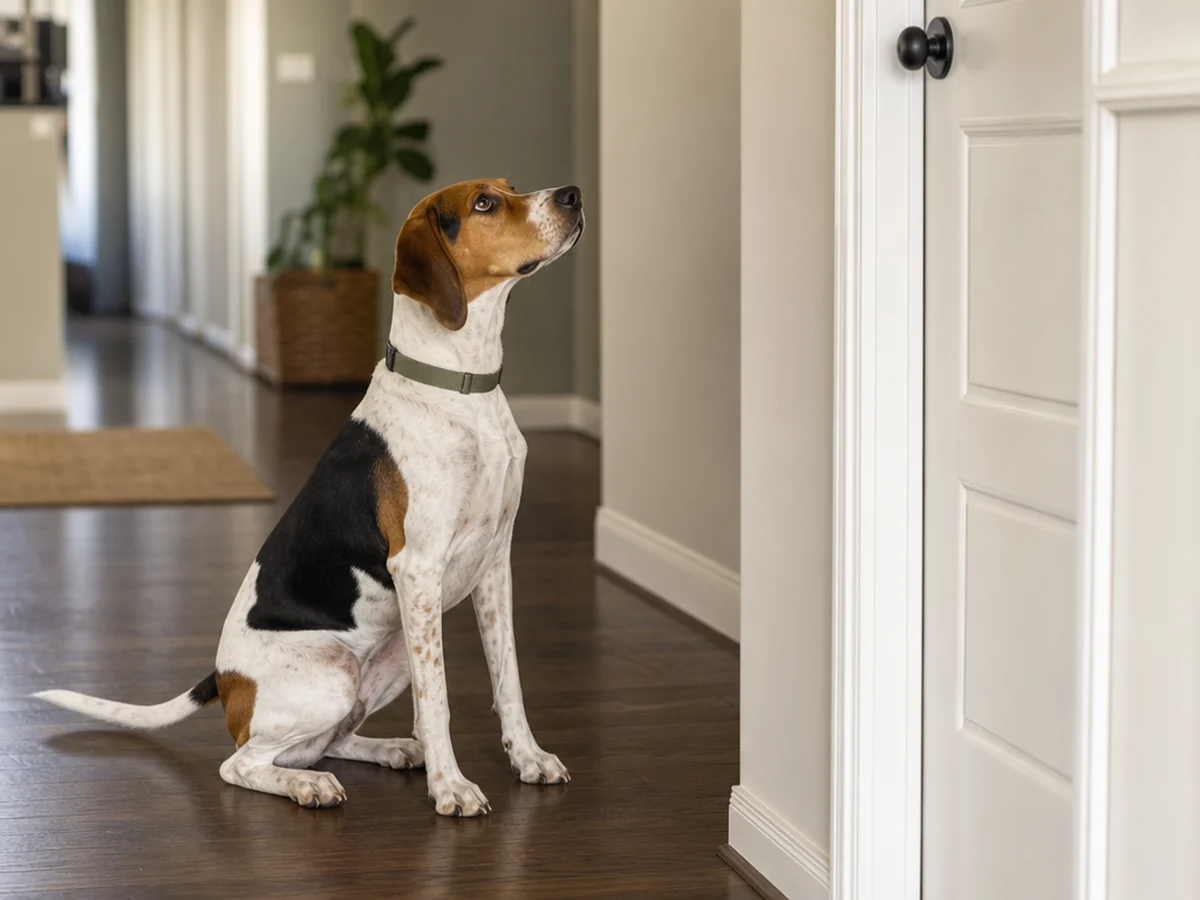
Rooms have histories. The kitchen predicts food, the hallway predicts departure, and the yard predicts scent. Those associations can add competition before an obvious distraction appears. A small shift in location may therefore be a large change from the dog's point of view.
Pay smaller pieces more often in the new place, then release your dog. If they reconnect readily, try another repetition. If they scan, stop eating, or move away, increase distance from the doorway or return to the quieter room.
- Change the room while keeping the cue easy.
- Restore distance when orientation becomes slow.
Keep the leash on in an unsecured outdoor place, but let it function as a safety line. Do not use it to arrange the dog's head or body. Focus grows when voluntary orientation earns something, not when physical restraint manufactures the picture.
Regular veterinary visits support good training decisions. Discuss any sudden, persistent change in attention, appetite, hearing response, or willingness to move with your veterinarian, because physical discomfort can change performance before the cause is obvious.
Run the control at different calm times before treating it as fixed. Morning energy, recent activity, hunger, and household traffic can alter participation even in the same room. Repeating the easy condition gives you a range, which is more honest than expecting one response to define the dog.
Reward Calibration for Training Focus
Return to the control room and compare rewards after the same easy check-in. Offer a familiar food on one turn and a different food, toy, or brief sniff opportunity on another. The comparison is fair only when the requested behavior and surrounding conditions remain similar.
Value includes what happens after payment. A chewy reward may interrupt rhythm. Fast food can keep a sequence moving, while a short toy exchange may raise arousal. A sniff release can be powerful outdoors, but it changes location and may take longer to return from.
The calm reward idea from the brief applies beyond vocal behavior. Rewarding naturally quiet, available moments teaches the dog that they need not create extra action to earn engagement.
Hide food before asking. If the dog watches the pouch rather than responding to the cue, mark an easy orientation and deliver from another pocket or a nearby container. The reward should follow behavior, not become a visible prompt that must remain in the picture.
Movement Enters the Treeing Walker Coonhound Focus Lab
Movement can sharpen interest or scatter it. Start with one step away after your dog orients, then mark when they follow. In another trial, move one hand slowly before asking for the same check-in. Do not add your motion and a moving family member together.
A hand target gives movement a destination. Offer an empty palm close to the muzzle, mark the touch, and pay from the other hand. Then place the target a little to one side. This lets the dog succeed through action rather than requiring prolonged eye contact.
Environmental motion needs more distance. Watch a person cross the far side of a room while you reward your hound for noticing and turning back. If the dog cannot disengage, increase space or block part of the view. Repetition at the same overwhelming distance does not build focus.
Use the site's Treeing Walker leash training workshop when motion becomes a walking question. Here, the lab asks only whether the dog can notice movement and return to a simple exchange.
Movement trials should include a neutral reset. Stand still, let the dog look around, and begin again only when their body softens and they can take a reward comfortably. Without a reset, excitement from one pass can carry into the next and make the dial appear harder than it is.
Duration Without Drilling for Training Focus
Duration is the time a dog remains in the learning exchange, not the time they stare at you. A hound who checks in, performs a target, sniffs briefly, and returns may show better functional attention than one who freezes because the reward is visible.
Build duration with varied intervals. Reward a brief pause, then a shorter one, then a slightly longer one. Predictable increases can turn each repetition into a harder test. Variation keeps easy wins inside the session and makes the next reward less mechanical.
Watch the quality of behavior as the session continues. Slower responses, rougher food taking, repeated guessing, wandering, or vocal frustration can signal that the useful learning window has closed. End or switch to a familiar success before attention collapses.
Several short sessions can occupy less total time than one long session and still produce more clean repetitions. The calendar may show many tiny experiments. That pattern suits a dog whose active mind benefits from novelty and clear endings.
Scent Enters the Focus Lab
Scent deserves its own dial because it can change the entire experiment without making a sound. Start far from the interesting patch and reward a glance back after your dog notices it. Then use a release word and allow safe investigation.
This sequence turns scent into part of the payment. Attention does not have to defeat the nose. It opens access to sniffing under safe conditions. That arrangement respects the breed's sensory strength while preserving a conversation with the handler.
If you want a separate outlet, qualified behavior support can help when focus changes are tied to fear or a broader behavior concern. For ordinary enrichment, simple food searches in open containers can provide a clear start and finish.
Do not test recall by unclipping the leash around compelling scent. A successful lab controls risk, and no focus exercise creates an off-leash guarantee. A secure enclosure or long line lets you study response without gambling on the result.
Scent intensity can change while location stays constant. Rain, wind, passing animals, and recent yard activity may alter the same patch. Record the dog's behavior rather than assuming yesterday's setting has the same difficulty today, and move back when their response says the dial rose.
Treeing Walker Coonhound Focus Recovery
Every useful experiment includes what happens after attention breaks. Let a mild distraction occur, wait for your dog to finish noticing it, then mark the first turn back. Recovery is a skill in its own right, and rewarding it prevents one interruption from ending the lesson.
If the dog does not return, change the setup rather than chanting the cue. Move farther away, reduce the view, choose a better reward, or return to the control room. The site's Treeing Walker leash training case conference can help separate a motivation mismatch from unclear criteria.
Recovery also includes the handler. Pause after a missed response, loosen your posture, and decide which dial to lower. Frustration often prompts people to change several things at once, producing a trial that teaches neither participant very much.
Record how the dog returned. A spontaneous glance, a hand target offered nearby, or a retreat to a quieter zone are different paths. Keep the one that preserved comfort and produced voluntary reengagement.
The Next Training Focus Trial
Read the lab notes for patterns. Perhaps place changes matter more than reward changes, or movement is easy until scent joins it. Choose the smallest uncertain point and design one trial around it. Keep every other dial at the last successful setting.
Write a concrete plan before beginning. For example, use the quiet yard, stand farther from the hedge, ask for one hand target, pay with food, and release to sniff. That sentence defines the conditions well enough to learn from the outcome.
The next trial should answer one question, not prove that your dog is focused. If they respond easily, increase one dial later. If they struggle, the result still helps because it locates the edge of the current skill.
Close the notebook after a clean exchange. Tomorrow's experiment can begin with the same control and one thoughtful change, giving your Treeing Walker Coonhound another fair way to show what they know.
 Training basicsLoose-Leash Walking for a Treeing Walker Coonhound
 Training basicsTreeing Walker Coonhound Recall Games for Scent
 BehaviorRedirecting a Treeing Walker Coonhound Who Fixates on Trees