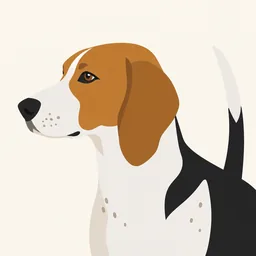
 Treeing Walker
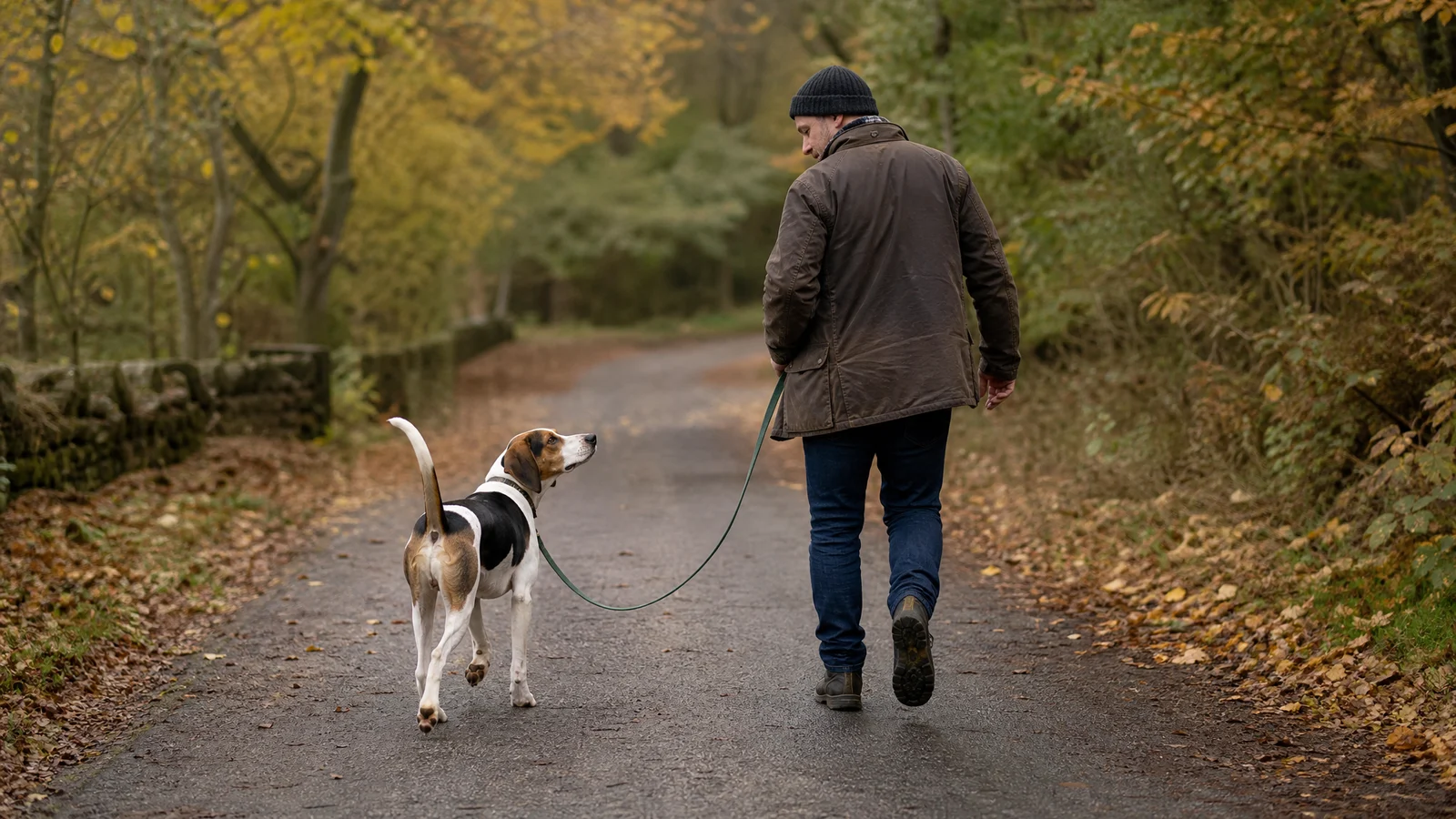
Place the walking equipment on one side of a workbench and sketch the route on the other. The gear manages safety, while training teaches the pattern between dog and handler. A well-fitted harness cannot teach a loose leash by itself, and a skilled dog still needs equipment suited to the setting. The workshop begins only after both pieces support the same safe plan.
A strong, fast Treeing Walker Coonhound can make small setup problems obvious. Scent may pull the route sideways, reward placement may pull the body ahead, and a crowded sidewalk may begin beyond the dog's current skill. Each issue has its own workshop bench. Workshop separation keeps those causes from becoming one vague pulling problem.
This article fits equipment, builds a reward position, uses sniffing as payment, prototypes routes, tests distractions, and repairs common failures. We keep the leash as a safety system and teach with rewards. The finished product is a practical route card, not a claim that every walk will look identical. Each bench changes one part while the others remain stable.
Leash Training Bench One Fits Treeing Walker Coonhound Equipment
Choose a comfortable harness that allows normal shoulder movement and stays secure when the dog turns or backs up. Check the fit according to its maker's directions. Attach a sturdy leash that you can hold without wrapping it around your hand. Comfort makes voluntary movement easier to observe.
Equipment should reduce risk without relying on discomfort. Reward-based structure combines clear boundaries with cues and reinforcers. In this workshop, the boundary is a secure connection and the teaching comes from marking loose movement. The equipment manages boundaries while rewards teach movement.
| Equipment check | What to observe | Workshop response |
|---|---|---|
| Harness fit | No rubbing, shifting, or easy backing out | Adjust or choose a better-fitting design |
| Leash handling | Hands stay relaxed with usable slack | Shorten only for safety, then restore slack |
| Reward access | Payment arrives without searching pockets | Prepare small rewards before the walk |
| Identification | Current tags and contact method are secure | Correct the setup before leaving |
Let the dog explore the equipment at home. Reward voluntary approaches, then brief contact, then wearing it for an easy indoor activity. If they avoid the harness or show discomfort, slow the process rather than turning dressing into a contest.
Keep regular veterinary visits and ask your veterinarian about new gait changes, skin irritation, sensitivity to equipment, or reluctance to walk. A fitting check can find a hardware problem, but it cannot rule out a physical cause.
Before leaving the equipment bench, rehearse clipping and unclipping in a quiet room. Reward the dog for standing comfortably while your hands approach, then release them to move. This small routine keeps the start of a walk from becoming a burst of wrestling, excitement, or avoidance.
Leash Training Bench Two Builds Position
Begin indoors with your dog near either side of your body. Mark when the leash forms a soft curve and deliver the reward beside your leg. Placement matters because food delivered ahead can manufacture the very forward position you are trying to change. This starting point keeps the first choice simple.
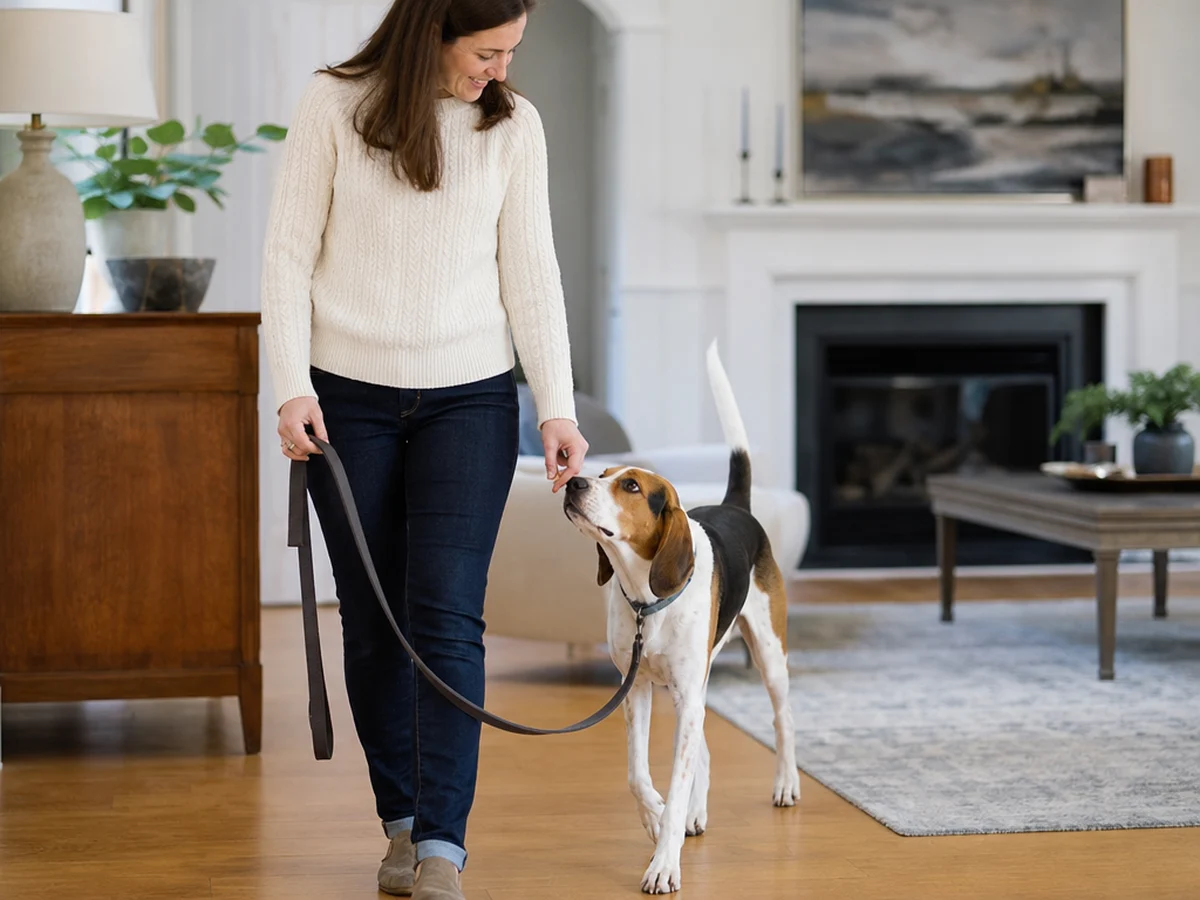
Take one step, mark soft leash movement, and pay at the chosen side. Pause before taking another step. The first product is not a long heel. It is a short exchange where connection makes movement and rewards continue. A pause gives both partners time to reset.
Change direction before tension develops. Invite the dog with your voice or an empty hand target, mark when they follow, and reward after the turn. The motion should feel readable, not like a surprise. Readable turns help the dog remain an active participant.
Walking nicely depends on teaching that a loose leash is the efficient route forward. That consequence becomes clearer when the handler can pause consistently and reward the return to slack.
Position is allowed to be practical rather than rigid. The dog may walk on either chosen side, and their head can move while the line stays soft. Mark the relationship between slack, body position, and forward travel instead of requiring constant eye contact during an ordinary neighborhood route.
Leash Training Bench Three Uses Sniff Payment
A scent-driven walk does not need to ban sniffing. Use it as a functional reward. After several loose steps or a check-in, say a release word and move with the dog toward a safe patch. The sequence makes connection the door to exploration. That arrangement lets the nose remain part of the walk rather than its opponent. The shared route can include both connection and investigation.
Structured scent searches can also give the nose a defined job away from the walking lesson. Open-box searches with food create a clear beginning and ending, which may help separate enrichment time from route practice.
Do not drag the dog away when sniff time ends. Give the walking cue, move a short distance invitingly, and reward the first return. If leaving is difficult, shorten the next sniff visit and choose a less intense patch.
Food and scent can share the payment plan. Food supports precise position close to your body, while sniffing rewards a larger sequence of connected steps. Observe which consequence produces a dog who returns ready for another exchange.
Bench Four Prototypes a Treeing Walker Coonhound Walking Route
Sketch a short loop with an easy opening, a quiet practice stretch, one sniff station, and an exit before the hardest corner. A prototype route should reveal what the dog can do, not expose them to every challenge in the neighborhood. Every segment should have a clear training job and an available retreat. A clear exit protects the lesson when conditions change.
| Route zone | Training job | Exit choice |
|---|---|---|
| Doorway | Pause, orient, and release | Return indoors if arousal is already high |
| Quiet stretch | Reward several loose steps | Turn into a driveway or wide space |
| Sniff station | Use environmental access as payment | Leave before fixation develops |
| Home approach | Finish with an easy check-in | Shorten the loop after a difficult trial |
Preview the loop alone when traffic, narrow sidewalks, or roaming animals make conditions uncertain. Identify places where you can create distance. Good route design reduces emergency handling and gives your hound room to make rewarded choices.
Use the site's Treeing Walker leash training map to keep route work connected to household attention skills. A hallway turn and doorway pause can warm up the same pattern before the outdoor prototype begins.
A prototype should include recovery space after its hardest point. Plan a quiet stretch where the dog can sniff, drink, or simply walk without new requests. Recovery prevents the route from stacking challenge upon challenge and lets you see whether attention returns once pressure falls.
Leash Training Bench Five Tests Distractions
Begin far enough from a distraction that your dog can notice it and still eat or turn back. Mark the glance, then reward the return toward you. Distance is a training tool, and increasing it early is more effective than waiting for the leash to become fully tight. Space keeps noticing from becoming full absorption.
Change only one variable. Approach a little closer while motion stays low, or keep your distance while a person moves across the scene. When distance, scent, and motion all rise together, a failure provides little useful information.
Read the dog's body before deciding to move closer. Soft muscles, comfortable food taking, and voluntary turns suggest that the current distance supports learning. A fixed stare, closed mouth, or inability to eat tells you to create space before asking for another loose-leash choice.
Repair Bay One Handles Forward Pulling
When tension reaches the line, pause the route and watch for a turn, step back, or shift that creates slack. Mark that reconnection and reward at your side. Then choose whether to continue, turn away, or release to sniff.
Pulling guidance in the brief emphasizes consistency and patience. The important contingency is that tension does not advance the route, while slack restarts useful movement.
If pulling returns immediately, the environment may be too difficult or the reward too weak. Increase distance and ask for fewer steps. Repeating the same stalled setup does not make the rule clearer.
Workshop records can stay simple. Note where tension began, what the dog was approaching, where the reward landed, and which exit restored slack. Those details reveal whether the next repair belongs at the equipment bench, the payment bench, or the route-design bench.
Treeing Walker Coonhound Leash Training Repair Bench
A dog who freezes may be worried, overwhelmed, or absorbed in information. Give them time and space rather than pulling them forward. Reward a voluntary glance or step, then consider retreating. Progress can mean leaving the situation comfortably.
A dog who zigzags may need planned sniff access and a shorter connected stretch. A handler who runs out of rewards may need better preparation, not a more obedient dog. Treat each failure as a specific wear point.
Repair Bay Two Fixes Handler Timing
Mark while the leash is loose, then reach for the reward. If your hand enters the pouch first, that movement may become the real cue. Practice the sequence indoors until marker, reach, and delivery remain distinct.
Deliver near the position you want repeated. Tossing food ahead can accelerate the dog, while feeding across your body can pull them into your path. Small placement changes have large effects on the next step.
The site's Treeing Walker leash training lab can help when attention changes unpredictably. Test place, reward, movement, and scent separately instead of altering every part of the workshop at once.
Bench Seven Sends the Treeing Walker Coonhound Route Home
Write one route card for the next walk. Name the quiet starting stretch, the reward position, the planned sniff station, and the place where you will turn away if the environment becomes too difficult. A written exit keeps the handler from improvising under pressure. The card turns workshop decisions into a repeatable plan.
- Check harness fit and identification before opening the door.
- Warm up with one easy orientation and a few indoor steps.
- Reward loose movement beside your body.
- Use the planned sniff station as payment.
- Take the easy exit while the dog can still recover.
Keep the leash attached in unsecured areas. Training improves communication, but it does not erase scent interest or create an off-leash guarantee. The site's Treeing Walker Coonhound recall games use the same safety principle.
After the walk, note one part that held together and one wear point. Modify only that point on the next route card. The workshop succeeds when equipment, payment, and route design help both ends of the leash repeat a calmer pattern.
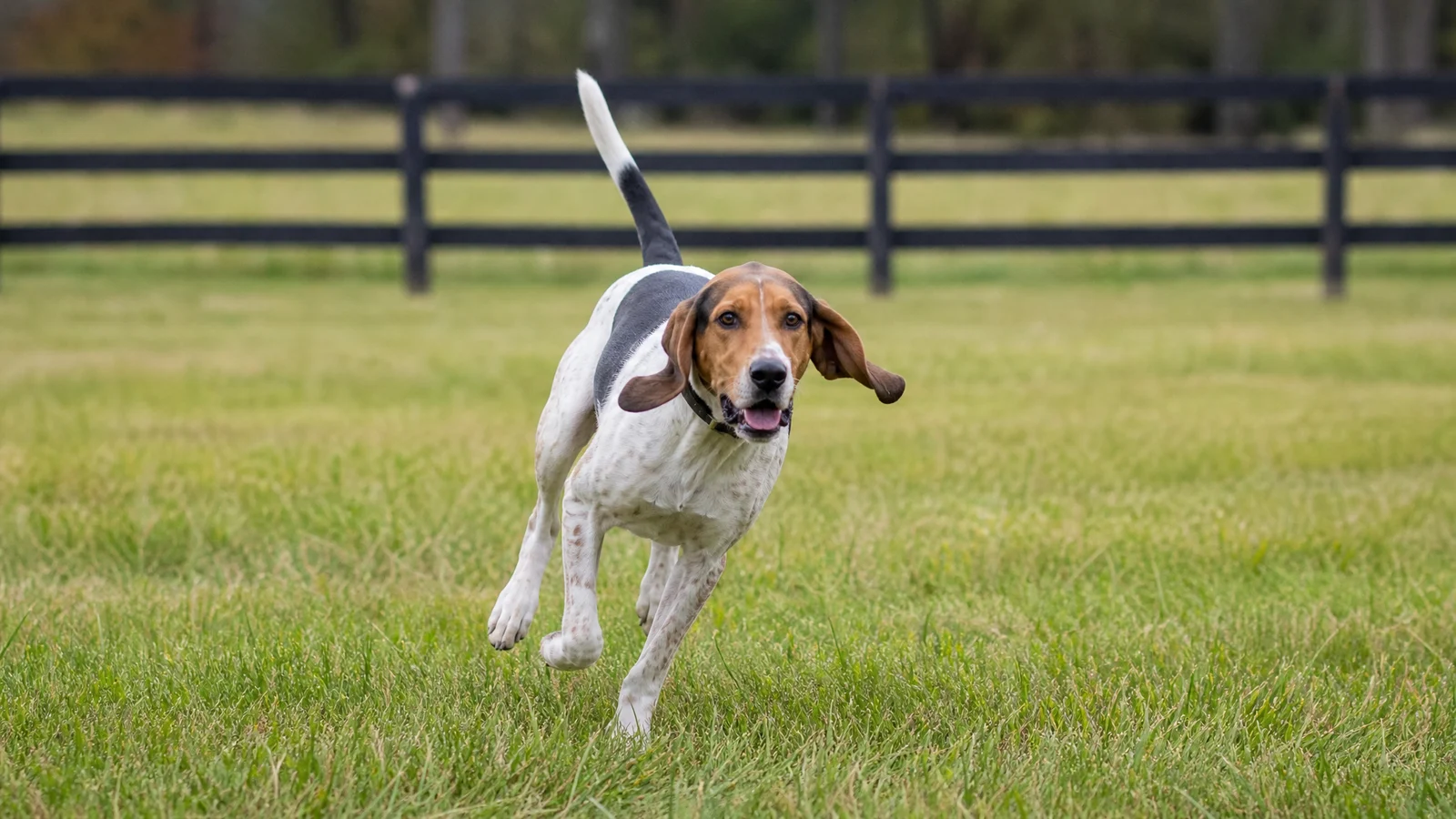 Training basicsTreeing Walker Coonhound Recall Games for Scent
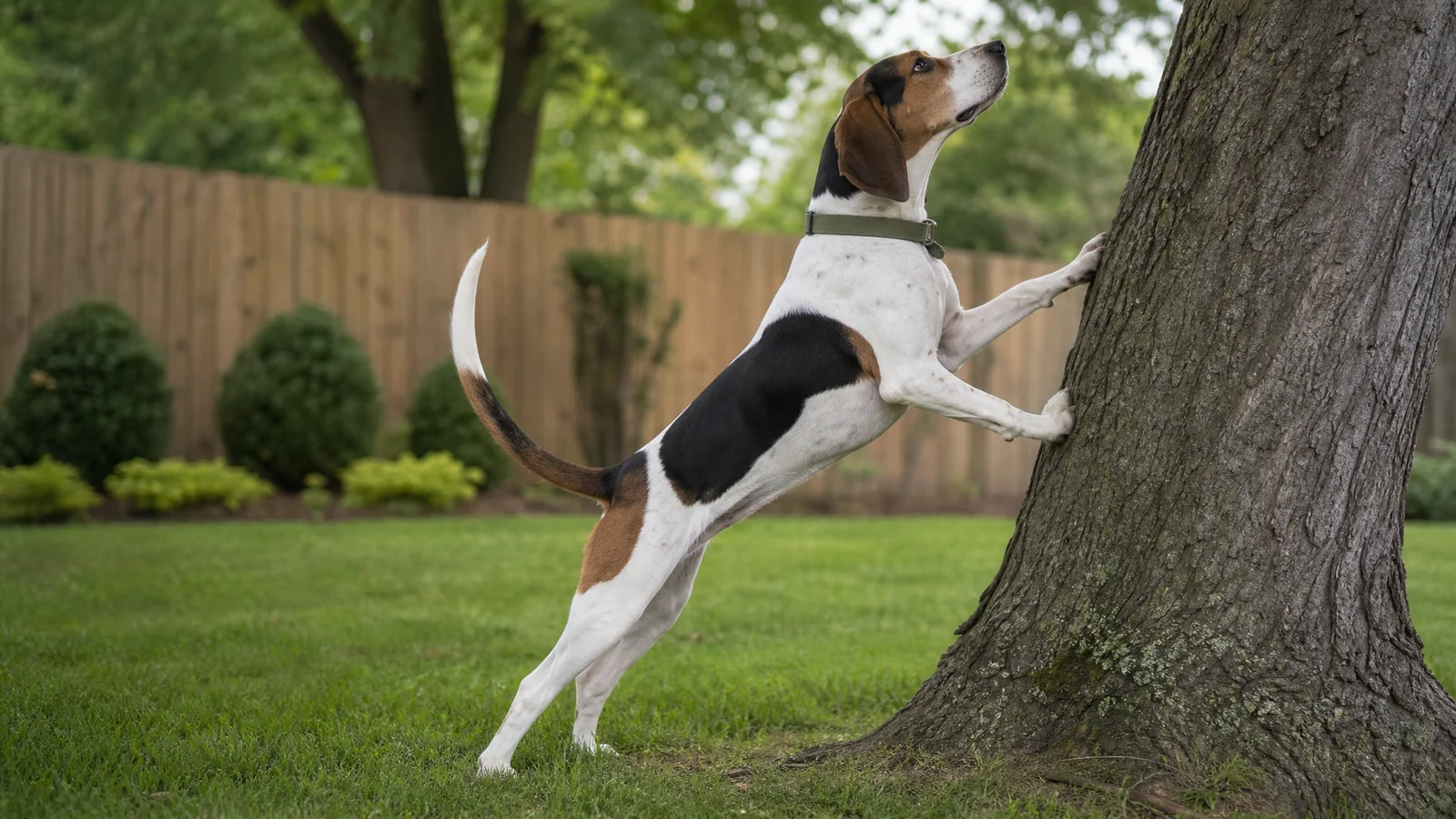 BehaviorRedirecting a Treeing Walker Coonhound Who Fixates on Trees
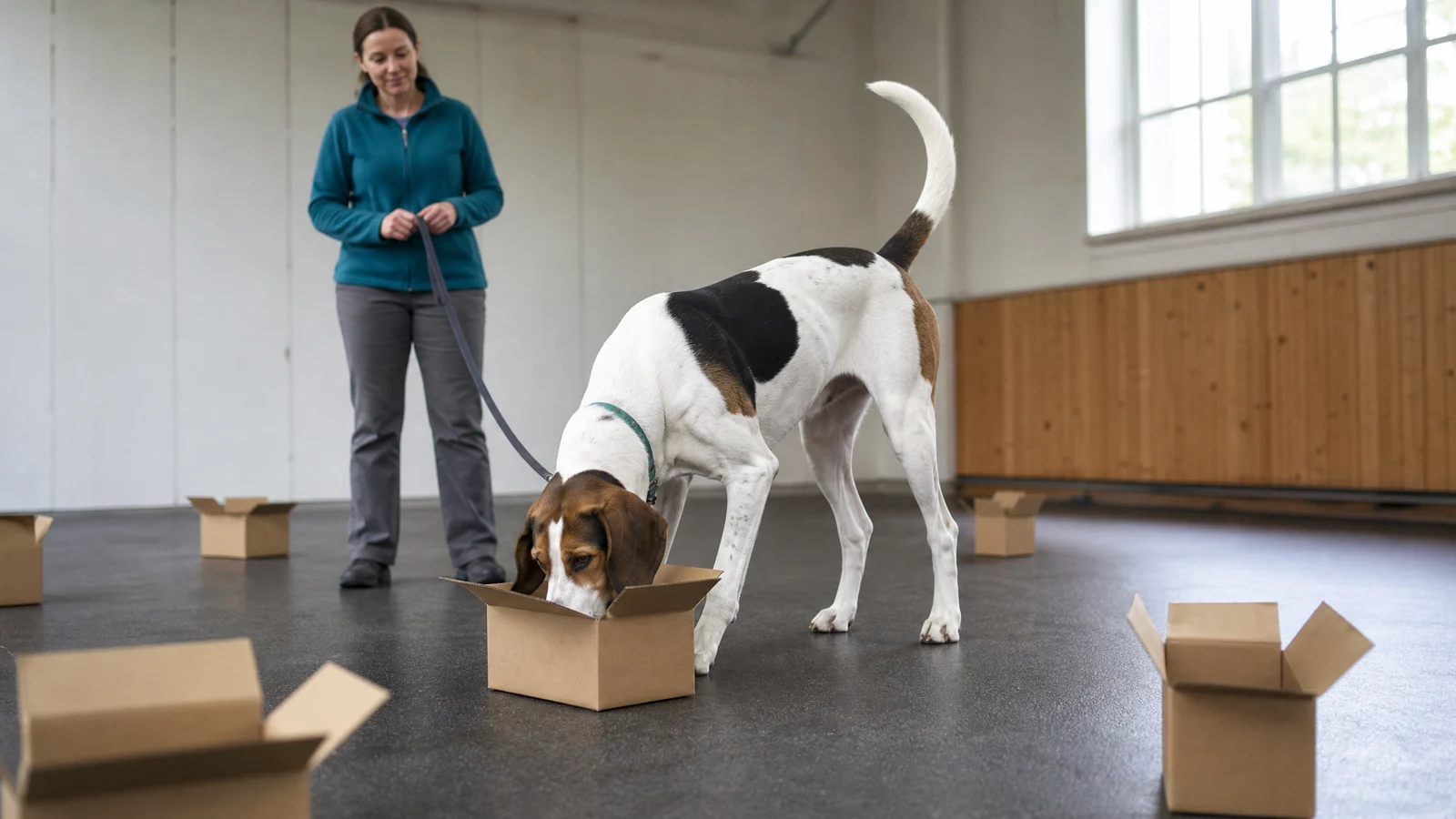 Exercise and jobsScent Games and Agility for a Treeing Walker Coonhound Who Needs Work