 Treeing Walker
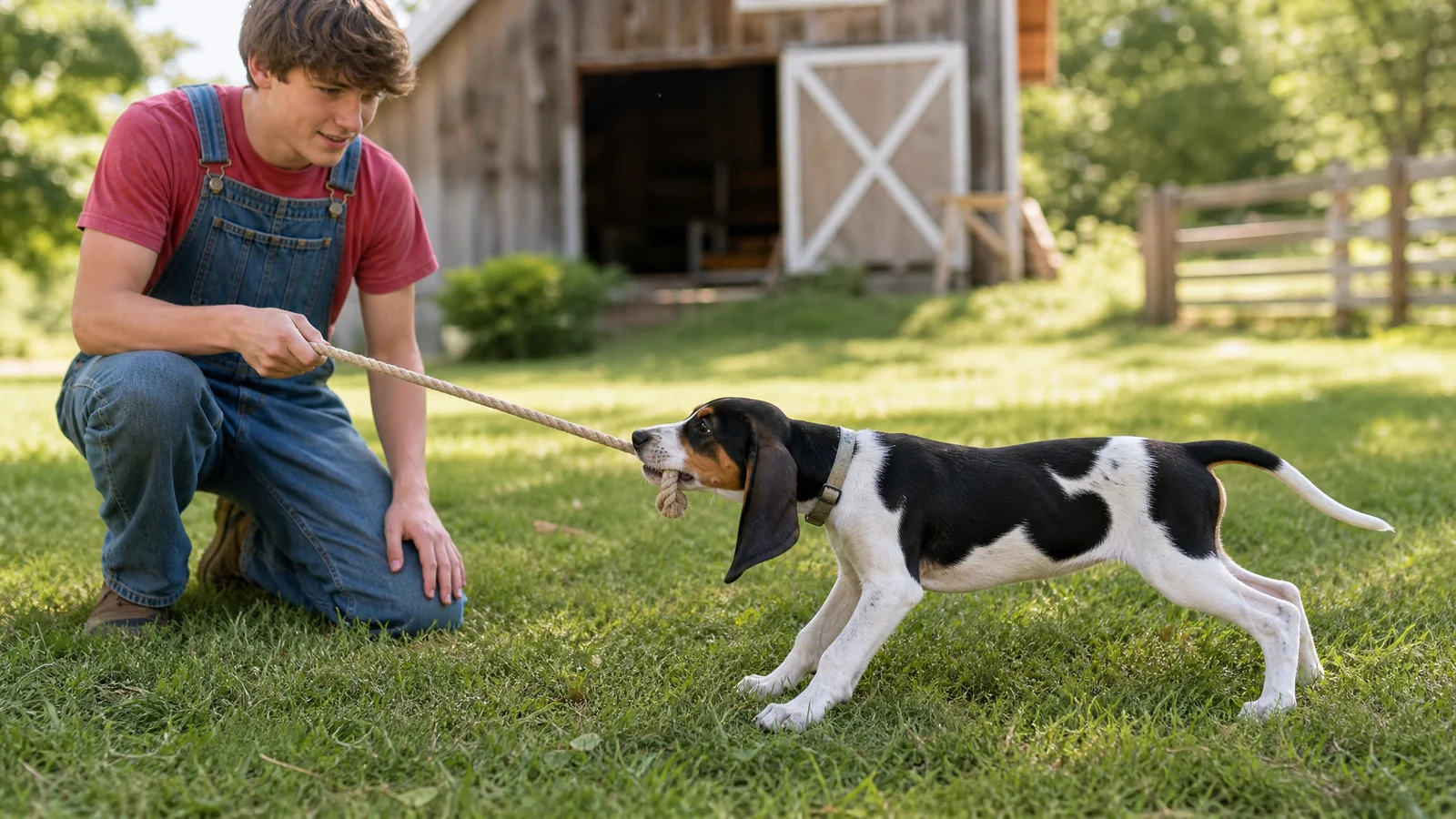
A mouthy Treeing Walker Coonhound puppy needs an intake before a technique. Record age, what happened immediately before the teeth arrived, how much pressure the puppy used, whether food or a toy could redirect them, and how quickly their body settled afterward. Teething, overtired play, frustration, handling discomfort, and a missing chew outlet can look similar from the end of a sleeve.
This guide sorts the common causes, stocks legal mouth jobs, teaches trades and brief play pauses, reviews age windows, and builds a clear two-week response plan. We aim for softer choices and faster recovery, not an overnight promise that a young puppy will stop exploring with their mouth.
Treeing Walker Coonhound Puppy Mouthing Triage
Normal puppy mouthing appears during play, exploration, and teething, but context still matters. A puppy who grabs moving sleeves after an active evening needs a different setup from a puppy who mouths whenever a sore paw is touched.
Look for patterns across several events rather than labeling one bite. Time of day, sleep, meals, exercise, visitors, handling, and the object targeted can reveal what the puppy was trying to obtain or escape.
The ASPCA puppy guide describes mouthing as normal and recommends brief withdrawal after a hard bite so gentle play continues while painful play pauses. That response works best when the puppy also has legal objects and enough rest.
Seek professional guidance promptly for bites that break skin, repeated stiff or guarded behavior, sudden escalation, or mouthing tied to pain or fear. Keep children out of the training role. An adult should control the environment and decide when play resumes.
Make the intake easy to repeat. Use a short note with context, pressure, redirect, and recovery rather than a long diary nobody maintains. Several comparable notes reveal whether the puppy is improving across the same kind of event.
Four Treeing Walker Coonhound Puppy Mouth Cases
Use the first clear cause to choose the first response. Several causes can overlap, especially late in the day. The purpose of triage is not a perfect explanation. It is a safer next move than repeating the same redirect in every situation.
The Tired Puppy
The puppy becomes faster, grabs clothing, and returns immediately after each redirect. Their movements may look frantic rather than playful. End social play, guide them to a quiet puppy-safe area, and offer a familiar settle routine.
Do not add a vigorous game to wear them out. More movement can raise arousal further. A calm transition, bathroom opportunity, and protected rest may solve what extra training cannot.
Move the rest period earlier on the next similar day. Preventing the overtired burst is more informative than interrupting it repeatedly. If the puppy wakes calmer and mouths less, the schedule change has answered part of the intake.
The Teething Puppy
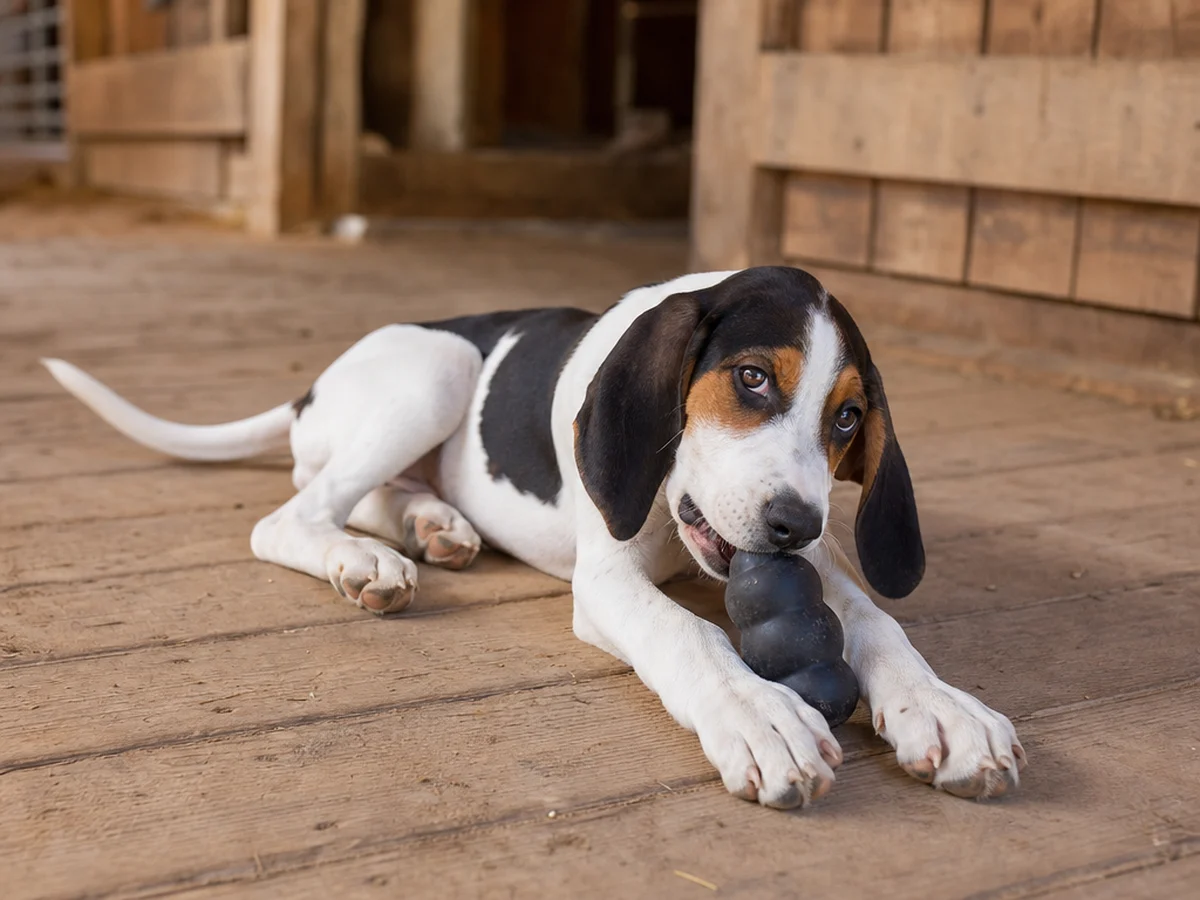
Chewing is broad and persistent, with the puppy seeking different textures. Offer puppy-safe items appropriate for chewing and supervise their use. Rotate texture and temperature rather than presenting every toy at once.
The PDSA chewing guide notes that chewing is natural and can increase when a dog lacks suitable activity. Keep valuable household objects out of reach while the legal choices gain history.
The Play-Chasing Puppy
Hands, pant legs, and shoelaces move like invitations. Freeze the moving target, present a toy at ground level, and restart play only when teeth remain on the toy. Tug can be structured without making human skin part of the game.
Use larger toys that create space between teeth and hands. Keep sessions short and finish with a calmer chew or scatter before the puppy loses control. The ending should be part of the game, not an abrupt disappearance after biting.
The Handling Puppy
Mouthing during paw, collar, ear, or body contact may ask for distance. Stop the contact and note the exact location and movement. Later, rebuild the handling in very small touch-and-reward steps while the puppy remains comfortable.
Do not hold the muzzle or continue touching until the puppy gives up. Regular vet visits matter, and sudden sensitivity or a painful body area should be discussed with the veterinary team before treating it as a manners problem.
Rehearse consent outside necessary care. Present a hand, touch briefly at an easy location, reward, and pause. The puppy should be able to move away. Comfort with shoulder contact does not automatically transfer to feet, ears, or collar handling.
Legal Mouth Jobs in Puppy Training
Place legal objects where mouthing actually happens. A toy stored in a distant closet cannot compete with a sleeve in the hallway. Keep supervised options near the sofa, entry, play area, and puppy rest space.
- A long tug toy for chase and social play
- A durable chew suited to the puppy's size and chewing style
- A food toy prepared before the busiest household period
- A soft carry toy for arrivals and transitions
Inspect items often and remove anything damaged or small enough to swallow. Suitability depends on the individual puppy, so supervise each object instead of treating a pet-store label as a safety guarantee.
Match the object to the cause. A tired puppy may need rest instead of another chew. A play-chasing puppy may need a long toy. A puppy who grabbed a forbidden object needs a trade. One overflowing toy basket does not replace this choice.
Teach a simple carry route with a soft toy during calm moments. The puppy picks it up, follows a few steps, and receives another round of play. That small job can later bridge exciting arrivals or hallway movement without placing clothing in the puppy's mouth.
Brief nose games can help meet the need for a job, but puppy bodies and attention still need rest. Hide a few pieces of food in an easy supervised search, then finish while the puppy remains organized. Stimulation and recovery belong in the same plan.
Reserve one special object for the hardest daily period. Bringing it out before the usual sleeve-grabbing time can shift the puppy onto a legal target early. Put it away after the session so it retains value.
Trade Games and Play Pauses for Puppy Training
Teach trades with low-stakes objects before the puppy finds something dangerous. Offer an item they like, present a valuable reward, and let the puppy release voluntarily. Mark the release, deliver payment, and often return the safe object.
Humane World's chewing advice recommends exchanging unsafe finds for an approved chew or food reward, then adding a give cue later. Returning safe items keeps human approach from always predicting loss.
For hard mouthing during play, become still and quiet, then step out of reach briefly if the setup allows. Return with a legal toy when the puppy is ready. The pause should be short enough to connect with the pressure, while the restart shows what makes play continue.
Reward gentle contact too. A puppy who takes food softly, carries a toy past clothing, or releases pressure when movement stops is showing useful control. Mark those small decisions instead of waiting only for perfect sessions.
Everyone should use the same rule. If one person wrestles with bare hands while another pauses at skin contact, the puppy receives conflicting information. Family consistency matters more than dramatic reactions.
Practice the trade and play pause separately. Trades handle objects, while pauses handle pressure on people. Combining them every time can teach the puppy that biting skin makes food appear.
Restart with a toy moving away from the puppy. This channels chase onto the legal object instead of a hand. End after several soft successes.
Age Windows for a Treeing Walker Coonhound Puppy
Age changes the likely mix of causes, but it does not create a deadline for perfect behavior. The puppy's sleep, teething, learning history, and daily routine matter alongside the calendar.
- Early weeks at home
- Exploration, transition stress, and missing sleep often overlap. Build routines, supervise closely, and make legal objects easy to find.
- Active teething months
- Chewing needs may rise and texture preferences can change. Protect household items and rotate appropriate supervised options.
- Adolescent stretch
- Strength, speed, and excitement increase even when the puppy knows the rule. Restore management and reward the softer choices you want to keep.
The site's Treeing Walker puppy training timeline covers the wider adolescent shift. This mouthing plan uses age only to interpret the intake. It does not turn every behavior change into a stage the household must simply endure.
Track pressure and recovery rather than counting every touch of teeth. A puppy who redirects sooner, uses less force, and settles faster is learning even if mouthing still appears during difficult periods.
Compare the same window from week to week. An early-evening puppy may still mouth more than they do after breakfast, but pressure should soften and recovery should improve within that familiar context. Fair comparison keeps normal variation from hiding progress.
Keep one familiar legal object available during each comparison. Changing the toy, room, people, and schedule together can make a better evening impossible to interpret. Stable conditions reveal whether the puppy's control is actually growing.
A Two-Week Puppy Training Response Plan
Choose one response for each common context and prepare the environment before the next event. A plan written after the household is calm is easier to follow than a new decision made while a puppy hangs from clothing.
- Record the first three daily mouthing contexts without provoking them.
- Place the matching legal object or rest route near each location.
- Practice several easy trades with safe objects.
- Use the same brief play pause for painful pressure.
- Review sleep, activity, handling, pressure, and recovery at the end of each day.
During the second week, change only the weakest context. Add a calmer greeting, an earlier rest period, or a better-placed toy rather than making every rule harder. Keep children separated from high-arousal puppy play and have adults manage trades.
Keep the successful contexts easy while repairing the weak one. If morning play is gentle, do not lengthen it merely because evening clothing grabs remain difficult. Stable successes give the household a clear model of the response they want.
The AKC standard describes an active, intelligent breed with a desire to perform. Give that energy a clear mouth job and a predictable off-ramp. Success after two weeks is softer pressure, quicker redirection, and faster recovery, which are the foundations of the gentle adult behavior the household wants.
 Puppy trainingBaby Treeing Walker Coonhound Teen Training: Stubborn Months
 BehaviorTeaching a Treeing Walker Coonhound Calm Manners Around Kids and Dogs
 Training basicsHow to Keep a Treeing Walker Coonhound Focused