 Treeing Walker
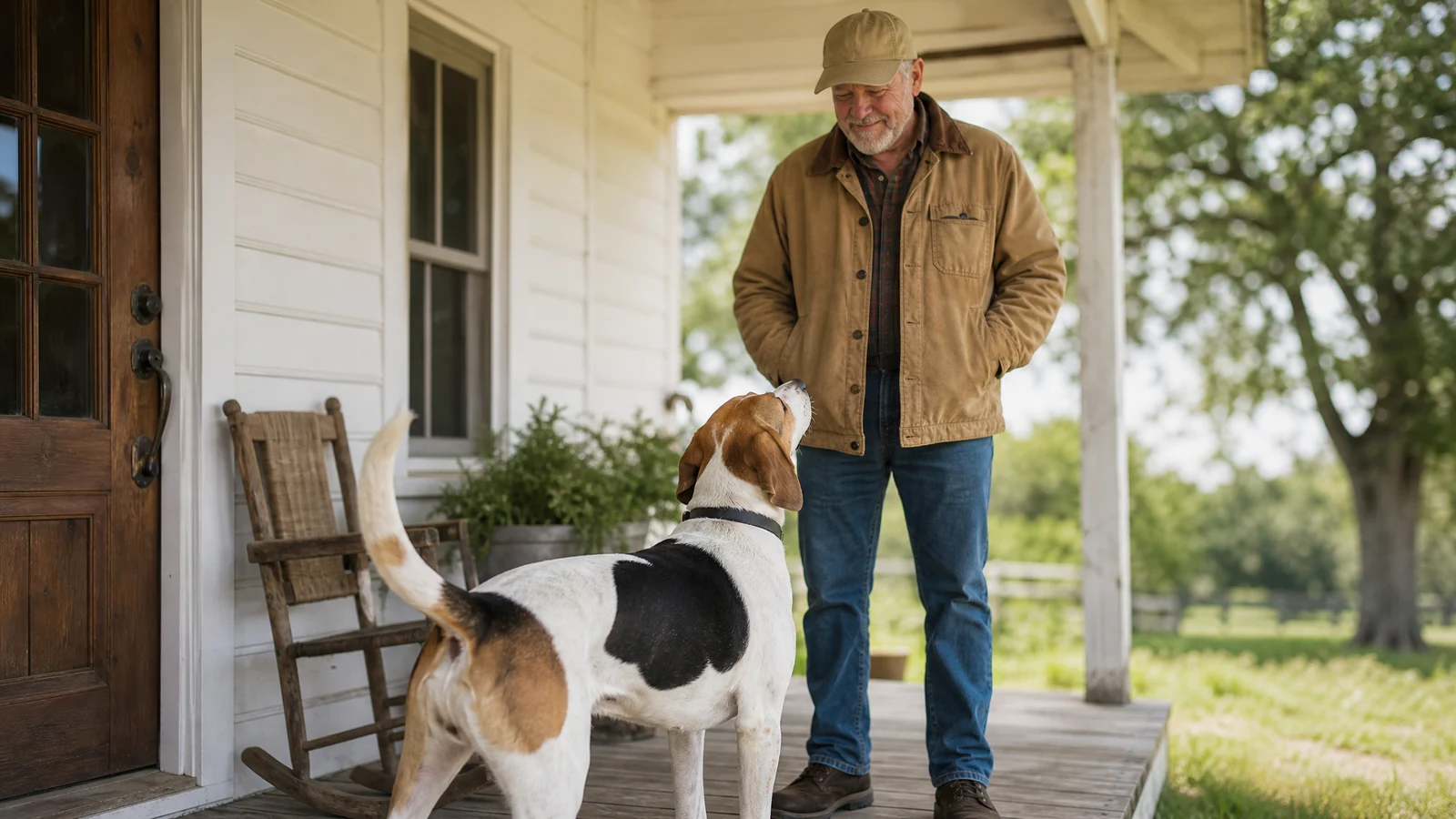
Friendly greetings from a Treeing Walker Coonhound can still land at chest height. The intention may be social, but the impact is real. A polite greeting needs a planned arrival rather than a shouted cue after paws are already on a person.
We organize the doorway like a small production. One handler manages the dog, one visitor follows a simple cue sheet, and one grounded behavior earns the hello. Nobody improvises by bending, pushing, or exciting the dog.
This guide casts the roles, rehearses before a knock, runs the arrival in timed beats, adapts for vulnerable guests, repairs human mistakes, and closes with a two-week schedule. The dog learns that four paws down make people approach.
Cast Treeing Walker Coonhound Jumping on Guests
Assign roles before opening the door. The handler holds the leash or controls the barrier, the visitor supplies movement and attention only on cue, and another adult watches the path when available. Children do not hold the leash during rehearsal.
- Handler
- Controls distance, marks grounded choices, and ends the greeting before excitement outruns the plan.
- Visitor
- Waits, approaches in small steps, and pauses without talking when paws leave the floor.
- Observer
- Watches footing, door position, and body language, then calls a reset if either participant needs space.
The visitor's attention is part of the reward. Eye contact, speech, touch, and forward movement can all pay jumping. Decide which one will arrive first so the dog is not flooded with every social reward at once.
The AKC breed standard describes an alert, active, courteous hound. Courtesy at the door is a trained pattern, not a trait that appears automatically when a sociable dog becomes excited.
Set a starting mark several feet from the door and keep the travel lane clear. A dog who begins directly under the handle has little room to make a different choice. Distance gives the handler time to reward before the visitor reaches chest range.
The Grounded Role
Choose one behavior the dog can perform without strain. Standing with four paws down, touching a hand target, or moving to a mat can all work. Repeated sits are not required if standing is easier during excitement.
Deliver food low and close to the handler so the dog's head does not rise toward the visitor. Release the dog from a station before they abandon it. Clear beginnings and endings keep the role from becoming an indefinite stay.
Practice the grounded role with the visitor absent and the handler moving normally. The dog should be able to stand, target, or settle while a person picks up keys, crosses the entry, and returns. Familiar household motion makes the later social scene easier to read.
The Visitor's One-Line Brief
Tell the visitor: “Please pause when paws rise and step forward when they stay down.” That sentence gives the person an observable rule. It avoids a long explanation while someone waits outside.
Humane World's jumping guide uses the same consequence in helper practice, with the approaching person turning away if the dog leaves a sit. Here, the visitor pauses or retreats, and the next approach begins from a more workable mark.
Send the brief before the visit when possible. A willing helper can rehearse their own movement in the hallway without the dog present. Human practice prevents the visitor from forgetting the rule when a friendly hound appears.
Rehearse Jumping on Guests Before the Knock
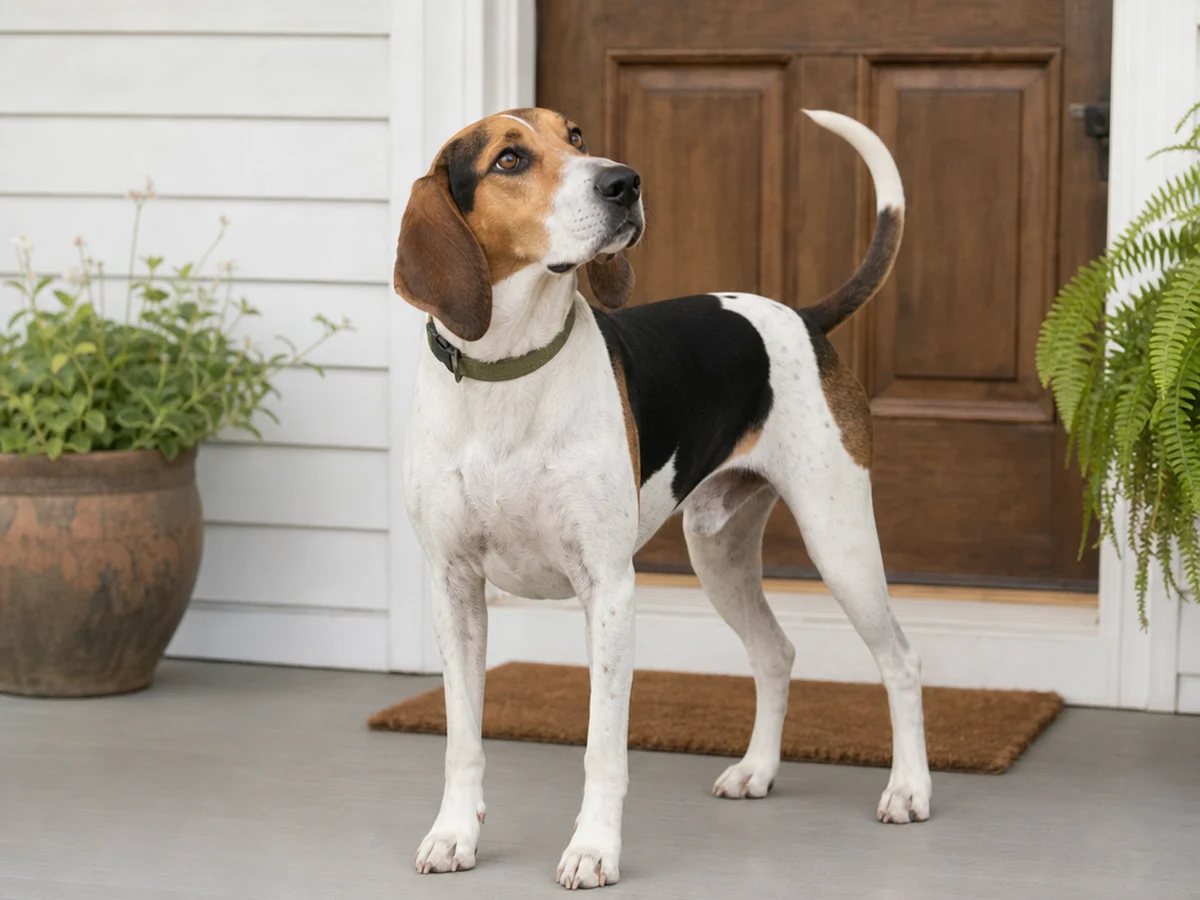
Practice the pieces without a guest. The dog hears a soft knock, travels with the handler to the starting point, and earns rewards for the grounded role. The exterior door remains closed during early sound rehearsals.
- Rewards placed at the handler's starting mark
- Leash or barrier ready before any door sound
- Visitor instructions sent before the rehearsal
- A quiet exit room available if the dog needs a break
Door Sounds Without a Person
Separate the knock, latch, opening, voice, and entering body. Play or create one mild sound, reward recovery, and return to ordinary activity. Several easy sound sessions are more useful than one realistic arrival that overwhelms the setup.
If barking is the main issue, use the site's Treeing Walker barking guide rather than turning the greeting rehearsal into a second quiet-cue article. The doorway plan begins after the dog can reorient to the handler.
Vary the volume and location of the sound gradually. A knock on an interior wall may be easier than the real doorbell, while a voice through the door may be harder than either. Record recovery before increasing realism.
Family Approaches Without Entry
A resident walks toward the dog, pauses, and steps away. The handler pays grounded behavior. Change speed, angle, and voice separately so the dog learns that different human movement still follows the same floor rule.
Stop before enthusiasm grows. A short successful exchange teaches more than a long greeting in which everyone gradually abandons the plan. The dog's recovery between approaches is part of the skill.
Add common visitor objects separately. An empty bag, coat, hat, or umbrella can change the dog's response. The family member carries one neutral item while preserving the same approach rule, then removes it before another feature changes.
Run the Treeing Walker Coonhound Guest Arrival
Begin with a calm helper who has read the one-line brief. Secure the exterior door area with a leash or interior gate, prepare rewards, and place the dog far enough back to stay grounded. The visitor waits outside until the handler confirms the setup.
Arrival cue sheet: knock, handler moves the dog to the starting point, visitor enters sideways, grounded paws earn one step, lifted paws pause the visitor, and a release ends the greeting.
Beat One Opens the Door
The visitor opens the door only after the handler is ready. They enter without reaching over the dog and stand at the agreed mark. The handler rewards a grounded choice before asking for any additional behavior.
If the dog jumps, the visitor becomes still or steps back while the handler restores a workable distance. The leash prevents contact but should remain comfortable. The next beat begins only when the dog can think and eat again.
End the arrival if repeated attempts grow harder. The visitor can enter while the dog rests in the exit room, and practice can resume on another day. Real hospitality does not require using every guest as a training session.
Beat Two Brings the Visitor Closer
The visitor takes one step. Grounded paws make another step possible, while jumping pauses movement. The dog controls the person's approach through a clear, safe behavior.
Keep speech quiet until movement is easy. A high voice may be more difficult than a step. Add the hello as its own feature instead of assuming words and touch are harmless.
Approach on a slight curve if a straight path raises excitement. The visitor's final mark should leave room for the dog to turn back toward the handler. A narrow face-to-face lane can trap everyone in the greeting.
Beat Three Decides on Contact
Contact is optional. If the dog stays loose and seeks interaction, the visitor can offer a brief touch at chest or shoulder level, then stop. The handler calls the dog away for another reward before excitement builds.
A dog who chooses the mat or watches from behind a gate can complete the arrival without greeting. Polite visitor behavior includes declining contact. The site's Treeing Walker socializing guide supports broader calm family routines.
After contact, give the dog a defined next job. They may return to the handler, settle with an activity, or rest behind the barrier while the visitor sits down. Without a handoff, the dog may keep jumping to restart a greeting that never clearly ended.
A Two-Week Jumping on Guests Cue Sheet
Adapt the casting for safety. Children stand outside the route while an adult manages the dog. A guest with balance concerns should be seated before the dog enters. The visitor role can be reduced to still presence while the handler rewards floor-level choices.
Use comfortable equipment and stable footing. The PDSA leash guide recommends a harness to help protect the neck for dogs who pull. Fit and handling matter because the leash is backup during a social exercise, not the way the dog is placed.
Rehearse departures as a separate scene. A guest who stands suddenly, picks up a bag, and moves toward the door may restart jumping. The handler returns the dog to the starting mark before the visitor gathers belongings.
Repair the Human Script
When jumping returns, review what the people did first. Someone may have bent over, spoken early, carried exciting bags, or continued walking after paws rose. Change that cue before demanding more from the dog.
Track which visitor, movement, and time of day made the greeting harder. The site's Treeing Walker puppy training article explains why adolescence can temporarily weaken familiar habits. Restore distance and payment instead of treating a setback as defiance.
Watch for patterns in human attention. A favorite guest may talk continuously, while another crouches or pats their chest. The dog is not inconsistent when different people create different cue sheets. Align the people before changing the dog's job.
| Practice days | Human scene | Dog's paid job |
|---|---|---|
| Early sessions | Door sounds and family approaches | Find the starting point and stay grounded |
| Middle sessions | One calm helper enters and pauses | Hold the floor rule through one step |
| Later sessions | Helper adds speech, then brief contact | Return to the handler between greetings |
| Review session | Repeat the hardest successful scene | Finish before jumping returns |
Keep the Treeing Walker Coonhound Guest Cue Sheet
Keep regular vet visits and mention sudden changes in balance, movement, arousal, or social behavior. A dog who becomes newly frantic, reluctant to sit, or sensitive to contact may need a health review alongside a simpler greeting plan.
Save the cue sheet near the entry and review it before planned company. Note the visitor movement that was hardest and the distance that restored success. The next helper should repeat that known scene before adding novelty.
For the next two weeks, cast calm helpers rather than surprising the dog with real guests. Preserve the same starting mark, visitor pause, and end-of-greeting handoff until the sequence looks ordinary. When every person follows one cue sheet, four paws down become the dependable way a Treeing Walker Coonhound brings the visitor closer.
 Puppy trainingTrade Games and Chews for a Mouthy Treeing Walker Coonhound Pup
 Puppy trainingBaby Treeing Walker Coonhound Teen Training: Stubborn Months
 BehaviorTeaching a Treeing Walker Coonhound Calm Manners Around Kids and Dogs