 Treeing Walker
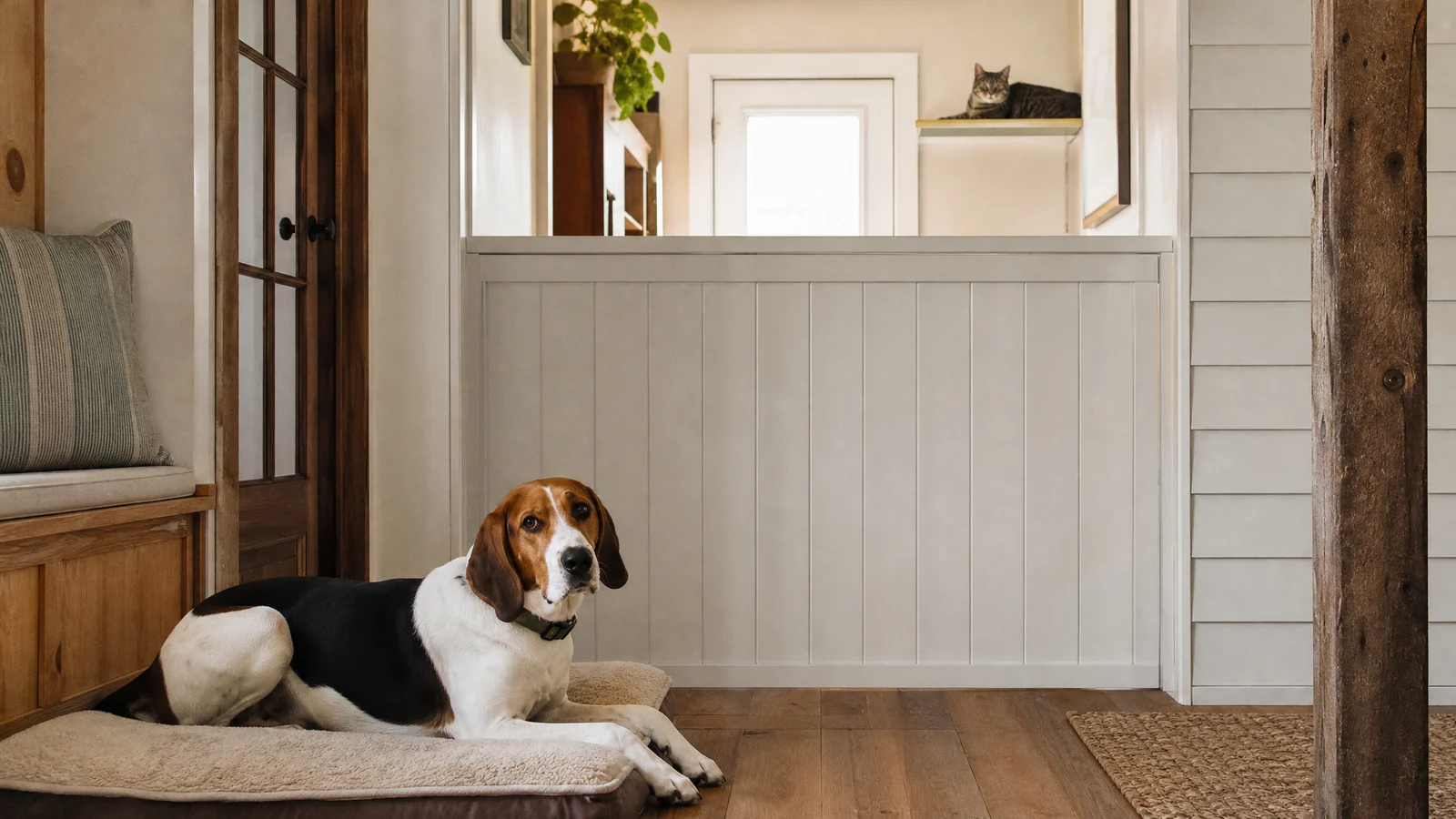
One Treeing Walker Coonhound may nap while a familiar cat crosses the room, while another becomes intensely still at the first flick of a tail. Both dogs can be social with people and dogs. Neither response gives the household permission to skip a careful small-animal plan.
Prey drive is about the pull of movement, scent, and pursuit, not whether the hound is friendly. A greeting that looks calm for thirty seconds can change when a cat runs, a rabbit kicks, or a gate opens. The safest goal is durable coexistence under management, not a promised friendship.
We use a species-safety charter because some dogs learn to relax around a resident cat and still remain unsafe around outdoor cats, rodents, birds, or an unfamiliar pet. This guide builds that charter through protected routes, staged sightings behind barriers, paid disengagement, and permanent supervision rules based on what both animals actually show.
A Treeing Walker Coonhound Small-Animal Safety Charter
Write the rules before the animals share space. Decisions made during a chase are late and emotional. A charter gives every person the same default when a door is left open, a visitor brings a dog, or the cat chooses an unexpected route.
- The small animal always has a dog-free room with food, water, rest, and litter or housing.
- Barriers are secured before the hound enters a shared area.
- No child is responsible for holding the leash or deciding when contact is safe.
- Unsupervised access is never used as a test of progress.
Include what ends a session. Fixed staring, stalking, whining that builds, lunging, frantic barrier work, or refusal of familiar food means the dog needs more distance. Hissing, hiding, freezing, swatting, or abandoning normal routes means the cat or other animal also needs relief.
Do not punish either animal for communicating. A growl, hiss, or retreat is information that protects space. Suppressing the signal without changing distance can leave the concern in place while making the next warning harder to see.
The official AKC breed standard describes an alert, intelligent, active hound with endurance and a strong desire to perform. Those qualities can support training, but they also mean a moving animal may remain interesting for a long time. The charter accounts for the working dog instead of relying on sociability alone.
The AVSAB statement supports reward-based methods for behavior work. In a multi-species home, humane training includes physical management because a cue should never be the only layer protecting a smaller animal.
Write an emergency rule as well. If a barrier fails, the handler calmly guides the hound into a separate room or secured area while another adult checks the smaller animal. Chasing the dog, shouting, or reaching between animals can add confusion and place people at risk.
Leash Training Starts With a Cat-Safe House Map
Draw the rooms and traffic routes before arranging a sighting. Mark doors that can close, gates the cat can cross but the dog cannot, high resting areas, narrow hallways, and places where either animal could become trapped. The map should reveal at least two escape options for the smaller animal.
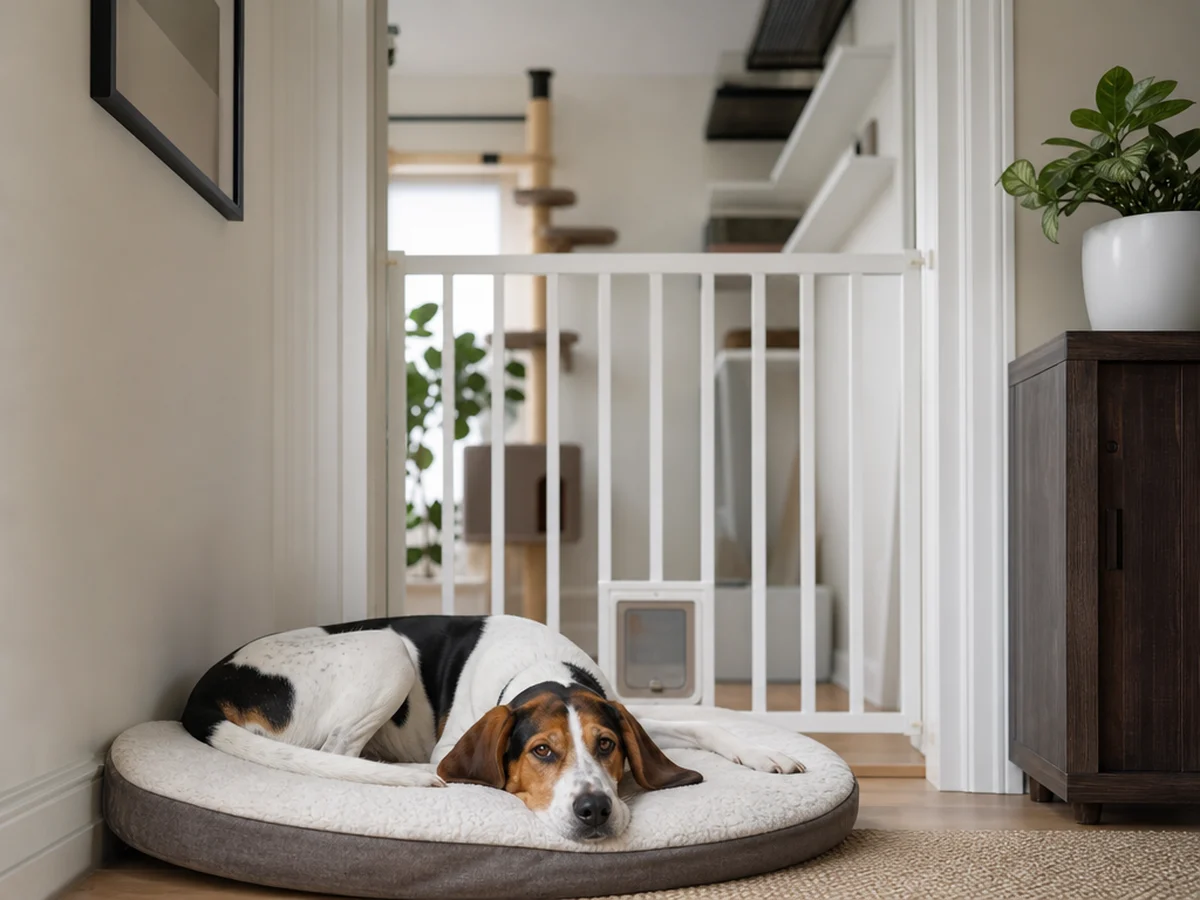
The Cat's Protected Route
A cat needs a route that does not require passing the hound. Vertical space can help, but a shelf above a dog is not automatically safe if the cat must jump down into the dog's path. Connect high areas to a dog-free room whenever possible.
Place essential resources away from the shared training zone. A cat should not have to cross a rehearsal to reach food or litter. Normal eating, grooming, resting, and litter use are part of the safety evidence.
The Hound's Working Route
Give the dog a wide path that curves past the barrier rather than aiming directly at it. Use secure footing and enough space for the handler to move away without pulling the dog backward. The leash is a safety connector, not a tool for forcing proximity.
Set a reward station where the dog's body faces away from the smaller animal. Payment in that location makes the full turn visible. A treat delivered while the hound continues staring can feed the dog without changing the behavior that matters.
Practice the route with the cat elsewhere. Walk in, orient to the handler, travel to the station, and leave. The sequence should feel ordinary before the most interesting living thing in the house appears behind a barrier.
Add a voluntary retreat cue to this route. The ASPCA guidance on dogs and babies recommends teaching a rewarded go-away behavior so a dog can leave pressure instead of feeling trapped. In this setting, the same clearly taught movement gives the hound an easy exit from the viewing area.
The Human Handoff Route
Assign one adult to the dog and another to observe the smaller animal during early sessions. The observer can end the setup before the handler notices a tucked posture, a blocked exit, or a cat who has stopped taking food.
Use a spoken handoff when doors change state. “Cat room secure” or “dog behind gate” may sound formal, but it prevents assumptions between residents. Quiet systems protect animals better than everyone believing someone else checked.
Treeing Walker Coonhound Leash Training Across a Barrier
Begin with scent and sound before a face-to-face view if either animal is new to the home. Bedding or a cloth carrying ordinary scent can be placed at a distance and paired with food, play, or relaxation. Remove it if either animal becomes tense or avoids the area.
When the Treeing Walker Coonhound Can Still Think
For the first visual session, use a secure barrier and enough distance for the dog to eat, respond to a familiar hand target, and turn away. A loose body and brief glances are more useful than a forced sit held under pressure.
Mark the first voluntary disengagement. The dog may glance back to the handler, lower the nose to sniff, soften the body, or choose the reward station. Pay that choice, then leave before curiosity becomes fixation.
Keep the smaller animal free to retreat. Do not hold a cat, cage an animal in the center of the room, or carry a pet toward the dog. Choice and distance make the observation truthful.
Vary only one feature in a later session. The cat might take one step, the viewing gap might widen, or the hound might begin slightly closer. Changing movement, distance, duration, and barrier position together makes it impossible to identify what caused a harder response.
When Either Animal Needs the Exit
End the session if the hound leans forward and stops hearing, repeatedly hits the end of the leash, chatters, trembles, or tracks every small movement. More food at the same distance is not always the answer. Close the view and restore the protected routes.
Also stop when the cat crouches, flattens the ears, hides, or cannot resume normal behavior. The dog's calm appearance does not override the other animal's experience. Coexistence is a two-animal outcome.
After an exit, wait for ordinary behavior in separate spaces. Do not immediately reopen the barrier to prove the session can end better. The next rehearsal starts farther away, with a smaller view, or after professional guidance.
Leash Training Changes With the Small Animal
“Small pets” is not one training category. Species move, smell, rest, and defend themselves differently. The household charter should reflect those differences instead of treating success with one resident cat as proof of safety everywhere.
Resident Cats
A resident cat offers repeated, predictable observations, but familiarity can hide risk. Watch what happens when the cat runs, jumps down, plays, or appears unexpectedly after dark. Calm beside a sleeping cat is only one part of the picture.
The site's Treeing Walker socializing guide covers broad calm behavior around family life. Cat work remains more conservative because a chase can injure the smaller animal even when the hound began with playful intent.
Feeding both animals on opposite sides of a closed door may help build a calm association when each remains comfortable, but bowls should begin well away from the door. Move them only when eating and body language stay ordinary. Food does not make close exposure safe when either animal is too tense to eat.
Rabbits, Rodents, and Birds
Caged or enclosed animals need a dog-free room, not merely stronger wire. A hound can frighten an animal through staring, pawing, baying, or circling even without direct contact. Housing should not become the barrier used for training.
Do not arrange nose-to-cage greetings. Work on calm movement outside the closed room and reward the dog for passing the door without stopping. For many households, permanent separation is the responsible long-term plan.
Outdoor Cats and Wildlife
Outdoor movement belongs to leash management and recall practice, not the resident-cat relationship. Keep the dog attached in unsecured areas and increase distance from a running animal. A familiar cat at home does not generalize safety to wildlife.
The Treeing Walker leash training article addresses fixation around squirrels and trees. Use that controlled-distance work outside while preserving the house charter inside. The two plans support each other but answer different risks.
Install visual barriers where the dog rehearses charging windows or fences. Repeated pursuit behind glass can keep arousal high even though contact never occurs. A quieter view gives the household better opportunities to reward orientation back to people.
A Long-Term Leash Training Review for Family Pets
Review progress by ordinary life, not by how close the animals can be made to stand. A useful plan produces easier disengagement, softer bodies, normal cat routes, fewer barrier rehearsals, and quicker recovery after surprise movement.
- Check whether every barrier and protected room still works as intended.
- Compare the dog's response to stillness, walking, running, and unexpected appearances.
- Confirm that the smaller animal still eats, rests, plays, and travels normally.
- Keep the strictest rule for any context that remains uncertain.
- Seek a qualified reward-based professional before reducing management around persistent fixation.
A trainer can help arrange controlled observation without gambling with a pet's safety. Sudden changes in pursuit, irritability, or tolerance also belong in regular veterinary care, especially when a previously settled household becomes tense.
Long-term success may mean supervised shared rooms in some homes and permanent separation in others. It does not require cuddling, play, or unrestricted access. Expect the Treeing Walker Coonhound to keep noticing movement, maintain the cat or small animal's protected routes, and let repeated calm choices earn carefully managed freedom without ever turning the smaller pet into the test.
 Training basicsTreeing Walker Coonhounds and the Open Gate: Teaching a Wait
 BehaviorTreeing Walker Coonhounds Who Reach the Counter: Management First
 BehaviorWelcoming Guests With a Treeing Walker Coonhound Who Keeps Paws Down