 Treeing Walker
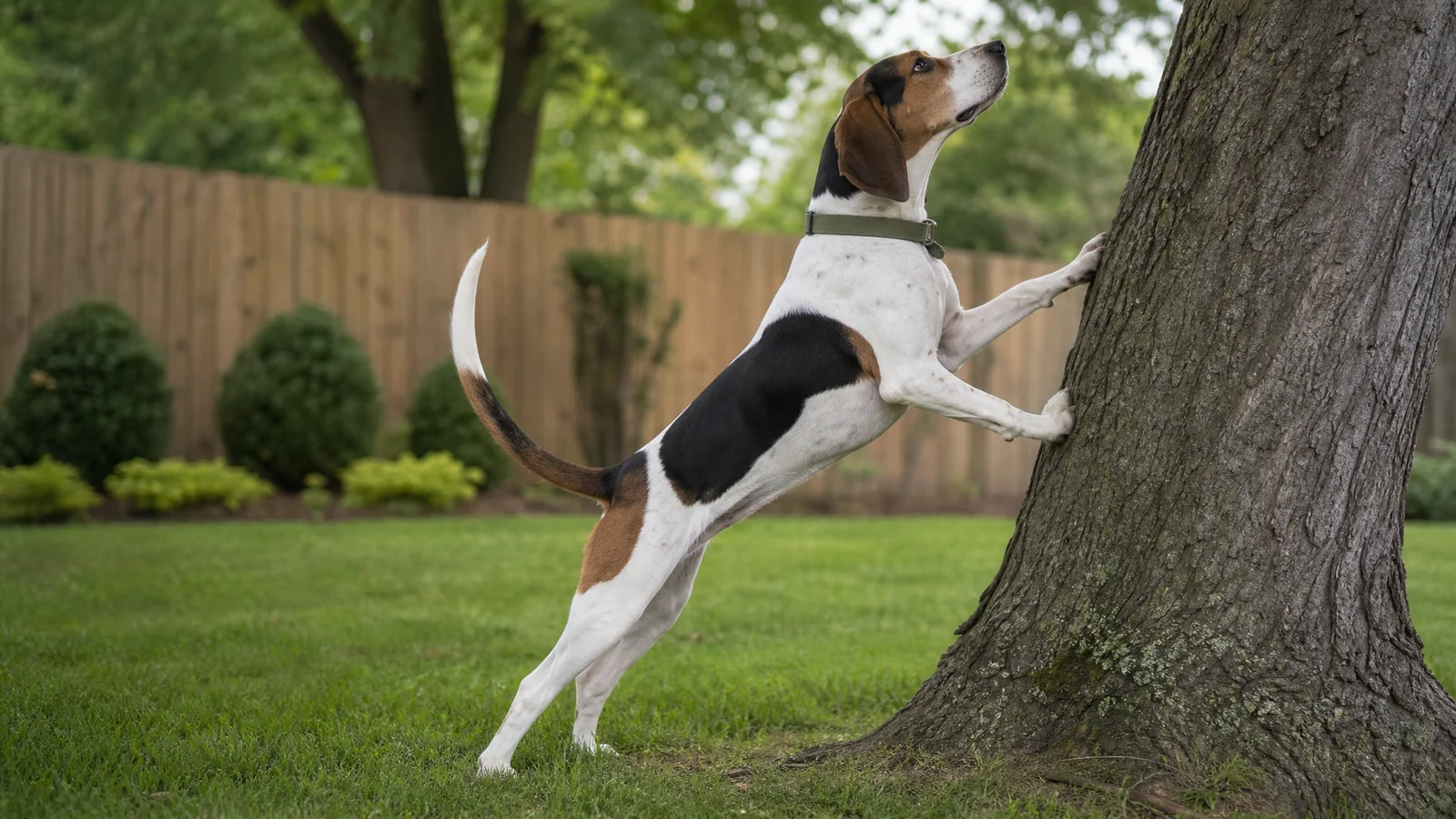
Two Treeing Walker Coonhound owners walk past the same yard oak. One hound strolls by on a loose leash and glances up at their person, while the other lunges, bays and throws both front paws against the trunk. The breed drive is the same in both dogs, and the gap is mostly in the leash work.
Some owners report scent trouble in adolescence, around 7 months, when a young hound locks onto a scent and recall can fail completely. Handled badly, every squirrel becomes a daily rehearsal of fixation. Handled well, you get a hound who checks in with you even with a squirrel overhead.
This guide covers leash training around trees and squirrels, starting with the instincts behind the fixation. It then works through four households: a family with young children, a small apartment, a house with two hounds, and an owner who is away at work all day.
Treeing Walker Coonhound Tree Drive
The Treeing Walker was developed to track wild raccoons and tree them, and the breed standard calls the dog perfectly suited to that task. Walkers are runners who cover a lot of ground in a hurry, and they carry a very high prey drive. That is why the breed belongs on a leash for walks, since a hound may be unable to resist an interesting scent.
We have trained this breed for many years, and our position is simple. A hound who goes deaf at a trunk is not defying you, they are doing the work that generations of selection asked for. Your job is to make staying with you worth more than the tree, and the two parts of the problem need different fixes.
The Trigger Is the Squirrel
The trigger is whatever sets the drive off: a squirrel's dash, fresh scent at a trunk, a rustle in the canopy. You cannot remove these from a neighborhood, so the plan is never to eliminate squirrels. The plan is to control how close your hound gets and to pay them for choices they make near the trigger.
Food shapes the picture too. Many owners find their hound's attention rides on food being visible or expected, so learning is quick while a treat is around and thin when it is not. Rewards therefore need to be varied and faded gradually, with praise, play and sniff breaks mixed in.
The Habit You Actually Train
The habit is what the hound learns to do about the trigger: jump at the trunk, bay, pull nose-down and ignore you. Each repeat strengthens the loop, because the chase feels good in its own right. A leash keeps the habit from being rehearsed while a new one forms.
Once a young hound is locked onto a scent, calling louder does not compete with it. Plan around that with a leash or long line, a secure yard, and rewarded check-ins practiced where scent is light. Our guide to training a Treeing Walker through the stubborn months covers why adolescence is the time to build these habits early.
Apartment Leash Training
This case file belongs to an owner in a small space, with a shared courtyard or a few street trees and no private yard. The upside is that every outing is on a leash anyway, so you get dozens of small chances a week to practice. The aim is short, successful exits rather than long walks that end in a lunge.
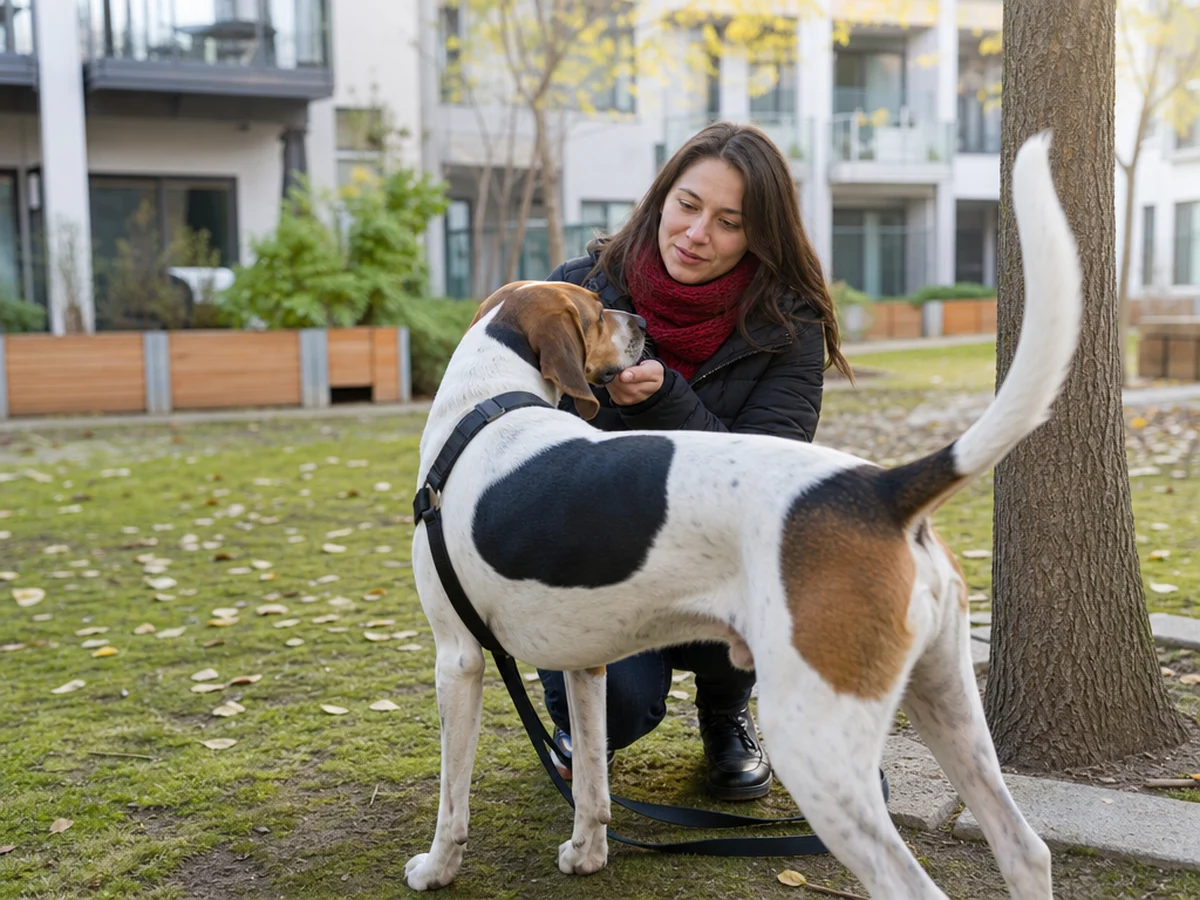
Start with the doorway, because the hallway and entrance are where excitement begins. Ask for a hand target before the door opens, reward it, and walk out only while the leash is slack. If the leash tightens, pause and wait for slack before moving again.
Choosing the Approach Distance
Every hound has a distance from the tree where they can still take a treat and answer their name. Past that line they are too stimulated to learn, so find it on a calm day and stay on the near side. Test with a soft name call and a treat at nose level. If your hound turns, you are working under the line, and if they stare through you, step back before trying again.
Courtyards are tight, so pick one tree and one approach path and use them repeatedly. Repetition at a comfortable distance teaches more than variety does.
Rewarding the Look Away
Common advice says to start with eye contact. With a very food-driven hound this often backfires, because they lock onto the treat instead of you and then check out when no treat is in sight. Hand targets, name response and nose games are a steadier foundation, and a game like hiding treats in boxes makes scent something you share. Work in this order:
- Teach the hand target indoors and mark the instant the nose touches your palm.
- Add name response by saying the name once, marking the head turn and delivering the treat at your side.
- Practice both in the hallway and then at the courtyard door.
- Walk toward the tree to the edge of your distance line and wait.
- Mark and reward the first glance away from the trunk, then move off before the hound relocks.
Kids and Leash Training
This case file is a home with young children who want to help walk the dog. A strong, scent-driven hound and a small child holding the handle is a recipe for a child being hauled toward a squirrel. The fix is clear roles for the family, not a ban on helping.
Give everyone a job that fits their size. The adult holds the leash whenever trees, squirrels or other dogs are in view. Children can be treat givers, spotters or the person who calls the hound's name from a few steps ahead, all of which build the hound's habit of looking to the family.
- An adult holds the handle in the yard and on every walk, and children walk beside the adult rather than behind the hound.
- A child may hold the leash only on a quiet stretch with no trees nearby, with the adult standing right there.
- Children hand over treats from a flat palm after the hound has looked at them, so the family becomes a source of rewards.
- The spotter job is to say squirrel quietly the moment one appears, which tells the adult to stop and add distance.
Handoffs deserve their own practice. Stop walking, ask for a hand target, reward it, and only then pass the leash while the hound is paying attention to the person receiving it. A rushed handoff in the middle of a pull teaches the hound that tension is normal.
Keep sessions short and upbeat, since children tire faster than hounds do. For the household side of this, including greetings and indoor manners, see our guide to calm manners around kids.
Two Hounds, One Leash Plan
This case file is a two-dog house where one hound's fixation excites the other. The second dog does not need a reason of their own, because bays, lunges and stiff bodies are contagious. Walking them together too soon turns every tree into a group event.
Begin by walking them separately. Do the early leash work with each hound alone so the fixated one practices without an audience and the calmer one is not pulled into the excitement. Expect to give each dog their own short session at the same tree, using the same distance rules described earlier.
Bringing Them Together
Once each hound can pass the tree calmly alone, walk them together with one handler per dog if you can. Start far from the tree and stay on flat ground, and reward both hounds for loose leashes before you add any trigger. If the second hound starts to bay or pull, add distance and restart, because the group has gone past its line.
Reward each hound in turn rather than at once, and stop the session while both are still doing well. Over time you can close the gap between the dogs and the tree a little at a time.
Keeping Cues Distinct
Two hounds sharing one set of cues will answer each other's. Use each dog's name first and give each their own hand target side, so the cue is clearly meant for one dog. A different marker word for each hound also helps, since it stops one dog from being paid for the other's success.
Treat delivery should match too. Reward the hound who did the behavior and nobody else, and keep their rewards on a different side so neither learns to crowd the other.
Treeing Walker Coonhound Workdays
This case file is an owner who is out most of the day and has only mornings and evenings. With few leash sessions to work with, each one has to count, and the yard cannot become a place where the hound rehearses fixation alone. Most Treeing Walkers appreciate long daily walks at a minimum, and a bored hound with a window onto a squirrel tree will make a job of it.
Plan the morning for nose work and the evening for the pass-by practice. A sniffy walk on a long line in an open area lets the drive out before you leave, while the short tree session takes place when you have time and patience. Common advice says to just tire the dog out, but a tired hound still has a nose, so add a short rewarded session to every walk.
Making Few Sessions Count
Plan the weekday around three small blocks, and keep each one focused:
- Morning: a sniffing walk, then a short hand-target and name-response warm-up before you leave.
- Evening: a pass-by session at your known distance, rewarding every glance away from the tree.
- Before bed: a scent game indoors, such as hiding treats around the room, using ideas from our guide to Treeing Walker scent games and other jobs.
If progress stalls, ask a trainer who relies on positive methods and sets a pace that suits your hound to look over your plan. Schedule regular vet visits too, and tell your vet if your hound's response to food or cues shifts suddenly.
A Safe Yard Plan While You Are Out
Unattended yard time is where fixation gets the most practice, so treat the yard as a space you use together. When you are gone, keep your hound indoors with a chew or puzzle, or use a spot away from the trees if you must use the yard. A hound who covers ground quickly will test every weak point in the fence, so walk the line regularly and check these points:
- Fill gaps and hollows at the bottom of the fence, since a hound following a scent will push at the lowest point.
- Keep planters, woodpiles and furniture away from the fence so nothing becomes a step.
- Use a latch a nose cannot lift and make sure the gate closes on its own.
- Trim low branches and leaning trunks that turn jumping into scrambling.
- Check the fence after storms, since a squirrel route can change overnight.
Start Leash Training With One Tree Today
The Treeing Walker was made to follow a scent to a tree, and no training removes that. What changes is where the drive goes, and the work is the same in every case file: distance you can succeed at, rewards that vary, a leash or secure fence between your hound and the chase, and a household that all follows the same plan.
Build these management and recall habits early, since adolescence is when owners report scent problems, and they will serve you in every later year.
So today, do a single small thing. Pick one tree, one leash and a handful of treats, and run a three-minute pass-by session. Walk toward the tree until you reach the distance where your hound can still take a treat and turn when you say their name.
Mark and reward the first glance away from the trunk, then walk on. Stop while your hound is still succeeding, even if that is after only a minute, and tomorrow repeat at the same tree and the same distance. Move closer only once they look relaxed there.
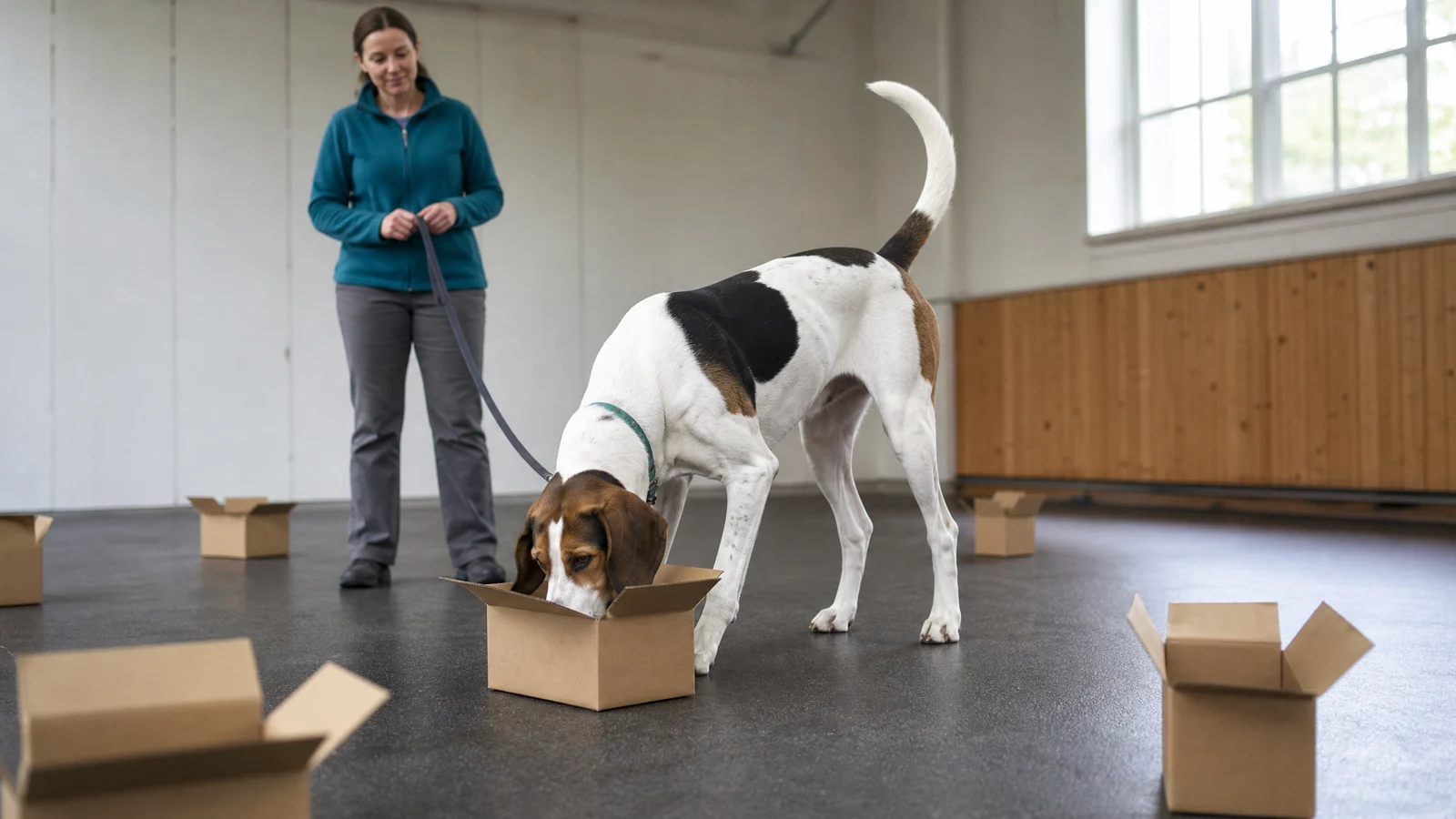 Exercise and jobsScent Games and Agility for a Treeing Walker Coonhound Who Needs Work
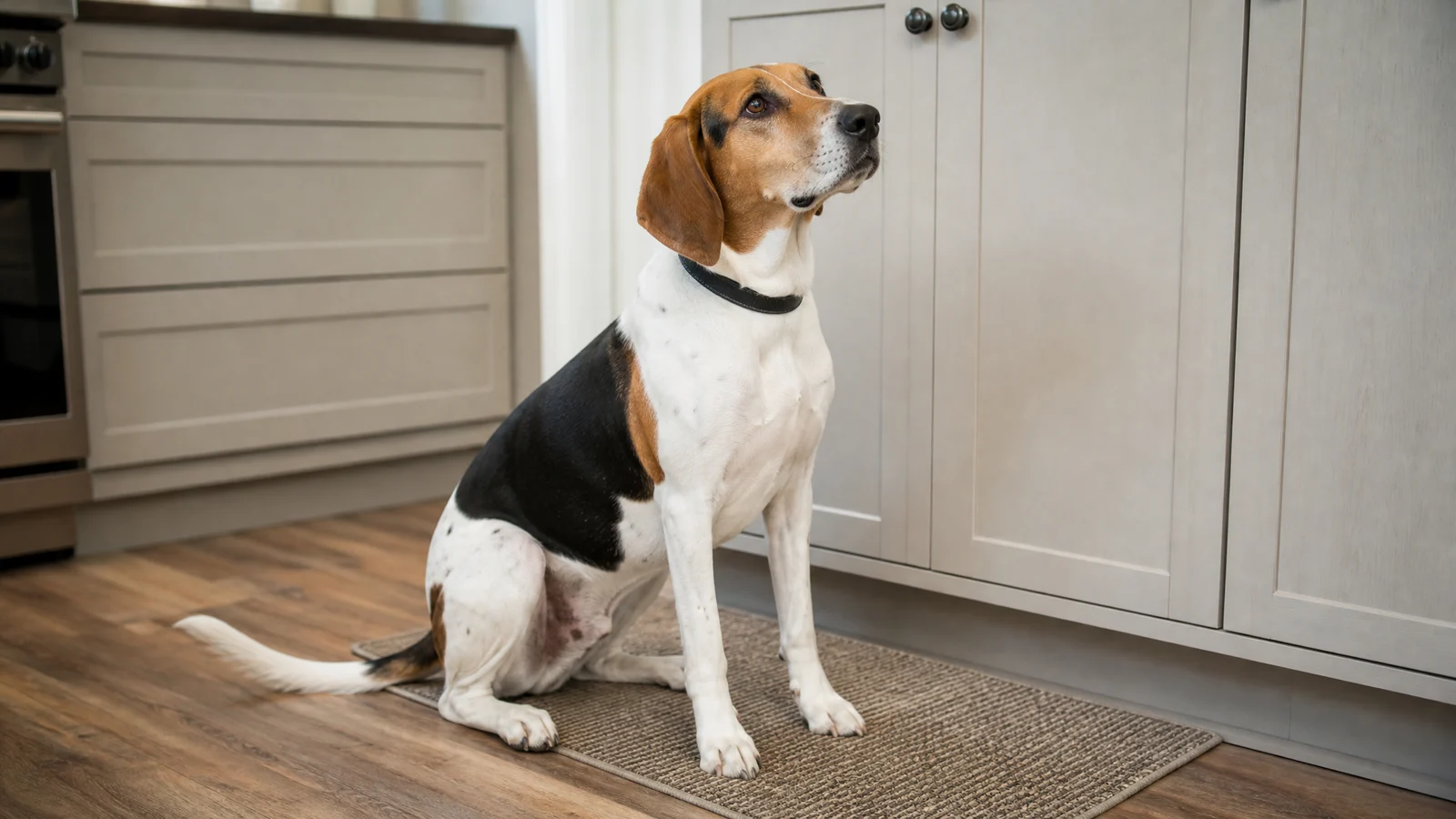 Training basicsTreeing Walker Coonhound Stubborn Streak Casebook
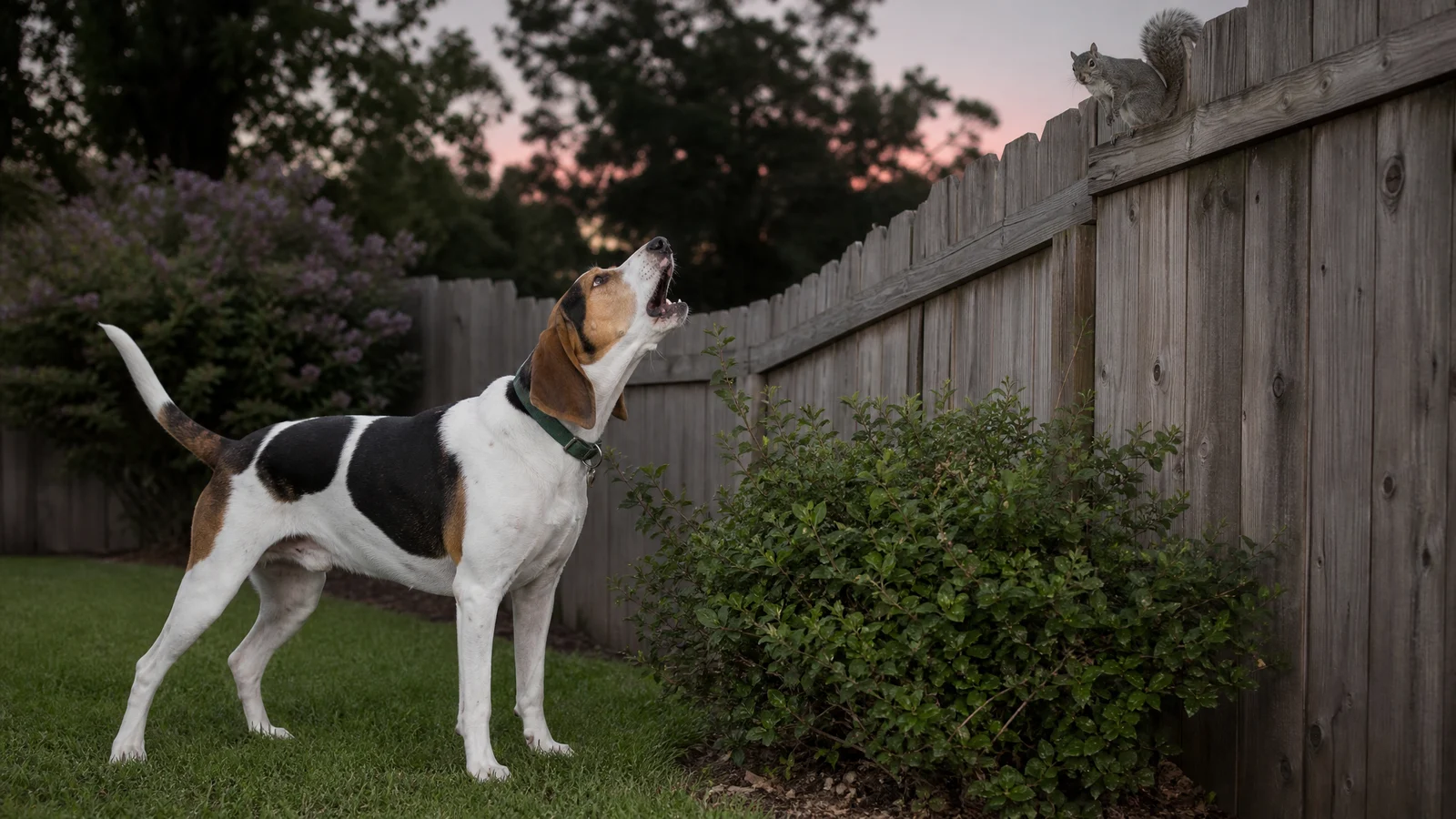 BehaviorWhy Does My Treeing Walker Coonhound Bay So Much?