 Treeing Walker
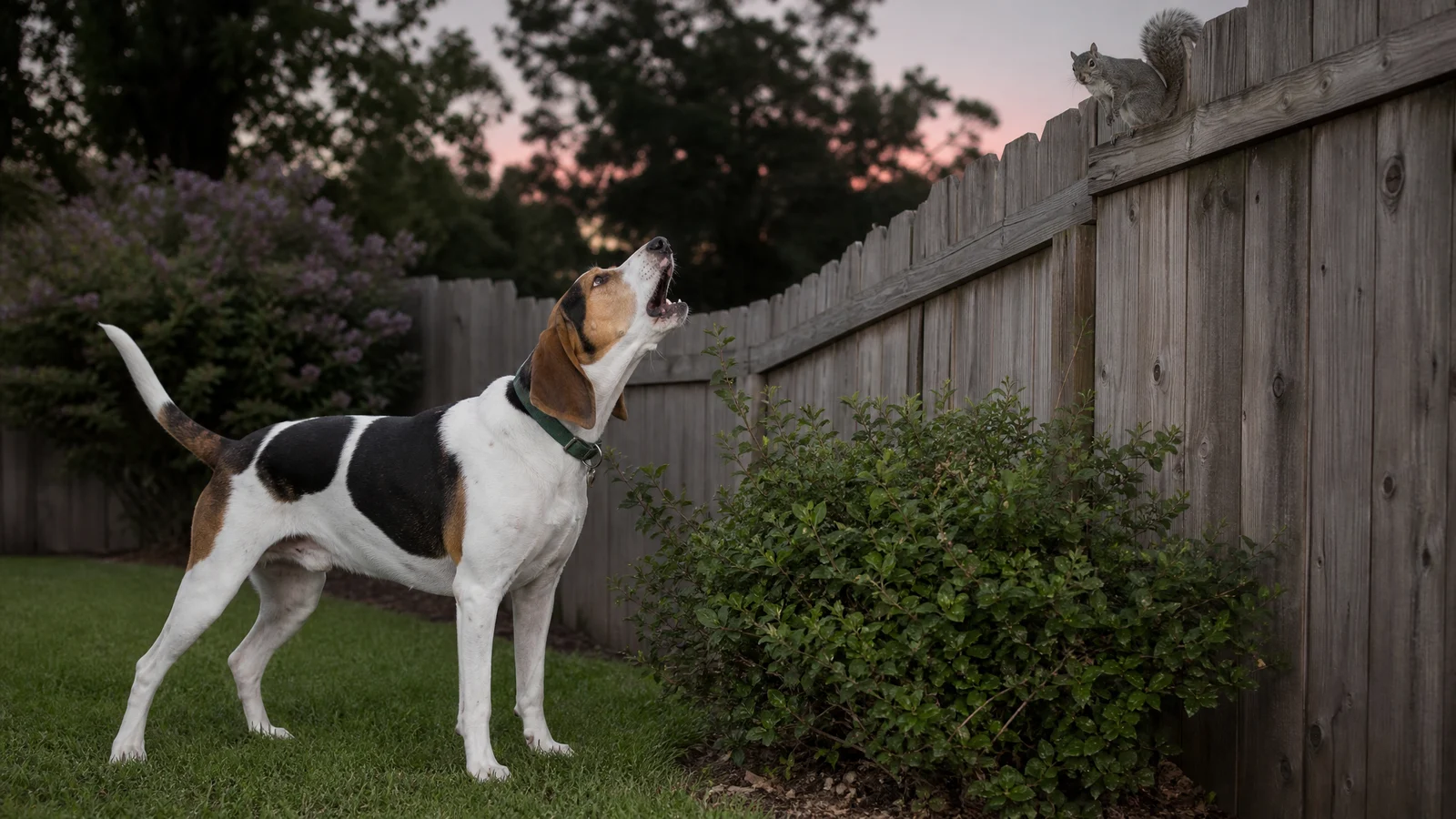
Yes, the Treeing Walker Coonhound bays a lot because the breed was built to, and yes, you can teach a quiet cue that holds up in real life. The catch is the goal: a quieter hound, not a silent one. The voice comes from generations of selection for a sound that carries, and your hound brings all of it to your hallway, your yard and your neighbor's bedroom window.
That matters because unmanaged baying wears everyone down. Neighbors complain, the dog gets shouted at, and shouting sounds a lot like joining in. Handled well, you get a hound who announces things on request and stops on cue. Read on for the voice itself, baying at squirrels, when alone, at night and on walks, then a step-by-step quiet cue and a two-week plan.
Barking as the Treeing Walker Coonhound's Bugle Voice
Start with the standard, because it settles whether this is a flaw. The breed standard calls for a voice that is preferably "a clear, ringing bugle or a steady, clear chop," with a noticeable change in voice at the tree. The standard prizes a clear, carrying voice, so what you hear from the porch is the breed's signature, not bad manners.
The breed's published ratings back this up. Barking sits at 4 of 5, where 5 means very vocal, while mental stimulation needs and energy both sit at 5 of 5. Read that as a profile: a hound who needs a job, has energy to burn and owns a big voice will use the voice whenever the job is missing or the excitement is high. Barking is the pressure valve.
What the Change in Voice Tells You
The change in voice at the tree is the useful part for owners. It means the sound carries information, and that holds in a living room too. A voice that shifts with arousal fits the standard's noticeable change at the tree, so a casual announcement and an urgent, excited bay are likely to sound different, and the urgent one is worth reading as a signal that something is driving it, such as boredom, frustration or excitement.
We have trained this breed for many years, and the owners who succeed stop asking how to delete the voice and start asking what it is saying.
Verdict: shape when the voice appears, because removing it is neither realistic nor fair to the dog.
Barking at Squirrels and Passersby
Outdoor triggers produce the most recognizable pattern: something moves, your hound locks on, and the voice follows almost at once. Squirrels, birds, cats, joggers, delivery drivers and dogs on the sidewalk all qualify. The breed has a very high prey drive and rates as only a middling watchdog, so the cause is usually interest, not alarm. That is why treating it as a threat response misses the point.
Manage the View First
Every rehearsal at the window or fence is practice, and practice strengthens the habit. Control access before you train anything:
- Block the lower half of the windows with frosted film or rearrange furniture so the dog cannot perch and patrol all day.
- Keep yard time supervised and purposeful instead of an open-ended patrol, and check that fencing is secure, since Walkers cover ground in a hurry.
- Bring the dog inside at the first locked stare and reward the move, so leaving the trigger always pays.
Redirect Once the View Is Managed
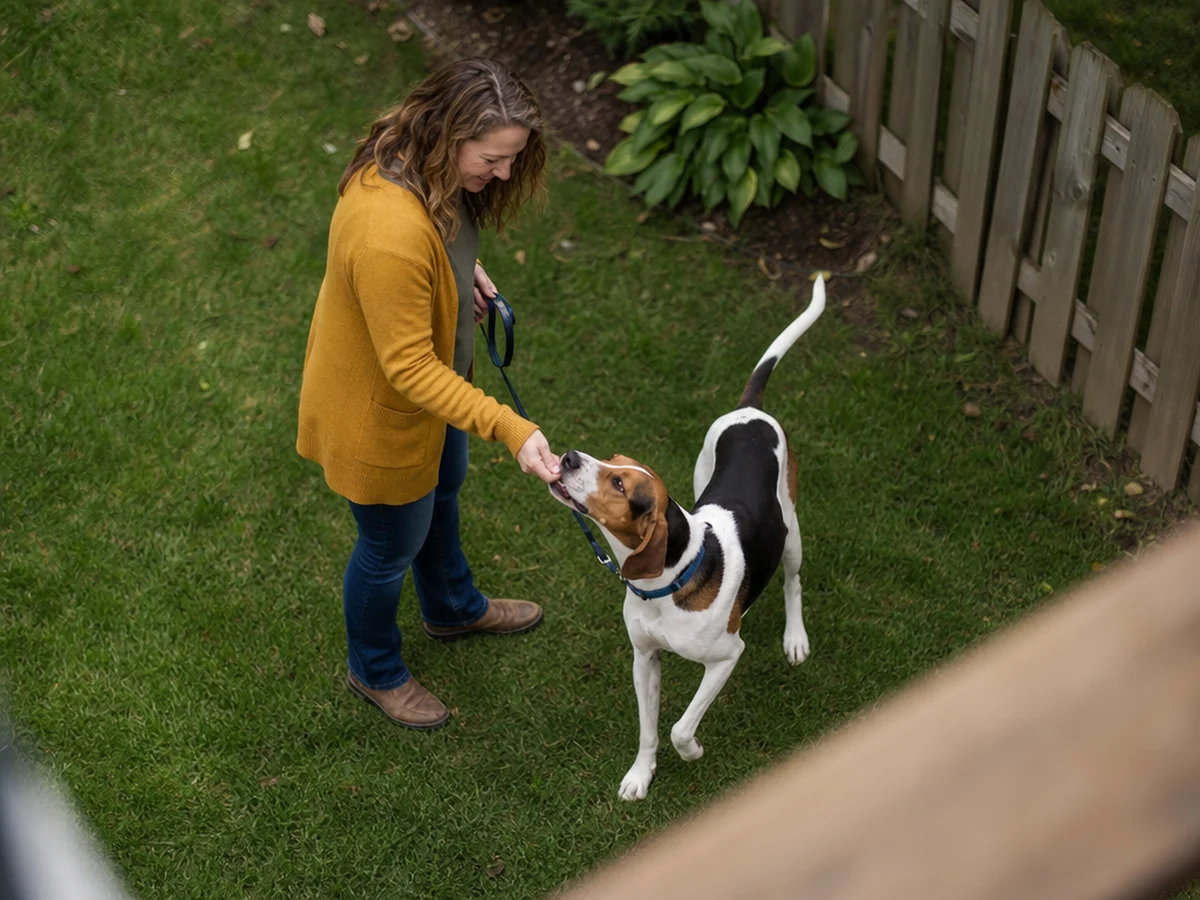
Now teach a better answer to the same trigger. The moment your hound notices a squirrel, before the first note, say your marker word and toss a treat on the ground behind them so they turn away from the target and toward you. Many of these hounds are food-driven, so this often works well. Repeat until the head-turn happens on its own, then reward looking at you with food, praise or a game.
Management stops the rehearsal, and redirection gives the drive somewhere to go.
Treeing Walker Coonhound Barking When Left Alone
Barking while you are out looks like one problem but comes from two, and the fixes differ. These hounds are very affectionate with family, so distress is plausible, yet plenty of alone-time baying is just a bored nose with nothing to do. Behavior and training of this hound is our specialty. Start by sorting the barking into two buckets. A phone or pet camera recording a short absence will tell you which bucket you are in.
Boredom Barking
Boredom baying starts after the dog has been alone a while, comes in bursts and often follows a sound outside. You will hear that a tired dog is a quiet dog. It only half works here.
A breed with top-level mental stimulation needs can be physically spent and still bay by mid-afternoon, because the nose and brain have had no work. Before you leave, scatter kibble across the floor, set out a snuffle mat or hide treats around a room. A hound with an under-used nose is likely to be noisy and restless, so rewarded nose games give that drive an outlet.
Distress Barking
Distress baying begins at your departure or within minutes, rarely lets up, and may come with pacing, drooling or damage near the door. Treat it as a training project, not a character flaw. Practice absences so brief the dog never reaches panic, reward calm, and lengthen gradually. If it persists, find a professional who uses reward-based methods.
In an apartment, tell your neighbors you are working on it and leave steady background sound, since people tolerate a noisy dog far longer when there is a plan. Sort the type first, because fixing boredom does nothing for distress.
Why Does My Hound Keep Barking at Night?
Night barking has a handful of usual suspects, and you can often spot yours by when it happens. Sound comes first: sirens, a neighbor's dog or animals passing the yard reach a hound's ears long before they reach yours, and a voice built to be heard will answer. Scent drifts in too, and the quiet hours make small movements stand out. Routine is the other suspect. A dog whose evening held no real walk, no nose work and no chew may simply have energy left over.
- Move the bed or crate to an interior room away from windows so fewer triggers reach the dog.
- Run steady white noise to cover the street and shared walls, which helps most in an apartment.
- End the evening with a sniffy walk and a food puzzle so the nose has worked before bedtime.
- If the dog barks, wait for a pause, then reward it quietly with a treat instead of walking in to talk, since attention in the middle of the night teaches that barking summons you.
If a settled adult or a senior starts barking at night when they never did, think health before habit. More barking is a listed sign of cognitive dysfunction in older dogs, alongside disorientation and anxiety. Regular vet visits are the best way to catch that early.
This is general information, not veterinary advice. If barking changes suddenly or begins in an older dog, check with your veterinarian before assuming it is behavior.
Night barking is usually a daytime problem in disguise.
Is Barking on Walks Just Scent?
Mostly yes, and that is the honest answer even when it is inconvenient. This breed may be unable to resist the instinct to pursue an interesting scent, which is why walks happen on a leash. The voice usually appears when the nose finds something fresh and the dog drops into a nose-down pull. Once the scent is caught, a hound with a very high prey drive may not respond to recall at all, so do not count on calling them out of it.
Two other causes ride along. Frustration shows up as high, urgent barking at a trail the leash will not let them follow. Excitement shows up when other dogs appear, which suits a breed that gets along with other dogs but says so loudly. Do not test recall off leash. Practice it on a leash or in a secure area.
Give the Nose a Sanctioned Outlet
Build sniffing into the walk instead of fighting it. Pick a spot, say your release word, and let the hound sniff on a loose leash, then mark and reward each time they check back in. Scent games at home, like sprinkling a few treats across the lawn or tucking them behind furniture, give the scent drive a rewarded outlet, so the nose is not starved when you head outdoors. For this breed, a good walk is a sniff walk.
Teaching a Quiet Cue to a Treeing Walker Coonhound
This breed is eager to learn and also has a stubborn, independent streak, so small wins and real rewards work best. A hound can learn a quiet cue, because commands stick when a reward reliably follows and many of these hounds are food-motivated. Keep sessions short and fun, and follow these steps in order.
- Pair the marker with food first. Whether you use a clicker or a word like yes, deliver the treat within 3 seconds, several times, in a calm and quiet place, as in these clicker training basics.
- Create a mild, controllable trigger such as a knock on the table, wait for the bay to start, then wait for the first natural pause for breath. Mark the pause and give a treat.
- Once pauses come quickly, say quiet in a calm, ordinary voice just as the pause begins. The word follows the behavior at first so it comes to predict it.
- Build duration by waiting one beat longer before marking, then another. If the bay restarts, drop back to an easier length and rebuild.
- Fade and vary the reward. Many owners see focus narrow to the treat itself, or vanish when no food is visible, so keep treats out of sight and mix in praise, play and sniff breaks. Reduce food gradually, never all at once.
- Add real triggers one at a time: the window, the yard, a knock at the door, a distant dog. Move to a harder one only when the easier one is reliable.
Capture the pause first, name it second, and ask for length last.
Your Two-Week Treeing Walker Coonhound Quiet Plan
Here is a schedule you can start tonight. It pairs the cue with fixes for the cause, because a cue alone cannot outrun an unmet need.
- In the first few days, block window views, note each episode as outdoor, alone, night or walk, and charge the marker with treats in a quiet room.
- Midway through week one, start capturing pauses at a mild trigger and add one rewarded nose game each day.
- By the end of week one, add the word quiet as the pause begins and keep sessions short and upbeat.
- At the start of week two, stretch the silence a beat at a time, mixing treats with praise, play and sniff breaks.
- Midway through week two, move to real triggers like the window, the yard and a knock at the door, and tell your neighbors what you are doing.
- At the end of week two, compare your notes. Fewer episodes, shorter ones and faster stops are the signs of progress. Book a vet visit if night barking is new.
Expect a quieter dog, not a silent one. The bugle is the breed, and what you are teaching is that it has a time and a place. Keep meeting the nose, the mind and the legs behind it every day, and the voice has far less reason to carry the whole load.
 Training basicsReward-Based Treeing Walker Coonhound Training Roadmap
 BehaviorA Few Barks, Then Back: Treeing Walker Coonhound Tree Line Manners
 BehaviorTeaching Calm Around Cats and Small Animals Despite Prey Drive