 Treeing Walker
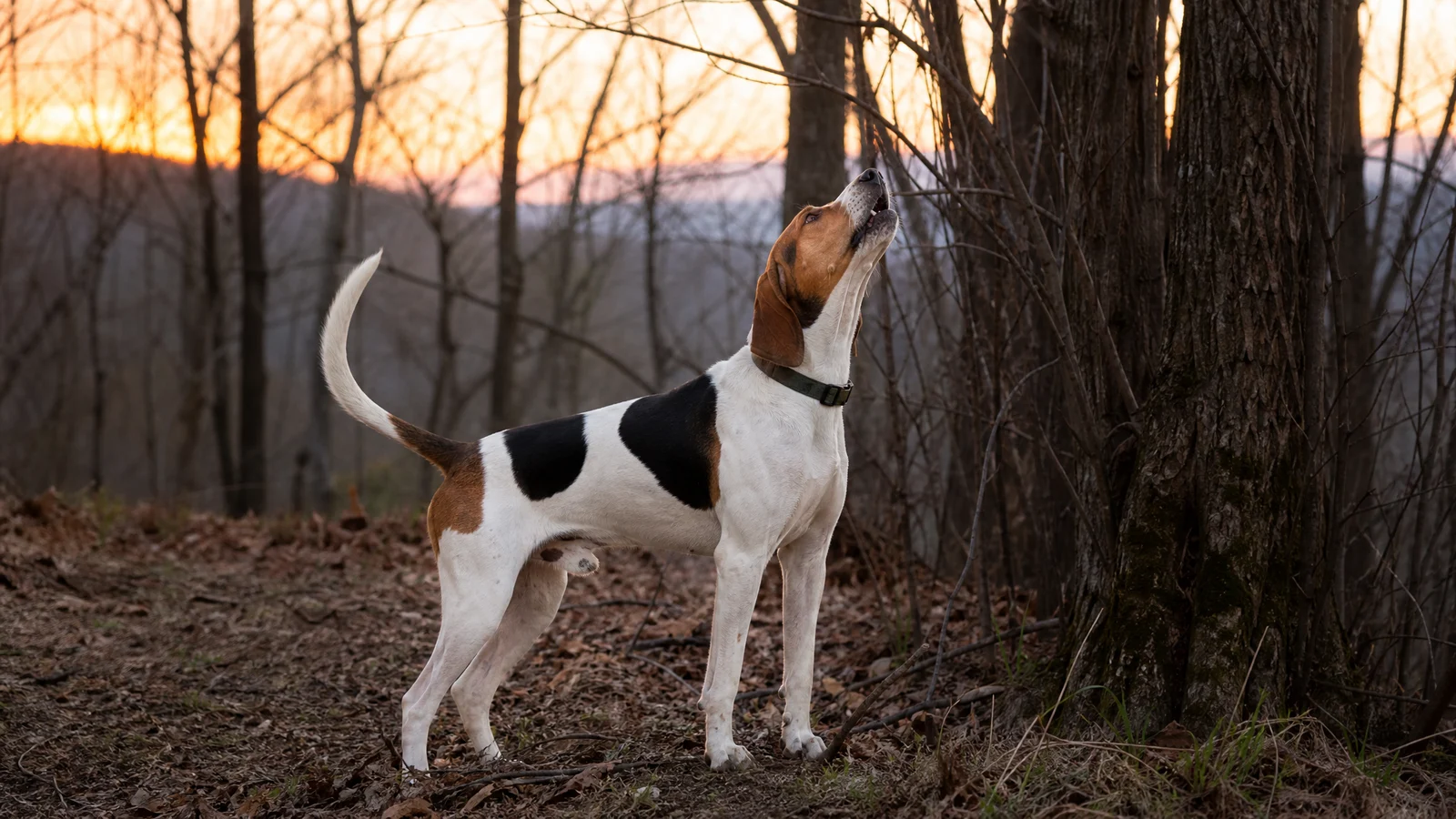
Treeing Walker Coonhound barking at the tree line can be shaped into a brief announcement followed by a turn back to you. The goal is not to erase a working hound's voice. It is to make the exit from barking as clear and rewarding as the rush toward the trees.
Picture success before choosing a cue: the dog reaches a managed boundary, gives one or several barks, hears their name or a turn cue, pivots away, travels to the handler, collects payment, and leaves the edge calmly. This guide builds that one exchange by distance, route, and reward. It stays separate from a general quiet cue and from prolonged squirrel-tree fixation work.
Treeing Walker Coonhound Chop Barking at the Tree Line
Start by deciding what counts as a completed turn-back. A glance over the shoulder is useful information, but it is not yet an exit if the dog immediately returns to the trunk or fence. For this exercise, completion means the dog turns the whole body, travels to a chosen reward point, and can move away with you.
The cue should begin the exit, not punish the voice. Say it once in a friendly tone when the dog is still able to hear and move. Calling through a long burst teaches the sound to become background noise, while shouting can add more social energy to an already loud moment.
Why This Boundary Gets Its Own Rule
We count the whole sequence rather than the absence of sound. The dog may use their voice and still make an excellent choice one moment later. That distinction protects a breed trait while giving neighbors and handlers a practical boundary.
The ASPCA barking resource starts with the reason for the behavior and treats reduction as more realistic than erasing every sound. At a tree line, the reason often includes scent, movement, and a long history of vocal work, so the plan changes access and teaches an exit instead of treating the bark as a moral failure.
| What you see | What it means | Next move |
|---|---|---|
| Dog can eat and turn before barking | You are outside the active edge | Install the turn here |
| One or several barks, then a full pivot | The exit remains available | Pay at the reward point |
| Hard pulling, fixed gaze, cue ignored | The route is too close or too difficult | Leave without repeating the cue |
The table is an operating card, not a test to pass in one outing. Your starting line may change with wind, wildlife, darkness, and how recently the dog has exercised. Use today's response to place the next repetition rather than insisting on yesterday's distance.
Distance Bands for Chop Barking at the Tree Line
Distance changes what the dog can notice. Far from the edge, your hound may orient to a name easily. Closer, airborne scent and movement compete with the handler. At the active edge, the voice and forward drive may already be running together.
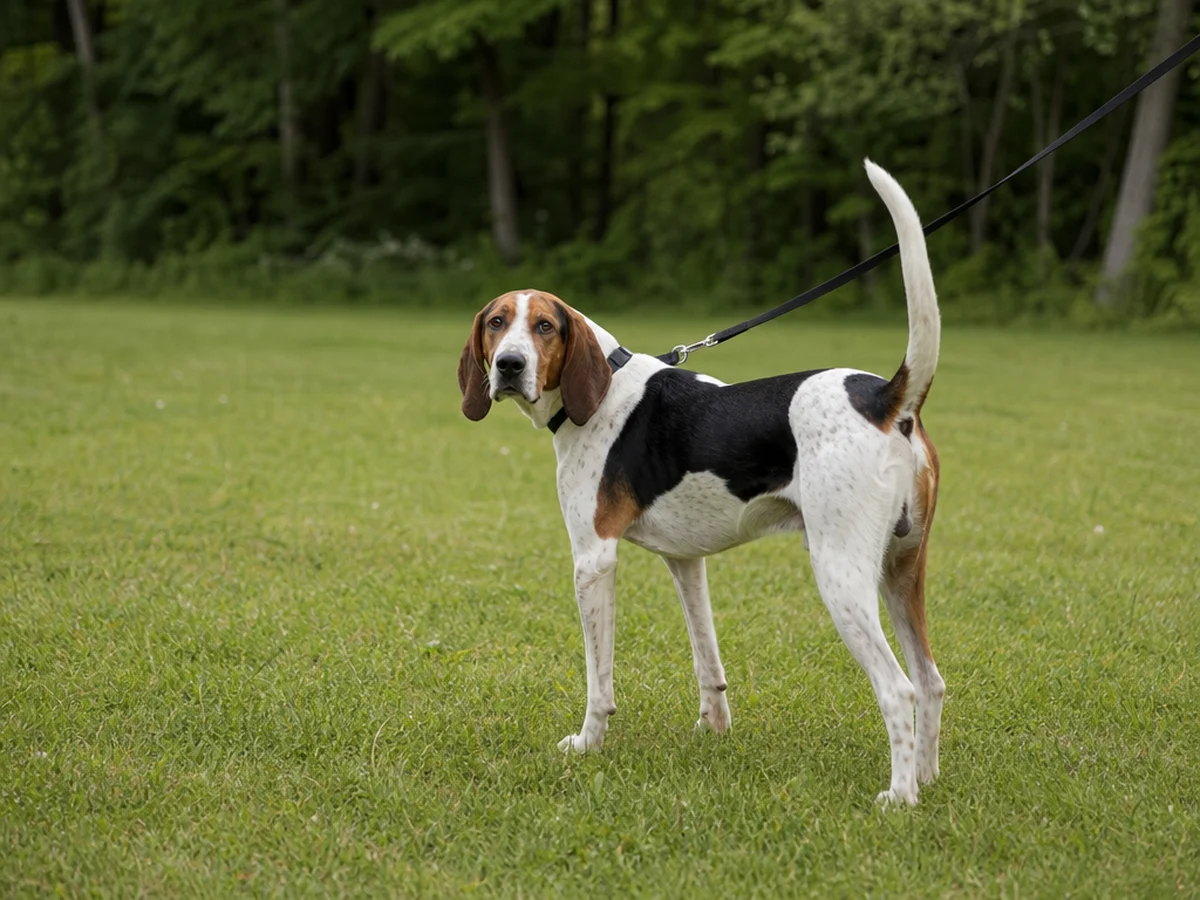
- Green band
- The dog can sniff, eat, and turn without leaning hard toward the trees. This is where you install the route and cue.
- Amber band
- The head and ears orient toward the edge, but the dog can still disengage after one cue. This is where a trained exchange gains strength.
- Red band
- The leash stays tight, food is refused, or the dog cannot turn. This is management territory, not a place to rehearse the cue.
Mark the Bands
Mark the bands on a real route using fixed landmarks such as a shed corner, a patch of gravel, or the end of a sidewalk. A physical marker keeps the person from drifting closer while watching the dog. It also lets different household members begin from the same fair place.
Use a standard leash or a carefully managed long line where space permits, and keep the dog attached near an unsecured edge. The line prevents a successful chase from becoming the largest reward of the session. It should not be used to jerk the dog away from the trigger.
Walk the route without training once and note where the first change appears. A closed mouth, higher head, faster breathing, or weight moving forward may arrive before vocalizing. That earlier landmark is often the fairest place to turn on a difficult day.
We also separate a safe distance from an empty distance. The dog should be able to notice the edge and choose the handler, not remain so far away that nothing registers. Begin generously, then adjust in small route changes as the response becomes easy.
If the green band is surprisingly far from the trees, accept it. The site's guide to Treeing Walker leash training handles deeper tree fixation. This boundary exercise begins where a voluntary turn is already possible.
Install the Turn Before Chop Barking at the Tree Line
Teach the movement away from the boundary before adding barking. In the green band, say the dog's name once, take two or three steps away, and reward at a consistent point beside or slightly behind you. The location matters because it gives the dog somewhere to travel, not merely a sound to acknowledge.
Begin with no visible wildlife and only a mild scent breeze. If the dog turns promptly, vary your approach angle while keeping distance easy. The turn should work from both sides of your body and from several positions on the route before you ask it to interrupt a louder event.
The Reward Point
The RSPCA recall guide recommends calling in a friendly tone and moving away to encourage the dog back. That motion fits this exercise, but the cue remains protected. If the dog cannot respond, increase distance instead of repeating it.
Pay generously at first. A Treeing Walker Coonhound may value the edge more than ordinary food, especially when a fresh track crosses it. Use a reward the dog has already shown they want in that setting, then leave the boundary for a brief reset.
Do not require a sit after the turn unless sitting serves a real safety need. The core behavior is disengagement and travel. Adding extra obedience can delay the payoff and make the dog wonder which part actually earned it.
Practice the cue in several mild contexts away from the boundary as well. A name response beside the porch, a hand target on the path, and a short follow-me turn can all build movement toward the handler. They are preparation, not substitutes for carefully managed tree-line rehearsals.
A Treeing Walker Coonhound Chop Barking Pass
Once the turn is fluent in the green band, use a single outbound and inbound pass. The outbound leg gives the dog a controlled chance to notice the tree line. The inbound leg confirms that the pair can leave rather than circle immediately back into the same arousal.
The Outbound Leg
Approach on a curved route instead of marching directly at the edge. Curving lets you stop or peel away without a sharp leash confrontation. Watch the dog's breathing, weight shift, and ability to take food as closely as the number of barks.
If the dog looks and remains quiet, you may reward that choice and leave. Barking is not required. If one or several barks occur while the body remains movable, give the turn cue once and begin traveling toward the reward point.
Pay after the dog arrives, not while they are still facing the trees. Reward placement helps finish the physical exit. A treat delivered at the end of the leash beside the boundary may keep the nose and feet pointed toward the trigger.
The Inbound Leg
Continue away long enough for the leash and body to soften. Then offer an easy sniff or scatter in a safe area if that activity helps the dog decompress. The session should not become a rapid shuttle between barking and payment.
The Treeing Walker sports guide provides planned outlets for the same nose and drive. A hound with appropriate scent work still needs boundary manners, but the tree line no longer has to carry the entire workload of the day.
End after one clean pass at first. Repetition is useful only while the exit remains easy. A second approach that produces harder pulling and slower recovery can undo the clear picture created by the first.
Record where the bark occurred and where the dog completed the pivot. Those two points may move at different speeds. A hound might notice the trees from farther away while also becoming faster at leaving, which is progress even before the approach distance changes.
Payment and Release for Chop Barking at the Tree Line
The payment must compete with staying at the edge. Food is convenient, but it is not the only option. A short sniff in the opposite direction, movement with the handler, or access to a prepared scent search can follow the food reward when those activities matter to the dog.
Keep the boundary itself out of the payment package while the habit is new. Releasing the dog straight back to the tree line after every turn can create a loop in which barking and returning are both reinforced. Early releases should lead to a different legal activity.
- Use small food rewards that can be delivered promptly at the exit point.
- Follow with movement or sniffing away from the active edge.
- Finish before the dog's turn becomes slower or the voice grows more urgent.
Reward-based structure does not mean unlimited access. The AVSAB statement supports teaching wanted behavior with clear routines and humane consequences. Here, the routine makes turning back profitable while the leash prevents the old route from paying.
As the response becomes dependable, vary the number of food pieces and sometimes follow with another valued activity. Do not remove payment abruptly. The hound is making a difficult choice near work their body and senses were designed to pursue.
Repairing Chop Barking at the Tree Line
A failed pass is a route report. If the dog could not turn, note the distance, wind, visible movement, recent activity, and the first sign of tension. Change one of those conditions instead of adding volume to the cue.
If pulling begins before the first bark, leave earlier on the next attempt. If the dog turns but runs straight back after payment, extend the inbound leg and make the alternative activity more useful. If barking continues after you have left the edge, the trigger may still be visible or the dog may need a quieter recovery area.
General barking belongs in the site's Treeing Walker barking guide. This exercise is narrower. It should not be expanded into a cure for barking at windows, during absence, or at night, because those situations have different causes and consequences.
Sudden changes in vocal behavior, recovery, or willingness to move deserve discussion at regular vet visits. Pain, sensory change, or another health concern can alter behavior that used to be easy. Training records help the veterinary team see what changed and when.
One Treeing Walker Coonhound Tree-Line Pass Today
Choose one landmark in the green band, prepare a valuable reward, and rehearse the full turn away before approaching any louder spot. If your hound reaches the amber band, gives a few barks, turns on one cue, travels to the payment point, and leaves with you, stop there. That complete exit is the Treeing Walker Coonhound tree-line manner worth repeating tomorrow.
 BehaviorTeaching Calm Around Cats and Small Animals Despite Prey Drive
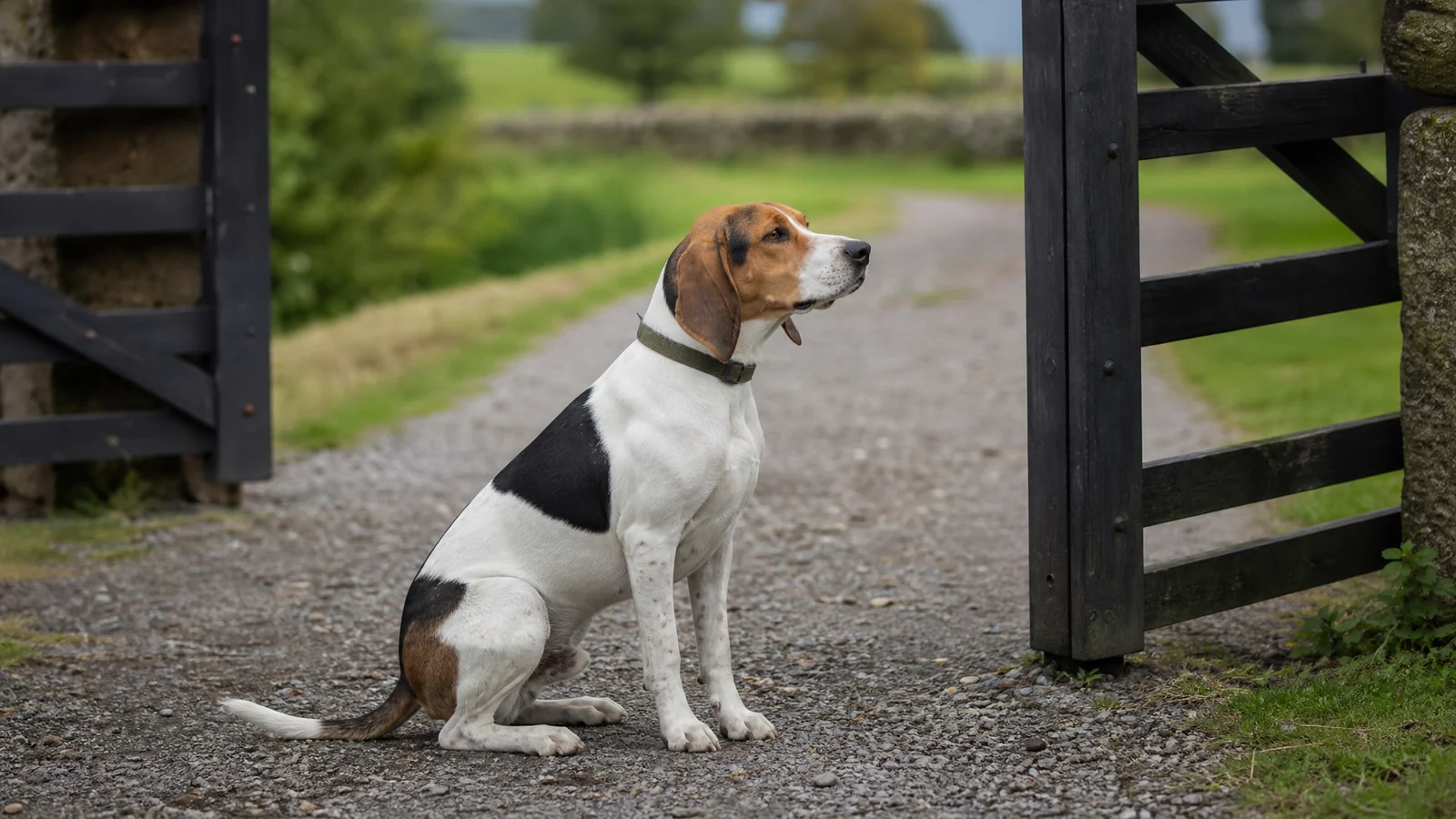 Training basicsTreeing Walker Coonhounds and the Open Gate: Teaching a Wait
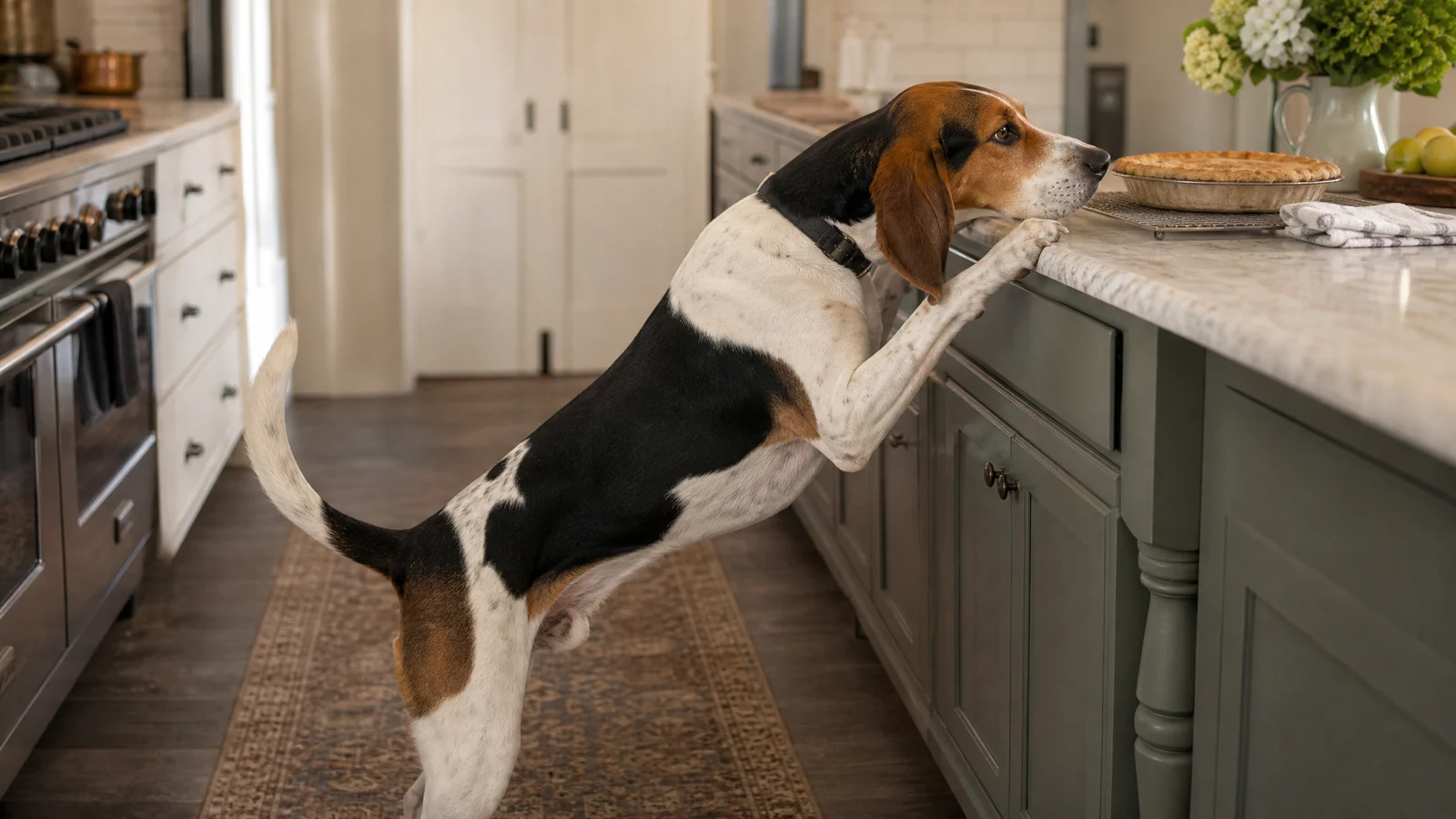 BehaviorTreeing Walker Coonhounds Who Reach the Counter: Management First