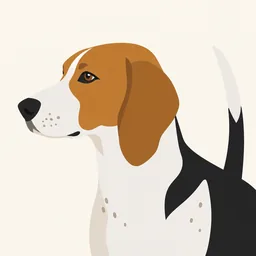
 Treeing Walker
Here is a common evening for an under-used scent hound. It is nine at night, and the dog is pacing the apartment with their nose glued to the baseboards, a shredded cushion lying behind them. The evening walk ended hours ago, yet the energy never left.
Nothing about this is spite. A Treeing Walker Coonhound has a working nose built in by generations of breeding, and a nose without a task will invent one, usually involving cushions, window glass and your neighbors' patience. We specialize in this one breed's behavior and training, and our advice begins by giving that drive a proper outlet.
In this article, we'll go through home scent games, formal tracking, low-impact agility foundations and conditioned trail miles, followed by the signs the plan is working. One example pup runs through every step, and everything is taught with treats and praise. Done well, a worked nose gives you a calmer hound. Ignored, it gives you noise and chewing.
Meet Our Example Treeing Walker Coonhound Pup
Here is the pup we will follow, a typical case that shows how the plan unfolds. A Treeing Walker Coonhound has just come home at ten weeks to a two-bedroom apartment, and the family is out for part of each weekday. The day runs in a loop most new owners will recognize.
- An early potty trip comes first, then breakfast served in a food puzzle, which slows eating and gives the pup mental work before the household leaves.
- A long nap follows while people are at work, with a chew or stuffed toy nearby.
- A leashed outing happens in the evening, followed by dinner.
- Then comes the hour when the hallway turns into a racetrack and the nose heads for the baseboards.
That last hour is the one to plan around. The breed is rated 4 of 5 for adaptability, so apartment life is workable, and 5 of 5 for affection, so the pup will want to be wherever you are. It is also rated 4 of 5 for barking, which matters through shared walls, so our guide to teaching a quiet cue fits alongside everything below. Keep regular vet visits on the calendar through puppyhood so growth is checked as the plan changes.
The plan is added in stages as the pup grows. This table shows the order we follow.
| Stage | What the pup does | What it builds |
|---|---|---|
| Right away | Treat scatters and box searches on the rug | A rewarded nose and calm focus |
| Next | Short laid trails on grass | Steady, low-nosed trailing |
| Alongside | Floor-level agility shapes | Balance and body awareness |
| Later | Brisk walks growing into trail miles | Endurance on a sound body |
Why Dog Sports Suit a Five-of-Five Engine
A long leashed walk is the minimum for this hound, not the full answer. Most coonhounds appreciate long daily walks at a minimum, and the breed's published ratings explain why walking alone only goes so far. Energy is rated 5 of 5, the top of the scale, and so is mental stimulation, where the top score describes a hound who wants real work to do.
A useful analogy is one engine with two gauges, one for the legs and one for the head. Miles empty the legs, while nose work and problem solving empty the head. A walk drains only the first gauge, which is why the common advice to simply run a restless hound more tends to backfire. A fitter hound with an idle nose becomes a fitter, noisier hound.
Built to Work
A dog sport is enrichment with a structure and a goal. The breed standard describes a graceful hound known for running over varied terrain, and other descriptions add extreme endurance and the desire to perform. That is a dog built to work, and a sport lets them do it at home, on a sidewalk or in a park.
The temperament helps. Treeing Walkers are rated 5 of 5 for trainability and love to please their people. They also have a stubborn, independent streak that can look like defiance to a trainer who does not understand the coonhound brain. Short, fun sessions paid with treats and enthusiastic praise work with that streak, and a sport gives it somewhere useful to go.
Dog Sports Start With Nose Games on the Rug
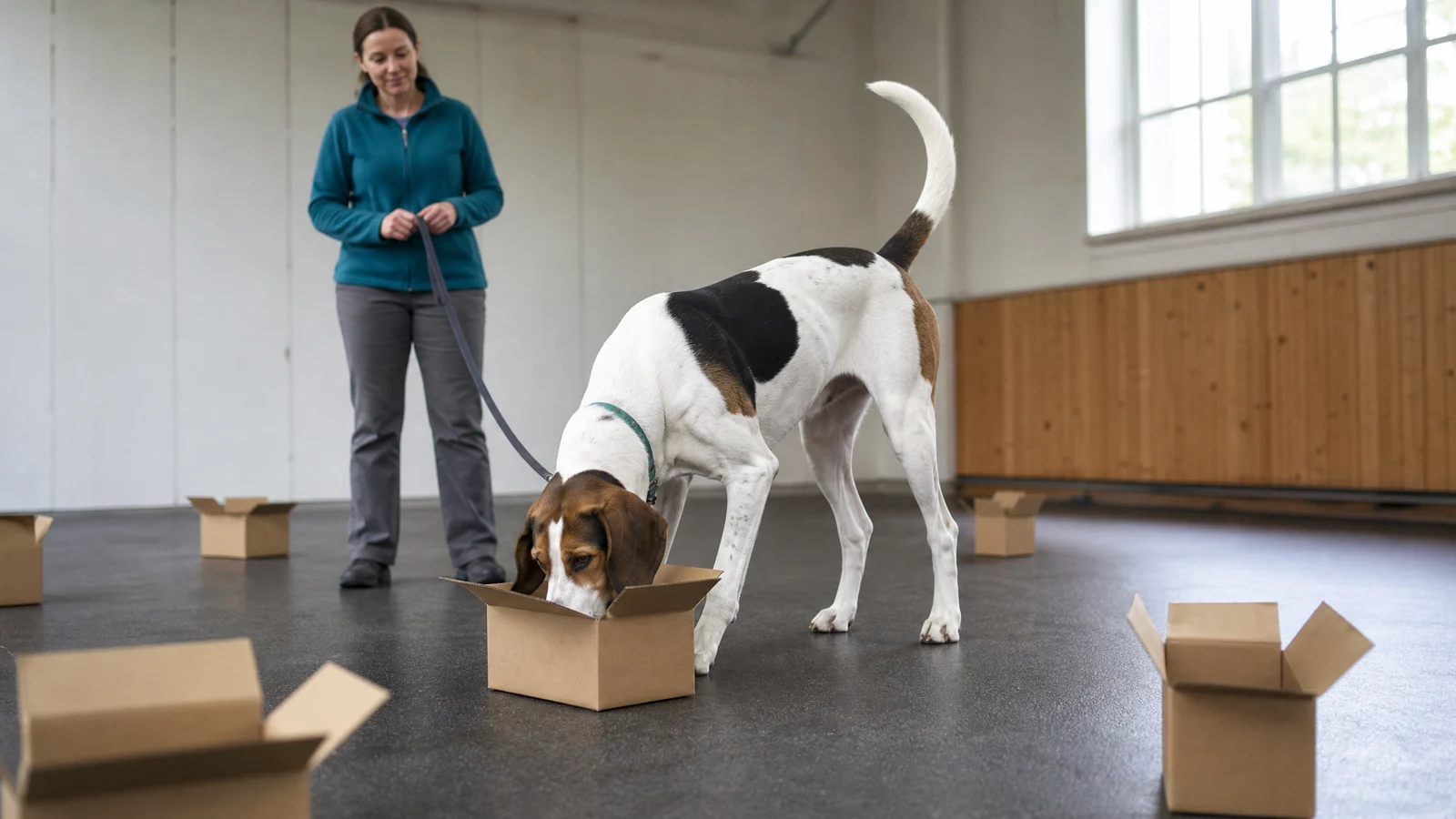
The example pup's first scent game takes almost no setup. The owner scatters a handful of tiny, soft treats across the living room rug and lets the pup sniff them out. Nothing is asked except to find food. Because the find pays for itself, the pup learns that using the nose is the best thing to do in this room. Rewarded nose games also give a restless young hound an outlet that does not depend on resisting a trail outdoors.
From there the games grow in small steps. Build each skill where distractions are low, and make it harder only once the easier version is reliable.
- Begin with the treat scatter, tossing the treats loosely so the pup works back and forth across the rug.
- Line up a row of open cardboard boxes in the hallway and bait at least half of them with strong-smelling treats, the box-search method for beginners. The pup finds the smell and rewards themselves.
- Play hide-and-find by tucking a treat or favorite toy beside a chair leg or behind a door in the second bedroom, then release the pup with a cue such as find it.
- Say a marker word the instant the pup finds the treat. A marker word is a single crisp sound, such as yes, that pinpoints the action that earned the reward.
- Stop while the pup is still keen, so the game always feels like a win.
Rewarded Recall Where Scent Is Light
The rug is also the right place for the first rewarded recall, because little competes with you there. Call only when you will praise, and pay every arrival with a treat or a burst of play. You will lean on this habit later. Once a young hound locks onto a heavy trail outdoors, calling louder does not compete with the scent, so the habit has to be built long before it is needed.
Tracking as a Treeing Walker Coonhound Dog Sport
A few weeks on, the owner lays a short, straight trail across a patch of grass, pressing a treat into each footprint. The pup follows with the nose low and the tail steady. Tracking asks a dog to follow the scent of a person's footsteps along a laid trail while the handler walks behind on a long line, a leash far longer than a walking one. It is a natural match for this breed's nose and stamina.
The door to formal tracking has been open for a while. Since January 1, 2004, the Treeing Walker Coonhound has been one of 20 Foundation Stock breeds that met the requirements to compete in companion events, which cover obedience, tracking and agility. Entering a trial is optional and the practice pays off either way, but a titled goal gives training a shape and a finish line.
Making the Trail Harder, One Change at a Time
Change only one thing per session, and keep each step easy enough that the pup still wins.
- Drop the treat from every second footprint, then from most, so the pup learns to keep working between rewards.
- Add one gentle turn, then lengthen the trail.
- Let the trail age a little before the pup starts, so the scent is slightly weaker.
- Place a scent article such as an old glove at the end, with the biggest reward beside it, to give the job a clear finish.
What the Sport Asks of the Handler
The handler's part is the one people underestimate. Clip the line to a harness, stay behind, keep the line loose and let the dog lead, because a hound who trusts their own nose is doing the job right. The independent streak that complicates recall is an asset here. Check the current rulebook for the levels and requirements of the test you aim for, since details can change.
Agility Foundations for Dog Sports While the Pup Grows
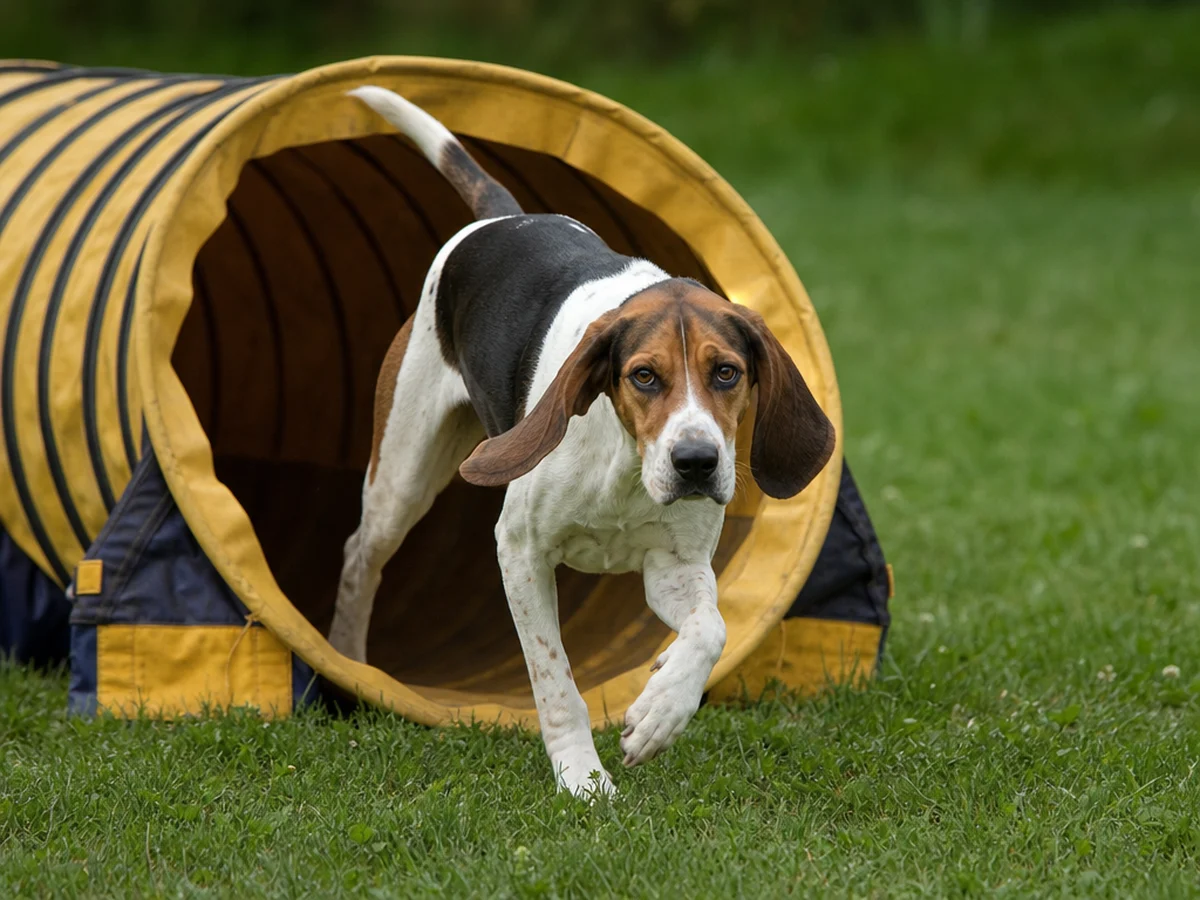
At ten weeks, the example pup's agility work looks nothing like the sport on television. A board lies level on the floor, a folded towel is there to step over, and a low cushion invites the pup to stand with all four paws on something that wobbles. A sheet draped between two chairs makes a tunnel to crawl through. Everything stays at floor height, and every attempt is paid.
Low and Slow for a Growing Body
Growth plates are soft zones of developing bone at the ends of the leg bones, and they stay vulnerable until growth finishes. Jumping and sharp turns put heavy impact on a young body, so early work builds balance and body awareness instead. The pup learns where the back feet are, how to shift weight and how to stay steady on an unsteady surface.
Ask your veterinarian when growth is finished before adding jump height or speed, and stop any session if the pup hesitates or limps. The balanced, symmetrical build described in the standard suits agility's turns once the body is ready.
When the Nose Competes With the Course
The bigger challenge is often the head. A nose-driven pup meeting a tunnel will want to investigate it first, and a hound who prefers a smell to your hand signal wanders off course. Lively sessions with a treat trail through each obstacle keep attention on the equipment.
Agility classes also put hounds near other dogs. Walkers score top marks on the breed scale for dog-to-dog sociability, so the social side is usually a pleasure, but practice calm waiting first with our calm manners guide.
Trail Miles for a Treeing Walker Coonhound's Endurance
On a weekend hike, a Walker hits the end of a long line at the first interesting whiff and keeps going all day. This breed is described as an excellent running or hiking companion, capable of covering a lot of ground in a hurry. Endurance still has to be built, so the example pup spends puppyhood on ordinary walks while the body grows and takes on longer trail miles later.
Building Up Slowly
Begin with brisk walking, and add short stretches of easy jogging only after your veterinarian confirms the growing body is ready. Increase distance gradually, choose softer surfaces when you can, carry water and finish with a cool-down walk. If the hound slows, lags or limps, shorten the next outing and make it easier.
Letting the Nose Work on Leash
The breed has a very high prey drive and may be unable to resist an interesting scent, so keep them in a harness on a leash or long line for walks and hikes. Treat the scent as a reward you control. Pay for a loose leash, then release the pup to sniff on a cue such as go sniff. The nose becomes part of the walk instead of a fight.
Build Recall Habits in Adolescence
The scent-driven problems owners describe, like being unable to call a hound off a scent while they tow nose-down, come mostly from adolescent dogs around 7 months old. We do not know how they look or fade at other ages, so treat adolescence as the time to build management and recall habits early. Use a long line, a secure yard and a rewarded recall practiced where scent is light before it is asked for in heavy scent.
Signs the Dog Sports Plan Is Paying Off
By evening, the example pup, now fitter and a little older, has spent the afternoon on a short track and a box search and is flopped beside the couch, sighing. That is the main point of this whole plan: a worked nose makes a calmer apartment hound. Mental work satisfies this breed more reliably than miles alone, so meet the nose first and the rest of the household settles.
These signs tell you the plan is working:
- Evenings settle, and the dog lies down without pacing the baseboards or baying at the door.
- Sniffing looks focused, with the dog working a scatter or a track steadily in a loose, relaxed body.
- Recall, loose-leash walking and play improve together because the nose is no longer fighting for attention.
- Chewing and household mischief fade as the week fills with useful jobs.
Some situations call for a professional. Contact your veterinarian about limping, stiffness after exercise, or a sudden change in appetite or behavior. Ask a trainer or behaviorist for help if destructiveness or noise continues despite regular nose work, if recall fails in every setting even on a long line with light scent, or if your hound seems withdrawn or loses interest in food and games.
 Training basicsTreeing Walker Coonhound Stubborn Streak Casebook
 BehaviorWhy Does My Treeing Walker Coonhound Bay So Much?
 Training basicsReward-Based Treeing Walker Coonhound Training Roadmap