 Treeing Walker
10 Treeing Walker training topics
Every common Treeing Walker challenge, with first steps and guides to read.
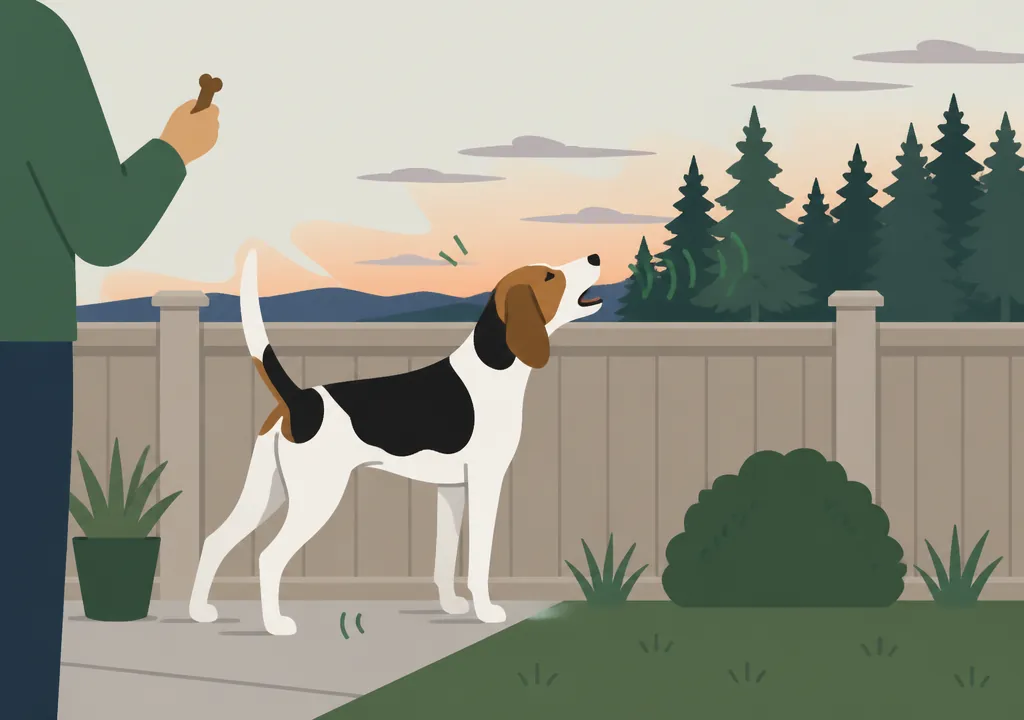
Chop barking at the tree line
A few barks, then back to you.
Treeing Walkers bay a lot, because selection built a voice that carries. The goal is a quieter hound, not a silent one, and shouting back sounds like joining in.
The full guide covers baying at squirrels, alone, at night and on walks, then a quiet cue.
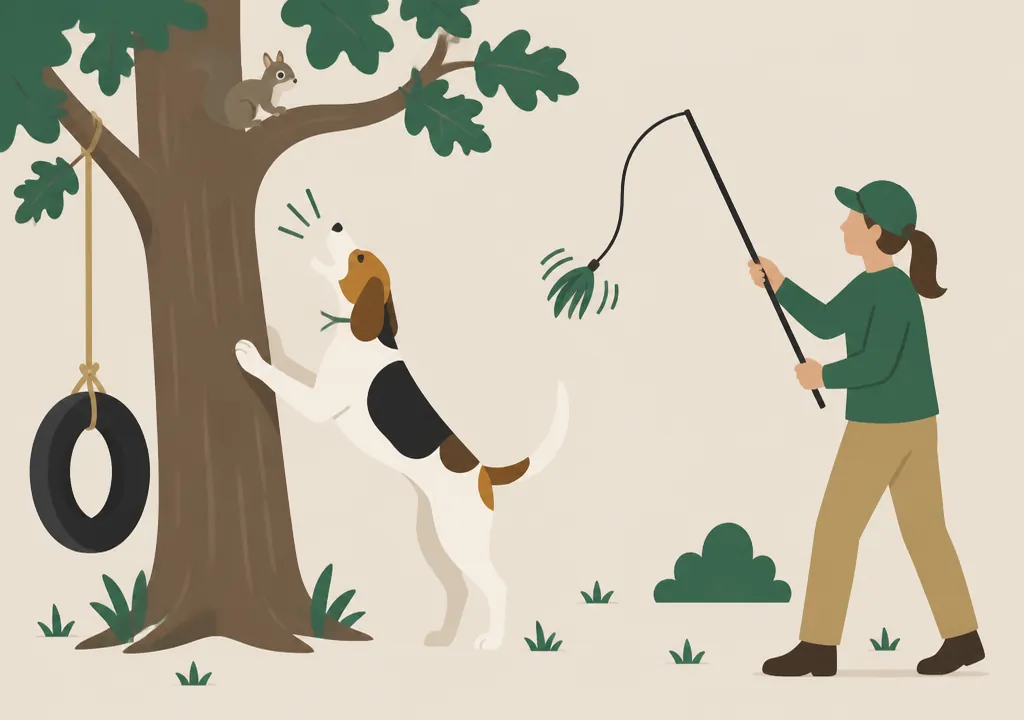
Treeing in the backyard
Turn treeing into a game you control.
One hound strolls past the yard oak on a loose leash, another lunges and bays at the trunk. The drive is the same. The gap is leash work, most of all in adolescence, around 7 months.
The full guide covers leash work around trees and squirrels for families, apartments and two hounds.
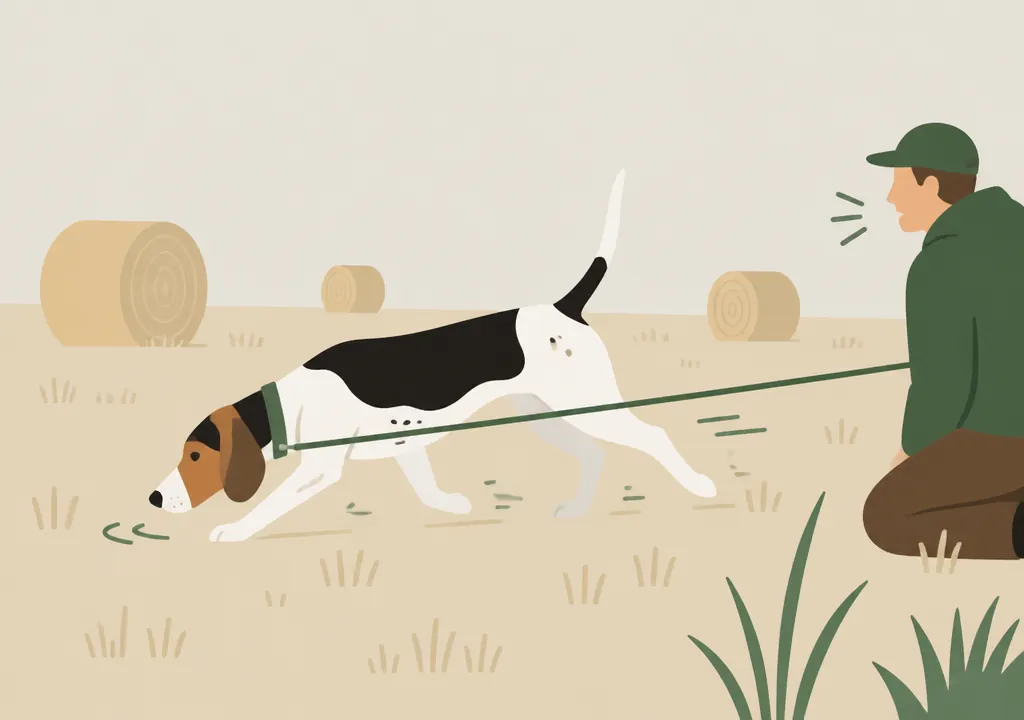
Racing off on a hot track
A recall built for a fast, fresh trail.
Recall around scent is a chain of noticing, disengaging, turning, traveling back and arriving close, and any weak link makes the whole response look absent. Long-line games strengthen each link without wagering safety.
The full guide sets up equipment, plays return games, raises difficulty slowly and repairs the broken link.
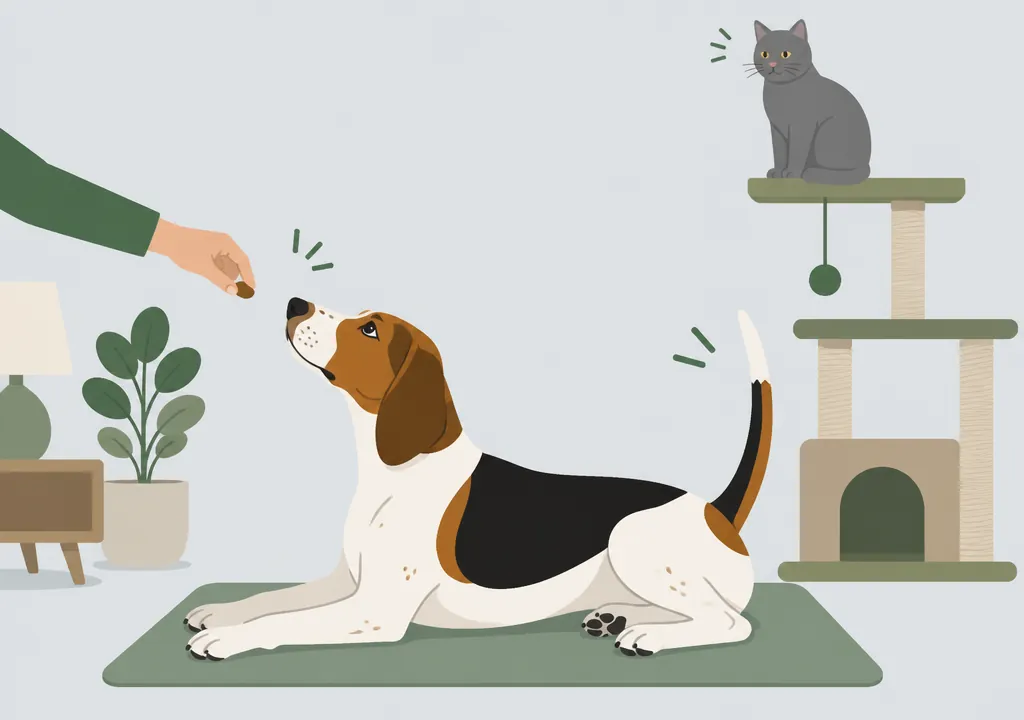
Living with cats
Calm introductions and a safe house for the cat.
One Treeing Walker Coonhound may nap while a familiar cat crosses the room, while another becomes intensely still at the first flick of a tail. Both dogs can be social with people and dogs. Neither response gives the household permission to skip a careful small-animal plan.
Prey drive is about the pull of movement, scent, and pursuit, not whether the hound is friendly. A greeting that looks calm for thirty seconds can change when a cat runs, a rabbit kicks, or a gate opens. The safest goal is durable coexistence under management, not a promised friendship.
Read the full guide: Teaching Calm Around Cats and Small Animals Despite Prey Drive
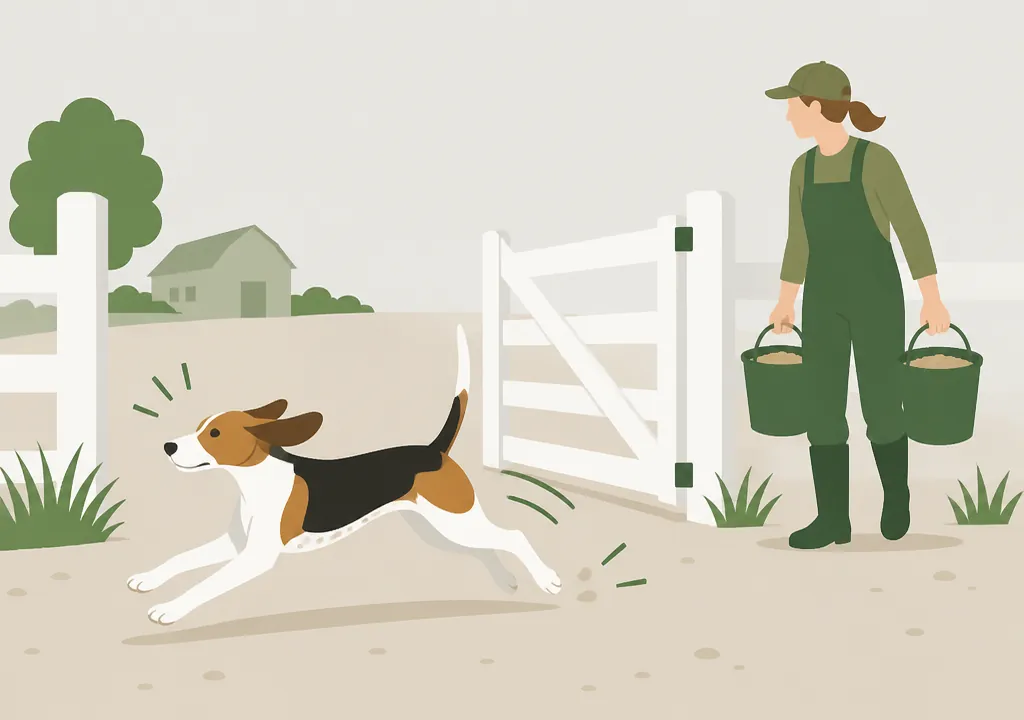
Bolting through the gate
Wait at every door and gate.
Bolting through a gate or going deaf beside a scented hedge gets written off as stubborn, a label that changes nothing. Treat each moment as a case, since the Treeing Walker may not know the cue.
The full guide runs one pattern through six case rounds, from motivation to professional help.
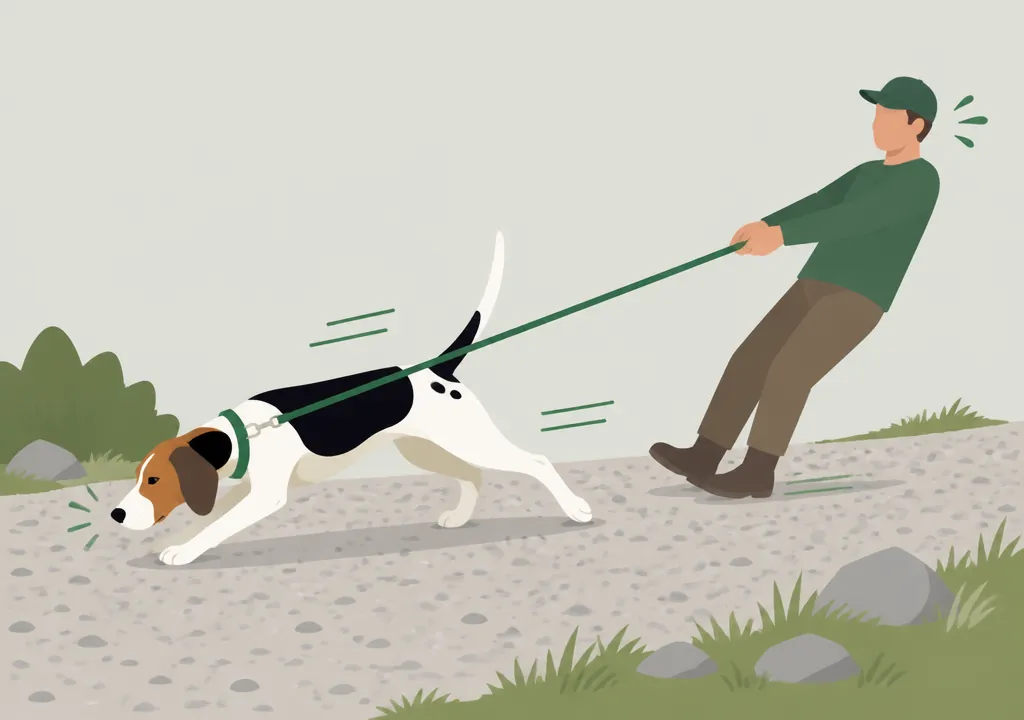
Pulling at full speed
A loose leash for a dog built to run.
Pulling at full speed is usually a confused learner, not a dog who quit. An intelligent, eager Treeing Walker Coonhound still picks scent over a muddled lesson, so a route beats a pile of new cues.
The full guide maps thirty days through five training districts, from first communication to outdoor settings.
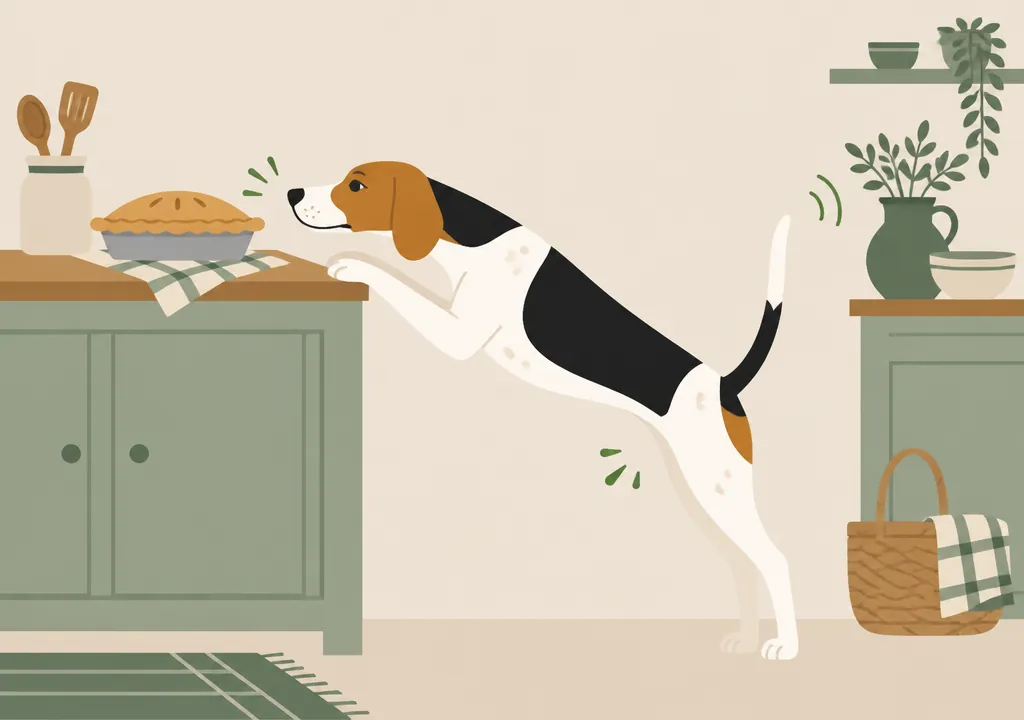
Counter surfing
Tall, clever and always hungry.
How do you stop a Treeing Walker Coonhound from counter surfing? First make every counter search come up empty, then teach a floor-level job that pays during real kitchen traffic. Telling the dog to get down after they find food leaves the most important reward in place.
We treat the kitchen as a loss-control problem because a tall, scent-driven dog can check a surface in a moment and remember the result for much longer. This guide closes food routes, maps permission zones, builds a mat station, rehearses cooking movement, investigates relapses, and separates ordinary scavenging from behavior that needs professional help. Management begins today, while training builds the replacement habit.
Read the full guide: Treeing Walker Coonhounds Who Reach the Counter: Management First
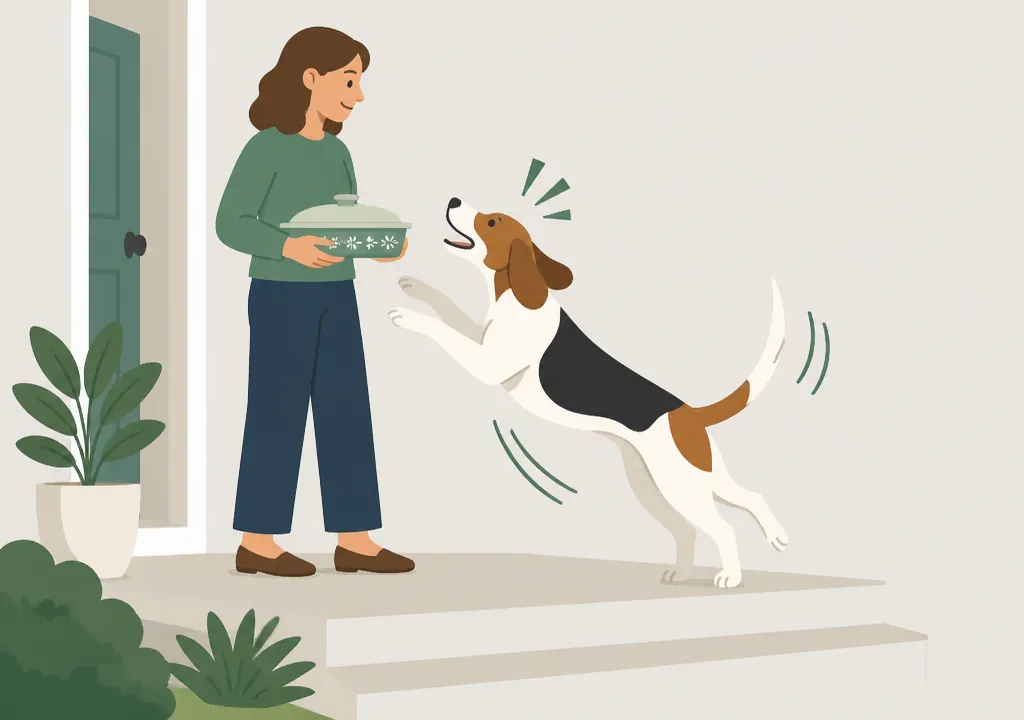
Jumping on guests
Four paws down for every hello.
Friendly greetings from a Treeing Walker Coonhound can still land at chest height. The intention may be social, but the impact is real. A polite greeting needs a planned arrival rather than a shouted cue after paws are already on a person.
We organize the doorway like a small production. One handler manages the dog, one visitor follows a simple cue sheet, and one grounded behavior earns the hello. Nobody improvises by bending, pushing, or exciting the dog.
Read the full guide: Welcoming Guests With a Treeing Walker Coonhound Who Keeps Paws Down
Puppy nipping
Soft mouths from the start.
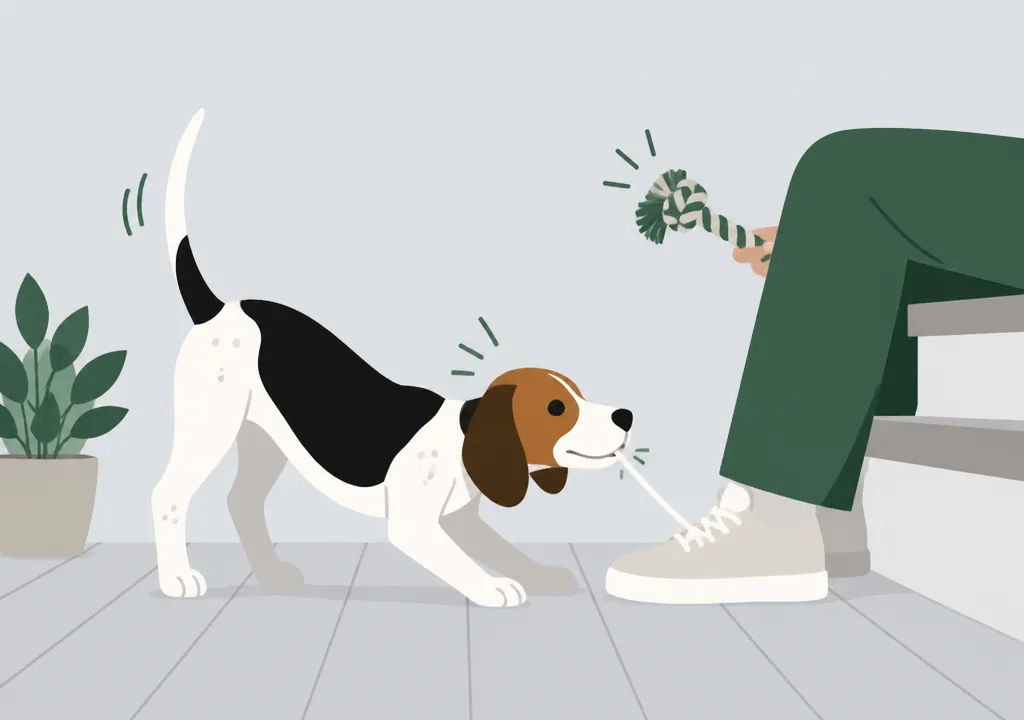
A mouthy Treeing Walker Coonhound puppy needs an intake before a technique. Record age, what happened immediately before the teeth arrived, how much pressure the puppy used, whether food or a toy could redirect them, and how quickly their body settled afterward. Teething, overtired play, frustration, handling discomfort, and a missing chew outlet can look similar from the end of a sleeve.
This guide sorts the common causes, stocks legal mouth jobs, teaches trades and brief play pauses, reviews age windows, and builds a clear two-week response plan. We aim for softer choices and faster recovery, not an overnight promise that a young puppy will stop exploring with their mouth.
Read the full guide: Trade Games and Chews for a Mouthy Treeing Walker Coonhound Pup
The teenage months
Hold on to manners while the nose takes over.
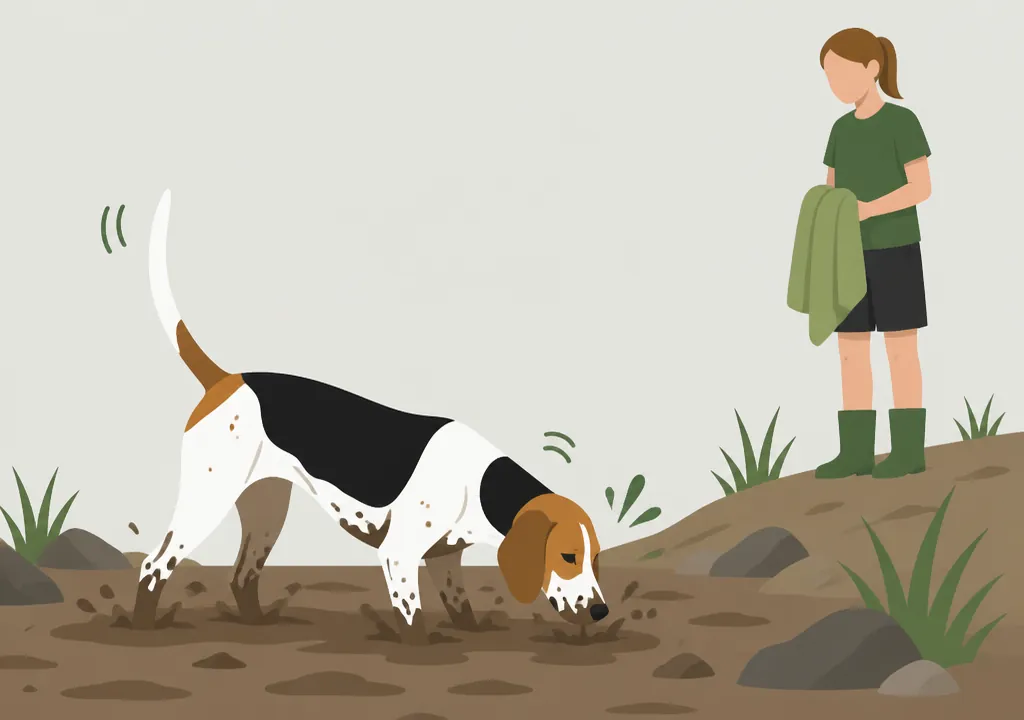
Near five to six months a Treeing Walker puppy starts tuning you out, and cooperation returns gradually through the first year. We see a clever, food-loving hound whose nose gets louder as they grow.
The full guide goes stage by stage, protecting your recall before the nose takes over.